Saltwater · Summer through fall offshore, following warm water currents
Albacore Tuna
Thunnus alalunga
A fast, schooling tuna that visits the west coast in summer and fall where warm blue water pushes inshore. Albacore are found by trolling temperature breaks, then taken on live bait and jigs once a school is stopped at the boat.
Seasons · Peak
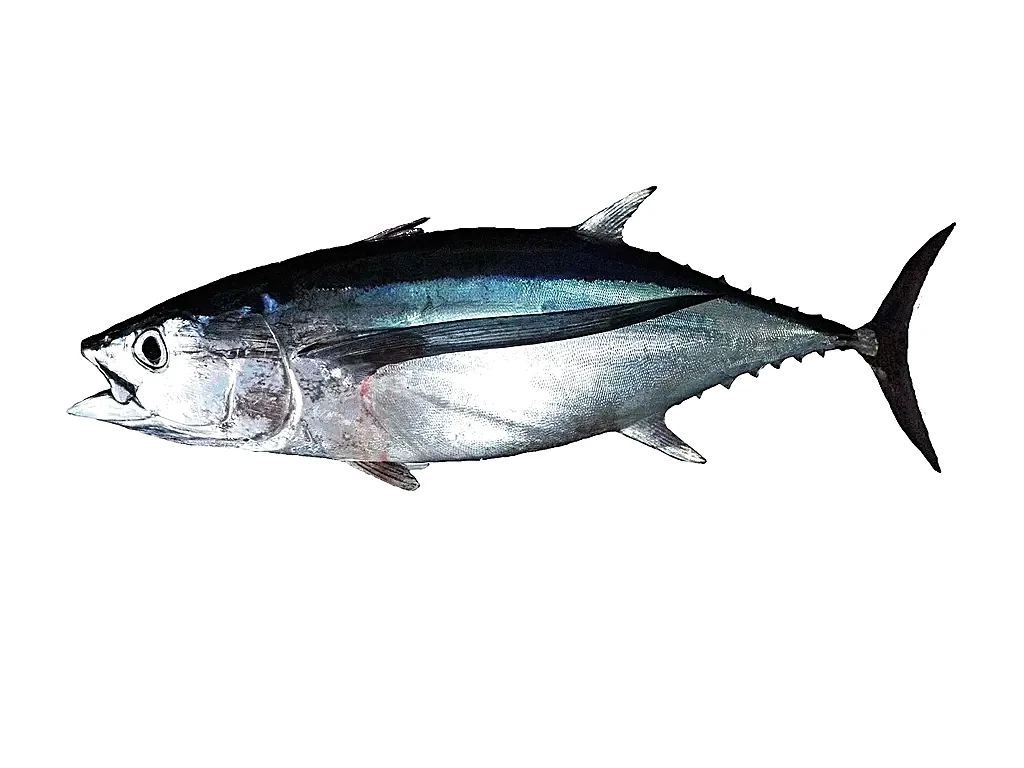
Identifying features
- Very long pectoral fins that reach well past the second dorsal fin — the 'longfin' tuna
- Metallic dark blue back, silvery white belly with no stripes or spots
- Torpedo-shaped tuna body with a deeply forked, stiff tail
- White trailing edge on the tail fin
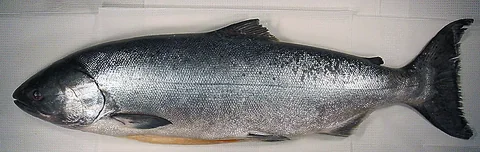
- Look-alike: chinook salmon are sometimes trolled in the same season but have spots, a soft-rayed tail and no long pectoral fins
Habits
- Travel in fast-moving schools hunting anchovies, sardines and squid
- Follow warm water of roughly 58-66°F and sharp temperature breaks
- Feed at the surface under diving birds, and deeper along the thermocline
- A trolled hookup often stops the school at the boat for bait fishing
Distribution
Where to find them
- Temperature breaks and colour changes 20-60 miles offshore
- Working birds and jumping bait over offshore banks
- Current edges where warm blue water meets cooler green water
Where they live
How to catch them
Trolling to find the school
Rig: Spread of cedar plugs and feathers trolled at 6-8 mph
Bait/lure: Cedar plugs, zucchini and Mexican-flag feathers
Key tip: Watch the water temperature gauge — a 1-degree break is a highway.
Live bait on the stop
Rig: Fly-lined live anchovy on a 2/0 hook, no weight
Bait/lure: Live anchovy or sardine
Key tip: Chum lightly to hold the school, and keep one bait in the water at all times.
Best baits & lures
Baseline setup
- Rod: 7' 20-40 lb trolling and live-bait rods
- Line: 30-40 lb mono or 50 lb braid with mono top-shot
- Terminal: Cedar plugs, feathers, 2/0 live-bait hooks
Recommended gear for this species
Rod · Best value
9' 5-weight fly rod outfit
≈ US$180-260
Covers chironomid lakes and small rivers with one setup.
Flies · Budget
Chironomid assortment (30 patterns)
≈ US$25-40
Chironomids are 60% of a lake rainbow's diet in spring.
Picks come from our rule library — never paid placements. Prices are guides; affiliate links may earn us a commission.
Typical size
Common 10-25 lb; large specimens 40 lb+
On the table
Excellent — rich, light flesh; prime for searing and canning, best fresh and well chilled.
Similar species
Regulations vary by area and can change in-season — always check the official rules for your area before you fish. Regulations guide →
Plan a trip for Albacore Tuna
Build today's plan