Freshwater · Short northern summer; June through August
Arctic Grayling
Thymallus arcticus
A sail-finned fish of clear, cold northern rivers and lakes, famous for rising freely to dry flies. Grayling feed in groups in pools and riffles and are a signature light-tackle fish of Alaska and the far north.
Seasons · Peak
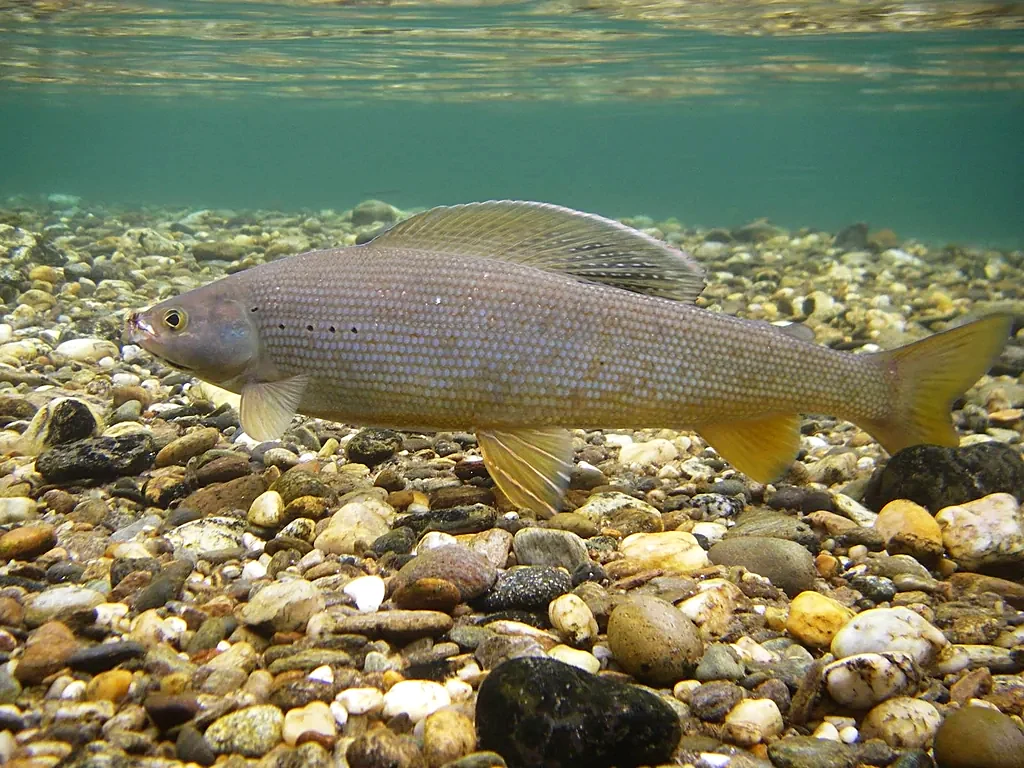
Identifying features
- Huge, sail-like dorsal fin, spotted and edged in iridescent blue and purple
- Silvery to dark blue body with small black spots toward the head
- Small mouth with fine teeth — much smaller than a trout's
- Deeply forked tail and large, smooth scales
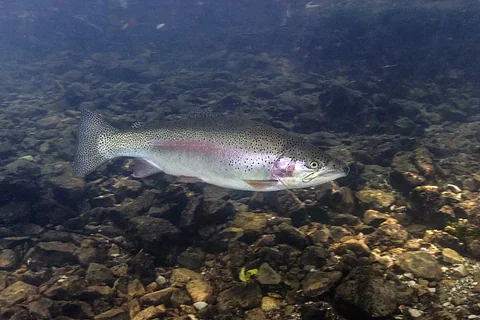
- Look-alike: rainbow trout have a small, ordinary dorsal fin and a pink lateral band — the sail fin separates grayling instantly
Habits
- Rise readily to insects on the surface through the long northern day
- Feed in loose groups in pools and at riffle tails
- Eat nymphs and larvae drifting near bottom between rises
- Move from deep lake and river wintering water to spawning streams in spring
Distribution
Where to find them
- Slow pools and eddies in clear tundra and foothill rivers
- Tailouts of riffles where insects collect
- Lake shore points and creek mouths in summer
Where they live
How to catch them
Dry fly on pools
Rig: 9' 4-5 weight fly rod, floating line, 12 ft leader
Bait/lure: Adams, griffith's gnat and caddis dries, sizes 14-18
Key tip: Grayling rise repeatedly — if one refuses, drop a fly size and try again.
Ultralight spinning
Rig: 1/16 oz spinner on 4 lb line
Bait/lure: Tiny silver and black spinners
Key tip: Cast across pools and retrieve slowly just under the surface.
Best baits & lures
Baseline setup
- Rod: 9' 4-weight fly rod or 6' ultralight spinning rod
- Line: Floating fly line / 4 lb mono
- Terminal: Small dry flies, tiny spinners
Recommended gear for this species
Rod · Best value
9' 5-weight fly rod outfit
≈ US$180-260
Covers chironomid lakes and small rivers with one setup.
Flies · Budget
Chironomid assortment (30 patterns)
≈ US$25-40
Chironomids are 60% of a lake rainbow's diet in spring.
Picks come from our rule library — never paid placements. Prices are guides; affiliate links may earn us a commission.
Typical size
Common 12-16 inches; large specimens 20 inches
On the table
Good — delicate, mild flesh that softens quickly; best eaten fresh.
Similar species
Regulations vary by area and can change in-season — always check the official rules for your area before you fish. Regulations guide →
Plan a trip for Arctic Grayling
Build today's plan