Saltwater · Spring and fall runs along the beaches; winter in south Florida passes
Florida Pompano
Trachinotus carolinus
The silver prize of the Florida surf — pompano run the beaches in spring and fall, digging sand fleas from the wash and jolting light surf rods all along both coasts.
Seasons · Peak
Identifying features
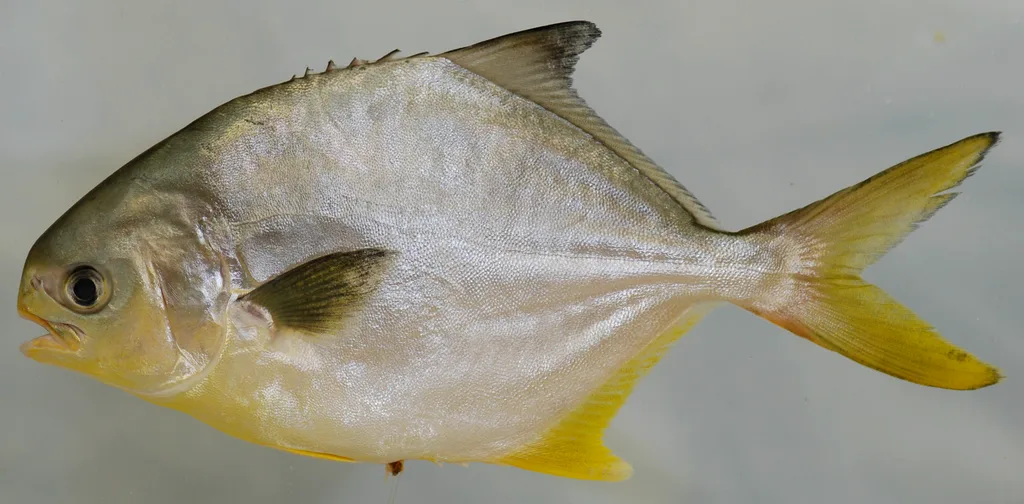
- Deep, compressed silver body with a blunt, steep forehead and a deeply forked yellow-tinged tail
- No scales visible to the eye and no teeth — skin feels smooth and tough
- Dark back shading to silver; juveniles show yellow on the belly and fins
- Short snout with a small mouth built for crushing sand fleas and clams
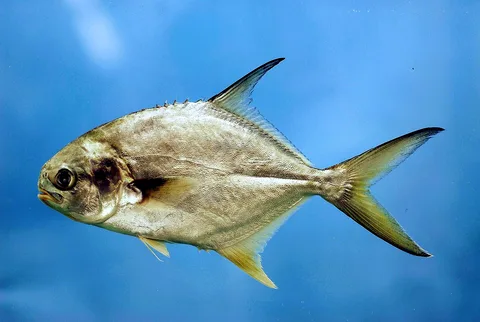
- Look-alike: permit are bigger and deeper-bodied with a taller, darker dorsal fin and a black lobe on the anal fin
Habits
- Runs the surf zone in small schools, tipping up to dig sand fleas out of the wash
- Migrates along the coast with water temperature — north in spring, south in fall
- Feeds on the move; a school works a trough, then vanishes down the beach
- Also stacks in inlets, passes and around nearshore structure in winter
Distribution
Where to find them
- Surf troughs and sandbars on Florida's Atlantic and Gulf beaches
- Inlets and passes on a moving tide, especially the edges of the channel
- Beach points and cuts where the wash churns up sand fleas
Where they live
How to catch them
Surf fishing with sand fleas
Rig: Two-drop pompano rig with small circle hooks, pyramid sinker to suit the surf
Bait/lure: Live sand fleas, backed up with shrimp or clam
Key tip: Cast to the near trough first — pompano feed feet from the sand, not just beyond the breakers.
Jigging the passes
Rig: 1/4-1/2 oz banana jig tipped with shrimp, on light spinning gear
Bait/lure: Jig alone or shrimp-tipped
Key tip: Bounce the jig along the bottom in the current seam; pompano pick it up on the drop.
Best baits & lures
Baseline setup
- Rod: 9-11' surf rod or 7' light spinning rod for jigs
- Line: 10-15 lb mono or 20 lb braid
- Terminal: Pompano rigs, small circle hooks, banana jigs, pyramid sinkers
Recommended gear for this species
Rod · Best value
9' 5-weight fly rod outfit
≈ US$180-260
Covers chironomid lakes and small rivers with one setup.
Flies · Budget
Chironomid assortment (30 patterns)
≈ US$25-40
Chironomids are 60% of a lake rainbow's diet in spring.
Picks come from our rule library — never paid placements. Prices are guides; affiliate links may earn us a commission.
Typical size
Common 1-3 lb; large specimens 5-8 lb
On the table
Outstanding — many anglers rate pompano the finest fish on the Florida coast; firm, sweet, white meat.
Similar species
Regulations vary by area and can change in-season — always check the official rules for your area before you fish. Regulations guide →
Plan a trip for Florida Pompano
Build today's plan