
Freshwater · Spring spawn; summer surface activity in warm shallows
Longnose Gar
Lepisosteus osseus
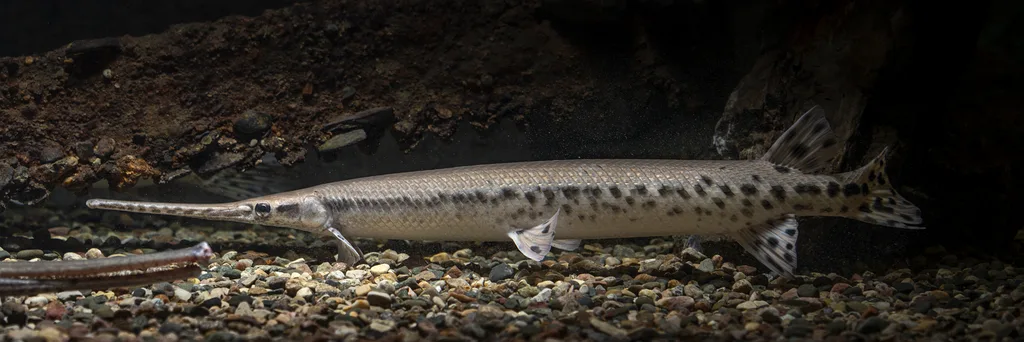
A living fossil with a needle beak — longnose gar hang like sticks in warm weedy shallows from the Great Lakes to Texas, gulp air at the surface, and ambush anything that drifts past.
Seasons · Peak
Identifying features
- Pike-thin body covered in hard, diamond-shaped ganoid scales that feel like armour plate
- Long, narrow jaws packed with needle teeth — a beak built for sideways strikes
- Single dorsal fin set far back, directly above the anal fin, near the tail
- Olive-brown to green with dark spots; juveniles are banded
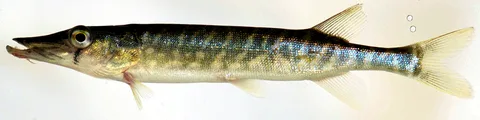
- Look-alike: chain pickerel have a fully scaled cheek and a duck-bill snout; gar jaws are narrower, longer and armoured in diamond scales
Habits
- An ambush predator of warm shallows: hangs motionless among weeds, then strikes sideways with a needle-toothed jaw
- Can breathe air — gar gulp at the surface in hot, oxygen-poor water, which gives away their position
- Spawns in spring over flooded vegetation; the eggs are toxic to most animals
- Feeds mostly on small fish, hitting sideways first and repositioning the prey before swallowing
Distribution
Where to find them
- Weedy bays of Lake St. Clair and the lower Great Lakes
- Backwaters of the Mississippi, Ohio and Missouri rivers
- Warm sloughs and oxbow lakes across Texas and the Southeast
Where they live
How to catch them
Float fishing live bait
Rig: Big float, live baitfish, heavy braid and a strong circle hook
Bait/lure: Live shiner or sunfish, no hook in the bait — let the gar run, then tighten up
Key tip: Let the gar carry the bait a long way before tightening — it mouths and turns the prey first.
Rope-fly fishing
Rig: Medium-heavy spinning gear, rope fly cast across cruising fish
Bait/lure: Frayed nylon rope fly, unweighted
Key tip: The fibres tangle in the needle teeth — no hook to set; keep steady pressure and net the fish fast.
Best baits & lures
Baseline setup
- Rod: 7' medium-heavy casting rod
- Line: 30-50 lb braid, wire or heavy mono leader
- Terminal: Rope flies, large live baits, stout hooks, jaw spreaders for release
Recommended gear for this species
Rod · Best value
9' 5-weight fly rod outfit
≈ US$180-260
Covers chironomid lakes and small rivers with one setup.
Flies · Budget
Chironomid assortment (30 patterns)
≈ US$25-40
Chironomids are 60% of a lake rainbow's diet in spring.
Picks come from our rule library — never paid placements. Prices are guides; affiliate links may earn us a commission.
Typical size
Common 2-6 lb; large specimens 10-20 lb (3-4 ft)
On the table
Armoured and bony — released by nearly all anglers; gar eggs are toxic, so gar are never a fillet fish.
Similar species
Regulations vary by area and can change in-season — always check the official rules for your area before you fish. Regulations guide →
Plan a trip for Longnose Gar
Build today's plan