Freshwater · Warm months; most active late spring through early fall
Northern Snakehead
Channa argus
An invasive ambush predator built for the thickest cover — northern snakehead guard fry in summer marshes and detonate on frogs dragged over the pads. The Potomac and Chesapeake tidal creeks are the centre of the fishery.
Seasons · Peak
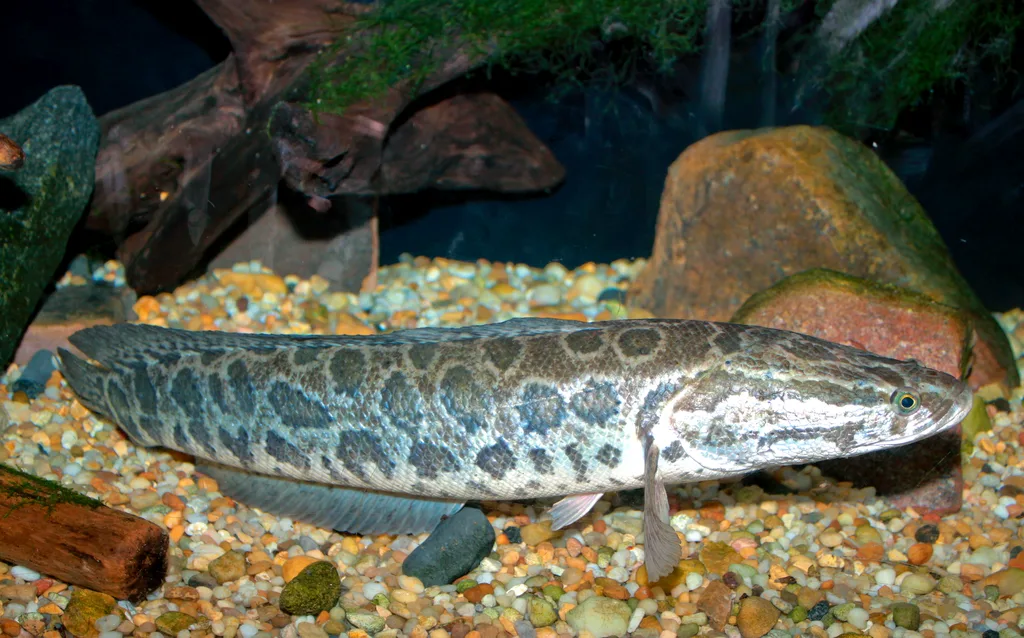
Identifying features
- Long, snake-like cylindrical body with a flattened, python-patterned head
- Very long dorsal and anal fins running most of the body length, with a rounded tail
- Tan to brown body with dark, irregular chevron blotches along the sides
- Large mouth full of sharp teeth and eyes set high on the head
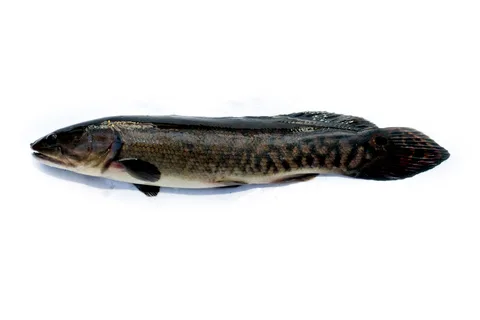
- Look-alike: bowfin have a long dorsal fin too, but a rounder head, a dark eye-spot near the tail on males and no snake-like blotches
Habits
- An air-breathing ambush predator of the thickest cover — pads, reeds, timber and matted grass
- Guards its fry ball aggressively in summer; both parents attack lures near the young
- Feeds on fish, frogs and crayfish, striking upward at surface lures with a violent boil
- Most active in warm, shallow, low-oxygen water other predators leave alone
Distribution
Where to find them
- Potomac River tidal creeks and Chesapeake marshes — the best-known snakehead water in North America
- Delaware River tidal marshes and New Jersey backwaters
- Florida canals and lake edges in the southeast
- Thick pad fields and reed lines in slow rivers and ponds
Where they live
How to catch them
Frog fishing the mats
Rig: Heavy baitcasting outfit, 65 lb braid, hollow-body frog walked over pads and mats
Bait/lure: Hollow-body frogs in black, white and natural colours
Key tip: Wait a full second after the blow-up before setting hard. Snakehead often miss the first strike — keep the frog moving and they come back.
Buzzbaits through cover lanes
Rig: Buzzbait or chatterbait retrieved steadily through lanes in the grass
Bait/lure: Buzzbaits with soft-plastic trailers
Key tip: Fish the blow-up, then pitch a soft plastic back to the same spot — a missed fish usually eats the follow-up.
Best baits & lures
Baseline setup
- Rod: 7 ft 6 in heavy casting rod
- Line: 65 lb braid
- Terminal: Hollow-body frogs, buzzbaits, weedless swimbaits
Recommended gear for this species
Rod · Best value
9' 5-weight fly rod outfit
≈ US$180-260
Covers chironomid lakes and small rivers with one setup.
Flies · Budget
Chironomid assortment (30 patterns)
≈ US$25-40
Chironomids are 60% of a lake rainbow's diet in spring.
Picks come from our rule library — never paid placements. Prices are guides; affiliate links may earn us a commission.
Typical size
Common 2-6 lb; large specimens 10-15 lb
On the table
Excellent — firm, white, mild flesh, highly rated where it is eaten; an invasive species kept by many anglers.
Similar species
Regulations vary by area and can change in-season — always check the official rules for your area before you fish. Regulations guide →
Plan a trip for Northern Snakehead
Build today's plan