Saltwater · Late summer to early fall; most BC and Washington runs are far larger in odd-numbered years
Pink Salmon
Oncorhynchus gorbuscha
The smallest and most numerous Pacific salmon, famous for huge schooling runs every second year. Pinks bite small pink lures willingly and are the easiest salmon for beginners to catch from shore.
Seasons · Peak
Identifying features
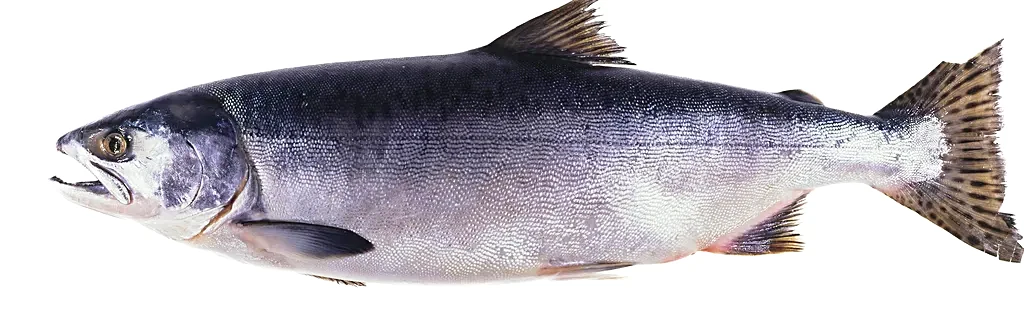
- Smallest Pacific salmon, typically 3-5 lb, with a deeply forked tail
- Large, oval black spots on the back and on both lobes of the tail fin
- Bright silver in the ocean; spawning males grow a pronounced hump — the 'humpy' nickname
- Small, fine scales and a white mouth with a dark gumline
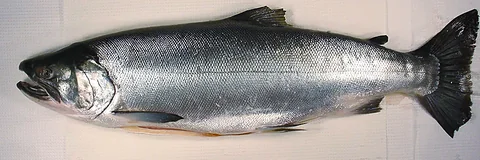
- Look-alike: coho salmon are larger, with spots on the upper tail lobe only and no spawning hump
Habits
- Travel in large schools close to shore and near the surface
- Feed on krill, shrimp and small fish, which gives the flesh its pink colour
- Bite readily in daylight, best on a moving tide
- Two-year life cycle — most southern runs return in odd-numbered years
Distribution
Where to find them
- Beaches off points and river mouths on the flooding tide
- Visible surface schools in 20-40 ft of water close to shore
- Shallow river runs and pool tailouts once the run enters fresh water
Where they live
How to catch them
Trolling a pink hoochie
Rig: Flasher with a 24-36" leader to a small pink hoochie or spoon
Bait/lure: Pink and white hoochies, small pink spoons
Key tip: Troll slow, 20-50 ft deep, right through visible schools.
Casting pink jigs from shore
Rig: 1/4-1/2 oz pink jig or spoon on a light spinning rod
Bait/lure: Pink jigs, pink spinners
Key tip: Cast beyond the school and twitch-retrieve through it. Fish the flood tide.
Best baits & lures
Baseline setup
- Rod: 9' medium spinning or trolling rod
- Line: 20 lb braid or 15 lb mono
- Terminal: Pink hoochies, small spoons, 2/0 hooks
Recommended gear for this species
Trolling rod · Best value
10'6" mooching/trolling rod (medium-heavy)
≈ US$120-180
Long soft action absorbs flasher load and keeps barbless hooks pinned.
Reel · Budget
Line-counter or mooching reel, 300 size
≈ US$70-110
Repeatable depth is half of salmon trolling; a counter makes it repeatable.
Terminal · Budget
11" flasher + anchovy teaser heads (2-pack)
≈ US$25-35
The chinook standard on this coast. Greens and chartreuse first.
Picks come from our rule library — never paid placements. Prices are guides; affiliate links may earn us a commission.
Typical size
Common 3-5 lb; large specimens 7 lb+
On the table
Good — soft, mild pink flesh; best fresh or smoked, less firm than sockeye.
Similar species
Regulations vary by area and can change in-season — always check the official rules for your area before you fish. Regulations guide →
Plan a trip for Pink Salmon
Build today's plan