
Freshwater · Spring and fall; deep points in summer
Spotted Bass
Micropterus punctulatus
The largemouth's river-loving cousin — spotted bass school on rocky points and current seams from Georgia to the Ozarks, hit small baits with total commitment, and pull like smallmouth.
Seasons · Peak
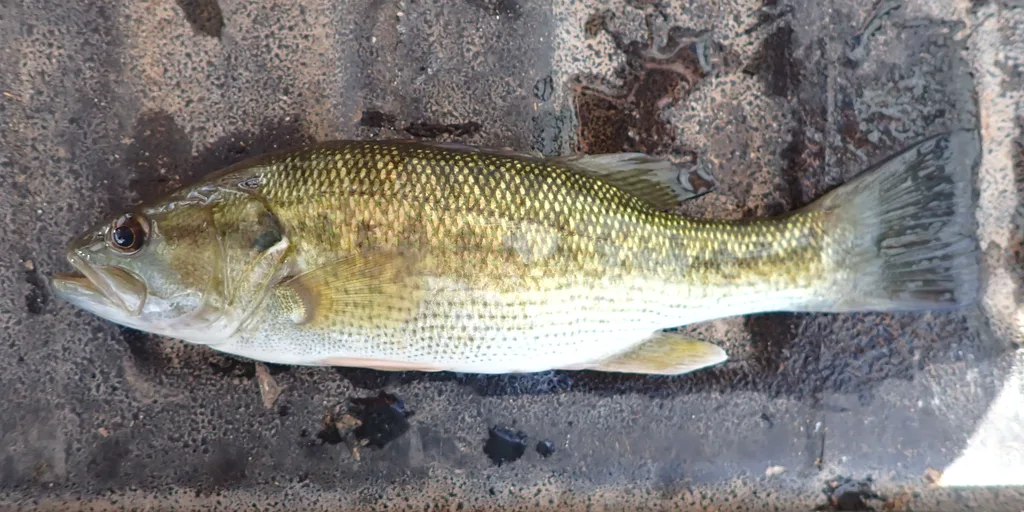
Identifying features
- Rows of dark spots BELOW the lateral line — the field mark that separates it from largemouth
- A rough patch of teeth on the tongue — feel for sandpaper where a largemouth's tongue is smooth
- Jaw ends below the eye and does NOT extend past it, even on big fish
- Connected dorsal fin with a shallow notch, and a clear horizontal dark stripe along the side
- Look-alike: largemouth bass have no spots below the lateral line and a jaw that reaches past the eye; spotted bass have both the spots and the tongue patch
Habits
- A fish of moving water and rock: spots love current seams, rocky points and creek arms
- Schools more than largemouth — where you catch one spotted bass, you'll usually catch several
- Feeds heavily on crayfish and shad; in summer it suspends over deep points
- Spawns in spring on gravel in protected pockets, like its cousins
Distribution
Where to find them
- Lake Lanier, Georgia — the most famous spotted bass lake in the world
- Table Rock and the White River chain in the Ozarks
- California's Shasta and Oroville reservoirs (introduced giants)
Where they live
How to catch them
Finesse on the points
Rig: Light spinning gear, 1/8 oz head and a 4-5 in worm
Bait/lure: Ned rig or shaky-head finesse worm
Key tip: Spots gang up — work a productive point thoroughly before moving on.
Cranking rock
Rig: Medium casting rod, shallow crankbait banged off rock and wood
Bait/lure: Small square-bill crankbaits in crawfish colours
Key tip: In current, cast upstream and let the bait hunt through the seam — spots live for crayfish.
Best baits & lures
Baseline setup
- Rod: 7' medium casting or spinning rod
- Line: 10-14 lb fluorocarbon or mono
- Terminal: Ned rigs, shaky heads, small crankbaits, tube jigs
Recommended gear for this species
Rod · Best value
7'3" medium-heavy casting rod
≈ US$100-150
One rod for jigs, Texas rigs and frogs — the bass workhorse.
Reel · Budget
7.1:1 baitcasting reel
≈ US$80-120
Fast retrieve for pitching and quickly taking up slack on hooksets.
Line · Budget
15 lb fluorocarbon (200 yd)
≈ US$18-25
Invisible in clear water, sensitive on rock, abrasion resistant.
Picks come from our rule library — never paid placements. Prices are guides; affiliate links may earn us a commission.
Typical size
Common 1-2 lb; large specimens 4-6 lb (world-class fish to 10 lb)
On the table
Good — same sweet, white flesh as largemouth; most river fish are released.
Similar species
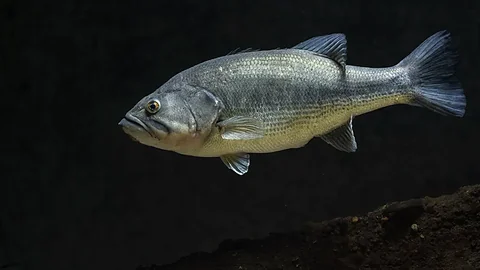 Largemouth BassLargemouth have a smooth tongue, no spots below the lateral line, and a jaw past the eye; spots have the tongue patch and spotted belly rows
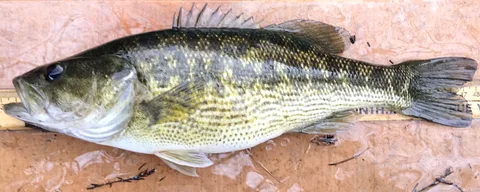 Guadalupe BassGuadalupe bass are Texas stream fish with diamond blotches along the lateral line; spotted bass are lake-and-big-river fish across the whole Southeast and Midwest
Regulations vary by area and can change in-season — always check the official rules for your area before you fish. Regulations guide →
Plan a trip for Spotted Bass
Build today's plan