Saltwater · Year-round in some systems; winter runs peak December to March, summer runs June to September
Steelhead
Oncorhynchus mykiss
The sea-run form of rainbow trout and one of the most prized river fish in North America. Steelhead hold in fast, broken water, take a wide range of drifted and swung offerings, and fight with long runs and jumps.
Seasons · Peak
Identifying features
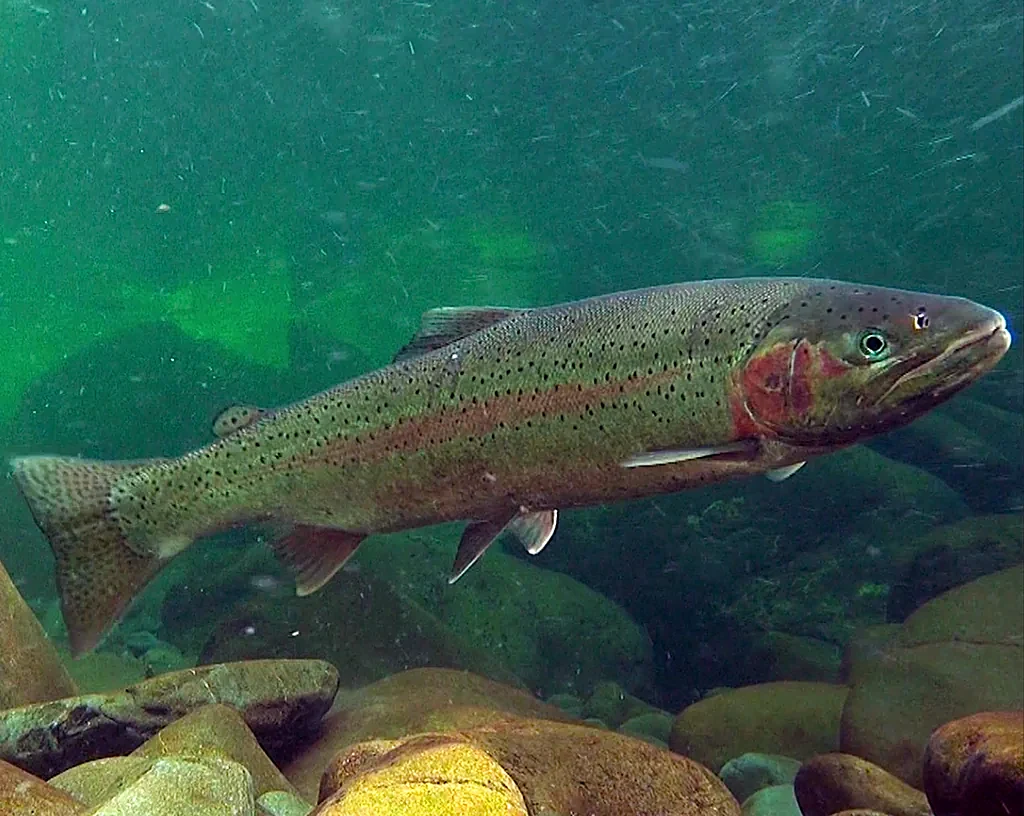
- Bright chrome sides fresh from the ocean, with a steel-blue back
- Pink lateral flush that deepens the longer the fish is in the river
- Black spots over the back and the whole tail fin, like a rainbow trout
- Torpedo-shaped and leaner than a resident rainbow of the same length
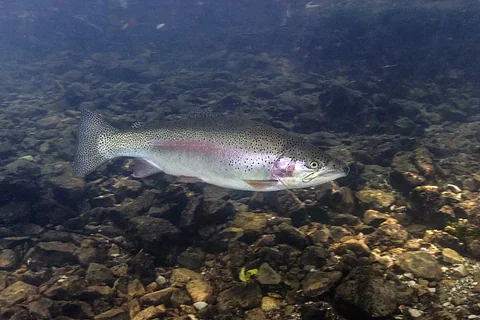
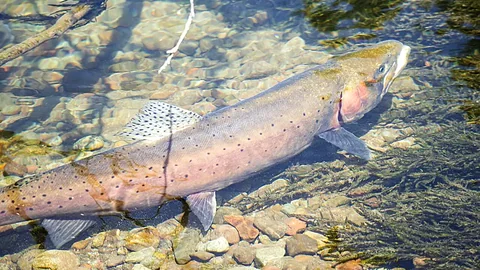
- Look-alike: rainbow trout are the same species but stay in fresh water, run smaller and show stronger colour year-round
Habits
- Hold alone behind boulders and in slots, facing the current
- Move upstream mainly at night and on rising water, rest in pools by day
- Feed opportunistically on eggs, insects and fry despite being sea-run
- Most aggressive in the first and last light and in water warming toward 50°F
Distribution
Where to find them
- Tailouts where a pool shallows into the next riffle
- Walking-speed runs 3-6 ft deep with broken surface
- Boulder gardens and log cover along the bank
Where they live
How to catch them
Float or drift fishing
Rig: Float or drift weight with a 24-36" leader, bait or bead just off bottom
Bait/lure: Roe bags, beads, pink worms, yarn
Key tip: Work a run in a grid, near to far. The first clean drift through a lie matters most.
Swinging spoons or flies
Rig: 2/5 oz spoon or weighted fly swung across the current on a tight line
Bait/lure: Silver and brass spoons; intruder-style flies
Key tip: Let the swing slow and hang at the end — many takes come on the hang-down.
Best baits & lures
Baseline setup
- Rod: 10'6" medium drift or float rod
- Line: 12-15 lb mainline, 8-10 lb leader
- Terminal: Floats, beads, roe bags, spoons
Recommended gear for this species
Rod · Best value
9' 5-weight fly rod outfit
≈ US$180-260
Covers chironomid lakes and small rivers with one setup.
Flies · Budget
Chironomid assortment (30 patterns)
≈ US$25-40
Chironomids are 60% of a lake rainbow's diet in spring.
Picks come from our rule library — never paid placements. Prices are guides; affiliate links may earn us a commission.
Typical size
Common 6-12 lb; large specimens 20 lb+
On the table
Excellent — rich, firm flesh similar to salmon; best fresh.
Similar species
Regulations vary by area and can change in-season — always check the official rules for your area before you fish. Regulations guide →
Plan a trip for Steelhead
Build today's plan