
Saltwater · Late spring through fall; peak summer around floating structure
Tripletail
Lobotes surinamensis
The master of disguise — tripletail drift sideways under buoys and floating junk pretending to be debris, then crush a live shrimp floated into range. A sight-caster's favourite from Florida to Texas.
Seasons · Peak
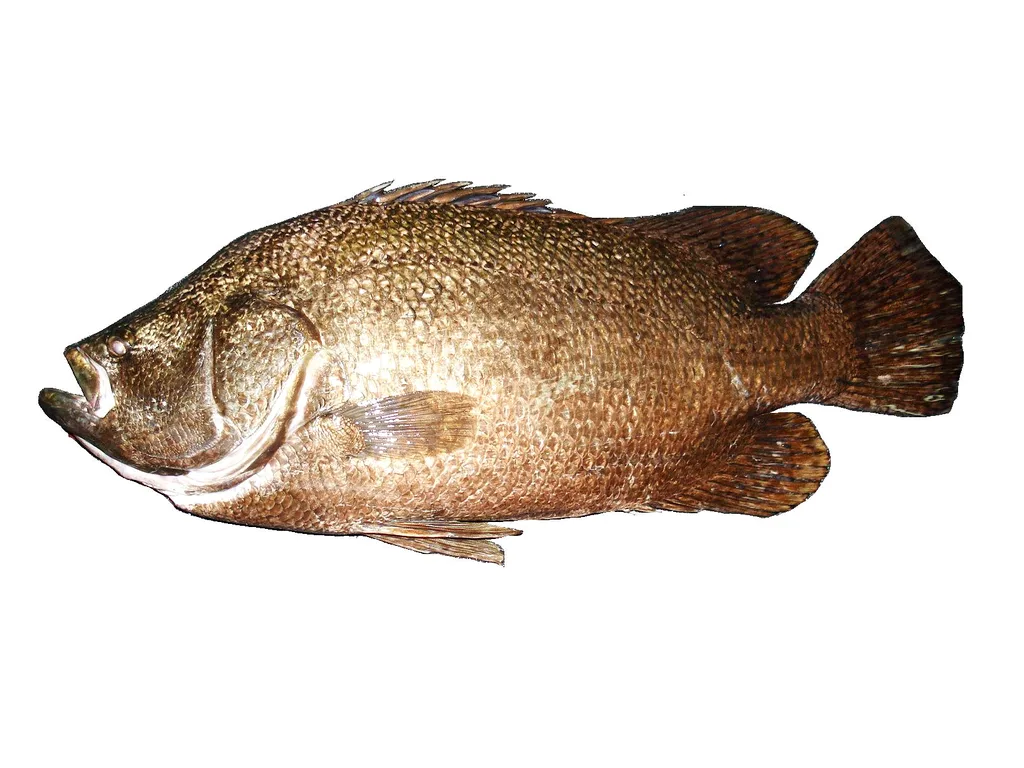
Identifying features
- The rear dorsal and anal fins extend back level with the tail, giving the fish THREE tails — the name is literal
- Deep, compressed body with a steep, blunt head and a small mouth
- Colour shifts from mottled brown and tan as a juvenile to dark grey-brown as an adult — it changes to match its cover
- Eyes sit high and far forward; the fish often floats on its side at the surface like a leaf or a dead fish
- Look-alike: no other US fish has the triple-tail silhouette
Habits
- A structure shadow — hangs under buoys, crab-pot floats, pilings and floating debris, often sideways at the surface
- An ambush feeder: drifts motionless, then lunges at shrimp and small fish that wander close
- Moves inshore with warm water in late spring and leaves as the water cools
- Solitary by habit; occasionally several fish share one big piece of flotsam
Distribution
Where to find them
- Channel markers, buoys and crab-pot floats along both Florida coasts and the Gulf
- Floating weed lines and debris in nearshore water
- Dock and bridge pilings in bays and passes
Where they live
How to catch them
Sight-casting to floaters
Rig: Light spinning outfit, 1/0 circle hook under a small float or free-lined
Bait/lure: Live shrimp
Key tip: Approach quietly from down-current and land the shrimp a foot past the fish — never drop it on its head.
Working the buoy line
Rig: Medium spinning rod, soft-plastic shrimp on a light jig head
Bait/lure: Shrimp imitations in natural colours
Key tip: Run the markers slowly and check every float; a 'leaf' that holds station against the tide is a fish.
Best baits & lures
Baseline setup
- Rod: 7' medium-light spinning rod
- Line: 15-20 lb braid, 25-30 lb fluorocarbon leader
- Terminal: Small floats, 1/0 circle hooks, shrimp-imitation jigs
Recommended gear for this species
Rod · Best value
9' 5-weight fly rod outfit
≈ US$180-260
Covers chironomid lakes and small rivers with one setup.
Flies · Budget
Chironomid assortment (30 patterns)
≈ US$25-40
Chironomids are 60% of a lake rainbow's diet in spring.
Picks come from our rule library — never paid placements. Prices are guides; affiliate links may earn us a commission.
Typical size
Common 2-10 lb; large specimens 20-35 lb
On the table
Excellent — firm, sweet white fillets, compared to snapper and grouper.
Similar species
Regulations vary by area and can change in-season — always check the official rules for your area before you fish. Regulations guide →
Plan a trip for Tripletail
Build today's plan