Freshwater · Year-round in southern rivers; peak in warm months, spawning in spring floods
Alligator Gar
Atractosteus spatula
A river giant from another age — alligator gar are the largest gar, broad-snouted ambush predators of Texas and Louisiana backwaters that can top 100 lb. Cut bait under a float in still, warm sloughs is the classic method.
Seasons · Peak
Identifying features
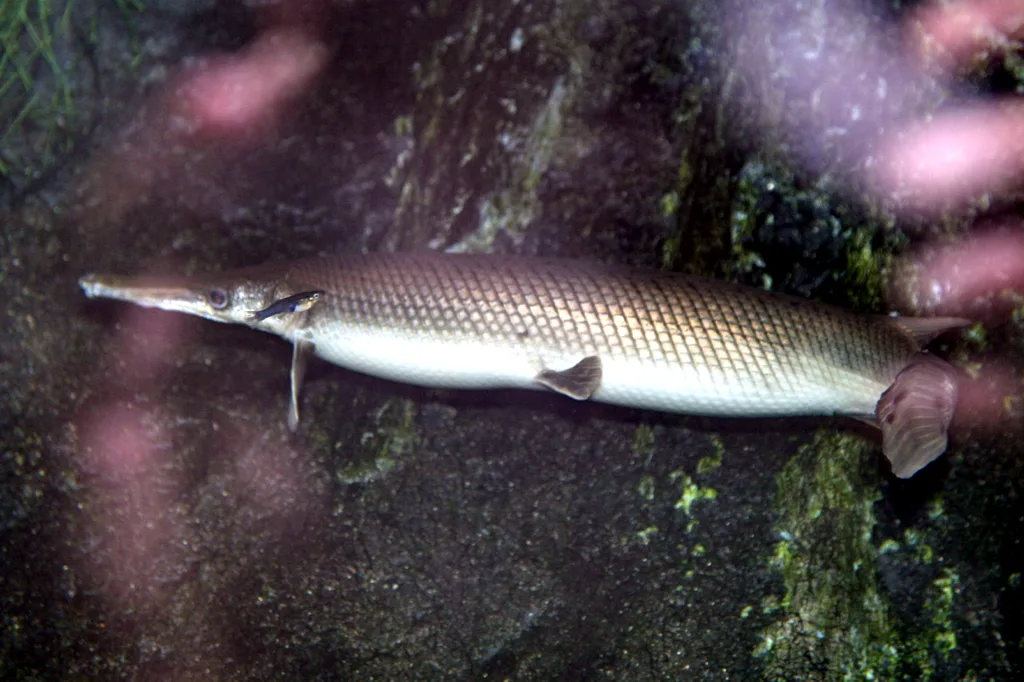
- Huge, cylindrical body armoured in hard diamond-shaped ganoid scales — commonly 4-6 ft long
- Broad, short, alligator-like snout with TWO rows of large teeth in the upper jaw — unique among gar
- Dorsal fin set far back, directly above the anal fin, near the tail
- Dark olive-brown back fading to a pale belly, often with dark spots toward the tail
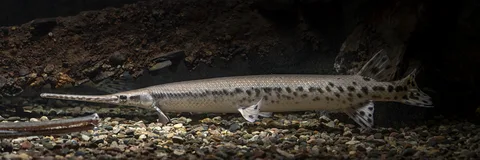
- Look-alike: longnose gar have a long, narrow needle beak and one tooth row; alligator gar have a broad shovel snout and two rows
Habits
- An ambush predator of slow rivers, oxbows and bayous: hangs motionless, then explodes sideways onto prey
- Can breathe air and thrives in hot, still, low-oxygen backwaters that other predators avoid
- Spawns in spring over flooded vegetation when rivers rise
- Feeds mostly on fish — shad, buffalo and carp — plus birds and small animals taken at the surface
Distribution
Where to find them
- The Trinity, Brazos and Colorado rivers of Texas — the heart of alligator gar country
- Louisiana bayous, oxbows and the Atchafalaya Basin
- Slow pools and backwaters of the lower Mississippi and Arkansas rivers
- Warm reservoir coves and sloughs across the deep South in summer
Where they live
How to catch them
Float fishing cut bait
Rig: Heavy outfit, large float, stout circle hook on a strong leader, bait suspended in still backwater
Bait/lure: Fresh cut carp, buffalo or mullet chunks
Key tip: Let the gar run and turn the bait before tightening up — it swallows head-first. Keep steady, heavy pressure once hooked.
Sight-fishing resting gar
Rig: Medium-heavy casting outfit, large swimbait or rope-style lure cast ahead of cruising fish
Bait/lure: Large soft swimbaits in shad colours
Key tip: Cast well past the fish and bring the bait across its nose. Gar follow slowly, then strike sideways — pause before you set.
Best baits & lures
Baseline setup
- Rod: 7-8 ft heavy casting rod
- Line: 65-80 lb braid, heavy mono or wire leader
- Terminal: Large circle hooks, big floats, cut bait
Recommended gear for this species
Rod · Best value
9' 5-weight fly rod outfit
≈ US$180-260
Covers chironomid lakes and small rivers with one setup.
Flies · Budget
Chironomid assortment (30 patterns)
≈ US$25-40
Chironomids are 60% of a lake rainbow's diet in spring.
Picks come from our rule library — never paid placements. Prices are guides; affiliate links may earn us a commission.
Typical size
Common 10-40 lb; large specimens 100 lb and up (6 ft+)
On the table
Good — firm, white flesh in the backstraps; gar eggs are toxic and must never be eaten. Most trophy fish are released.
Similar species
Regulations vary by area and can change in-season — always check the official rules for your area before you fish. Regulations guide →
Plan a trip for Alligator Gar
Build today's plan