
Freshwater · Ice-out spring and fall; summer fish hold deep and cold
Landlocked Atlantic Salmon
Salmo salar (landlocked form)
The Atlantic salmon that stayed home — landlocked salmon cruise the smelt schools of Maine, Quebec and Newfoundland lakes, named and managed as their own fishery, distinct from their sea-run cousins.
Seasons · Peak
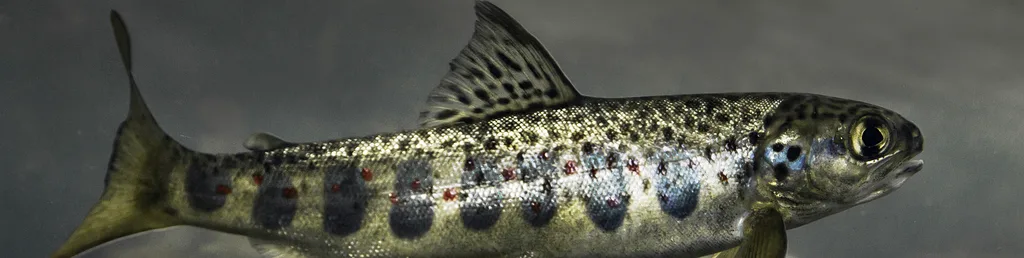
Identifying features
- The freshwater form of the Atlantic salmon — named explicitly 'landlocked' to separate it from the sea-run fish in this guide
- Silver body with dark X-shaped spots on the back and upper sides, forked tail
- Smaller than sea-run fish: landlocked salmon in most lakes run 1-5 lb, not the 10-30 lb of ocean fish
- Parr marks show on juveniles; spawning adults bronze and darken in fall
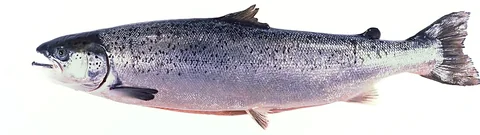
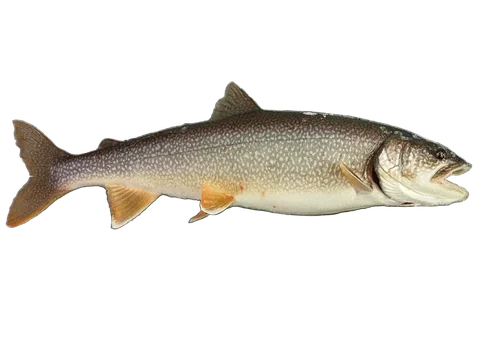
- Look-alike: lake trout have a deeply forked tail covered in pale spots and a white-edged lower fin set; landlocked salmon have dark X-spots and no pale fin edges
Habits
- This is the Atlantic salmon that never goes to sea: whole populations live and spawn entirely in lakes
- Feeds on rainbow smelt and other forage fish high in the water column, especially in spring
- Cruises cold, oxygen-rich water; in summer it retreats below the thermocline
- Spawns in fall in lake tributaries and outlet streams, colouring up like its sea-run kin
Distribution
Where to find them
- Sebago Lake and the Rangeley lakes, Maine — the original landlocked-salmon waters
- Lac Saint-Jean and the great Shield lakes of Quebec
- Newfoundland's grand lakes and the stocked waters of the Great Lakes basin
Where they live
How to catch them
Trolling the smelt schools
Rig: Light trolling gear with spoons or tandem streamers run just under the surface in spring
Bait/lure: Small silver spoons and streamer flies imitating smelt
Key tip: At ice-out, fish the top 10 ft near stream mouths — landlocks chase smelt in the shallows.
Casting the outlets
Rig: Light spinning or fly gear at lake outlets and feeder-stream mouths
Bait/lure: Small spinners, spoons and wet flies
Key tip: Work the current seam at dawn; feeding landlocked salmon show themselves with soft rises.
Best baits & lures
Baseline setup
- Rod: 8'6"-9' light salmon spinning rod or 7-8 wt fly rod
- Line: 8-12 lb mono or light braid
- Terminal: Small spoons, spinners, wet flies and streamers
Recommended gear for this species
Trolling rod · Best value
10'6" mooching/trolling rod (medium-heavy)
≈ US$120-180
Long soft action absorbs flasher load and keeps barbless hooks pinned.
Reel · Budget
Line-counter or mooching reel, 300 size
≈ US$70-110
Repeatable depth is half of salmon trolling; a counter makes it repeatable.
Terminal · Budget
11" flasher + anchovy teaser heads (2-pack)
≈ US$25-35
The chinook standard on this coast. Greens and chartreuse first.
Picks come from our rule library — never paid placements. Prices are guides; affiliate links may earn us a commission.
Typical size
Common 1-4 lb; large specimens 6-12 lb
On the table
Excellent — identical in the pan to its sea-run twin; rich, pink, delicate flesh.
Similar species
Regulations vary by area and can change in-season — always check the official rules for your area before you fish. Regulations guide →
Plan a trip for Landlocked Atlantic Salmon
Build today's plan