
Saltwater · Spring and fall peaks; around the Keys reefs much of the year
Blackfin Tuna
Thunnus atlanticus
The Atlantic's pocket tuna — blackfin school over Keys humps and Gulf ledges at dawn, out-pull their size by a mile, and eat better than any other small tuna.
Seasons · Peak
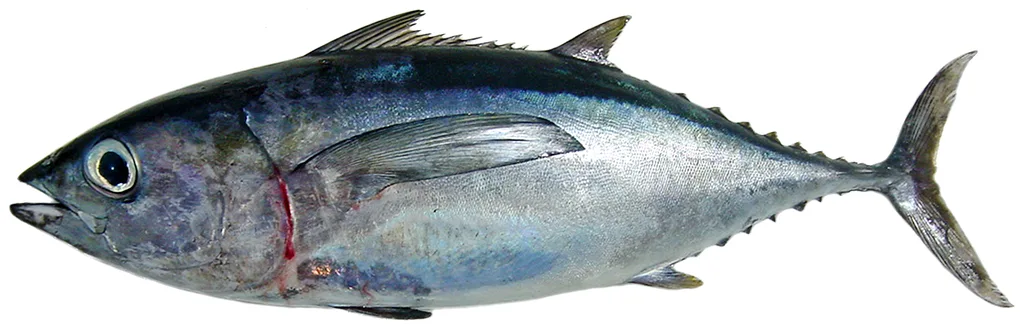
Identifying features
- Dark metallic back separated from the white belly by a clean line; no stripes or bars on the belly
- Short pectoral fins that do NOT reach the second dorsal fin — the key separator from other small tunas
- Fins are dusky, and the finlets behind the dorsal and anal fins are dark-centred, not fully black
- Torpedo tuna body, smaller and slimmer than skipjack
- Look-alike: skipjack tuna have bold black horizontal stripes on the lower belly; blackfin bellies are plain white
Habits
- Schools over reef edges, wrecks and ledges, often mixed with skipjack tuna
- Feeds on small fish, squid and shrimp — frigate birds and surface splashes give the schools away
- A dawn specialist: the bite frequently fires at first light and fades by mid-morning
- Migrates along the Atlantic coast and through the Gulf with water temperature
Distribution
Where to find them
- The humps and reef edges off Islamorada and Key West
- Gulf Stream edges and weed lines off southeast Florida
- Northern Gulf ledges and oil rigs in summer
Where they live
How to catch them
Trolling feathers at dawn
Rig: Small feather lures trolled 6-8 knots along rips and reef edges
Bait/lure: Feathers in green, pink or black/red
Key tip: Be on the spot before sunrise; the first hour is the blackfin hour.
Live-chumming the school
Rig: Light conventional gear, small circle hook through the bait's nose
Bait/lure: Live pilchards, with freebies thrown to hold the school
Key tip: Keep a trickle of live chum going and drift your bait back with it — no weight.
Best baits & lures
Baseline setup
- Rod: 6'6"-7' medium conventional or heavy spinning rod
- Line: 20-30 lb mono or braid
- Terminal: Feathers, cedar plugs, small circle hooks for live bait
Recommended gear for this species
Rod · Best value
9' 5-weight fly rod outfit
≈ US$180-260
Covers chironomid lakes and small rivers with one setup.
Flies · Budget
Chironomid assortment (30 patterns)
≈ US$25-40
Chironomids are 60% of a lake rainbow's diet in spring.
Picks come from our rule library — never paid placements. Prices are guides; affiliate links may earn us a commission.
Typical size
Common 5-15 lb; large specimens 25-35 lb
On the table
The best-eating of the small tunas — dark red loin meat, far richer than skipjack; sear it rare or use it fresh.
Similar species
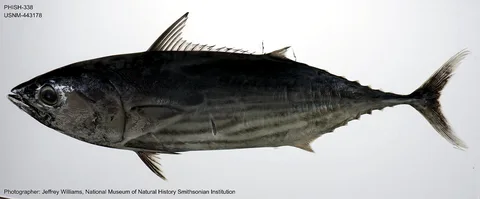 Skipjack TunaSkipjack have 4-6 bold black stripes running along the white lower belly; blackfin have an unmarked white belly and dusky finlets
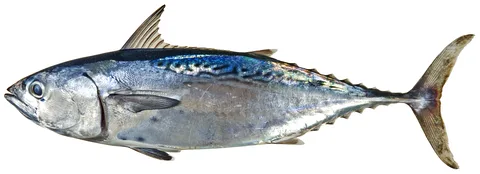 Little TunnyLittle tunny (false albacore) wear a marbled 'worm' pattern on the back and scattered fingerprint spots below the pectoral fin; blackfin backs are plain dark
Regulations vary by area and can change in-season — always check the official rules for your area before you fish. Regulations guide →
Plan a trip for Blackfin Tuna
Build today's plan