
Freshwater · Spring and summer; bedding season is prime
Bluegill
Lepomis macrochirus
The classic beginner's panfish: abundant, willing and surprisingly strong on light tackle. Bluegill nest in colonies on shallow flats in spring and guard the beds aggressively.
Seasons · Peak
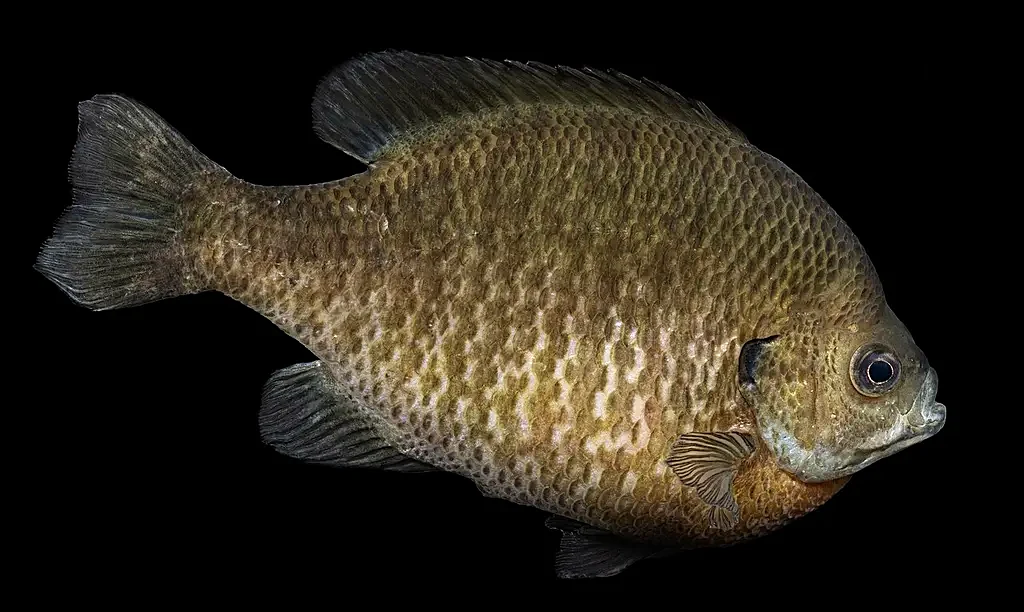
Identifying features
- Deep, disc-shaped body with a small mouth
- Dark blue-black ear flap (opercular flap) with no pale edge
- Blue and purple sheen on the cheek and lower jaw — the source of the name
- Faint dark vertical bars on olive-green sides; orange-yellow breast on males
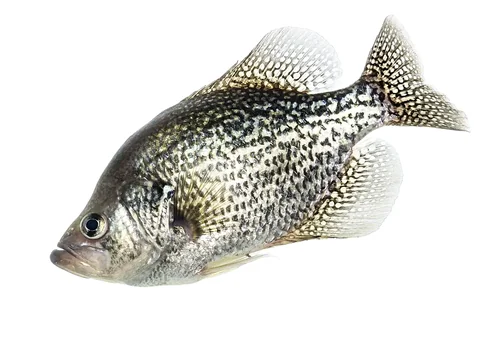
- Look-alike: black crappie is larger and mottled black with a much bigger, thin mouth
Habits
- Lives in loose groups around shallow cover
- Feeds by day on insects, larvae and small crustaceans
- Builds and guards saucer-shaped nests in colonies in spring
- Bigger fish hold deeper, just off the bedding flats
Distribution
Where to find them
- Shallow sandy bedding flats in late spring, from shore or boat
- Dock pilings and weed pockets in 3-8 ft
- Lily-pad and reed edges on small lakes and ponds
- Deeper weed edges near the bedding flats for larger fish
Where they live
How to catch them
Float and worm
Rig: Small fixed float, split shot and a size 8-10 hook
Bait/lure: Worm pieces, crickets, small grubs
Key tip: Fish it just off the weed edge. Small hooks — bluegill nip big baits to pieces.
Small poppers on a fly rod
Rig: Tiny foam popper or spider on a 3-4 weight fly rod
Bait/lure: Foam spiders and small poppers
Key tip: Evenings over the beds in summer are non-stop action.
Best baits & lures
Baseline setup
- Rod: 5-6 ft ultralight spinning rod or light fly rod
- Line: 4 lb mono
- Terminal: Size 8-10 hooks, small floats, split shot
Recommended gear for this species
Rod · Best value
9' 5-weight fly rod outfit
≈ US$180-260
Covers chironomid lakes and small rivers with one setup.
Flies · Budget
Chironomid assortment (30 patterns)
≈ US$25-40
Chironomids are 60% of a lake rainbow's diet in spring.
Picks come from our rule library — never paid placements. Prices are guides; affiliate links may earn us a commission.
Typical size
Common 6-9 in, under 1 lb; large fish 1 lb+
On the table
Excellent — sweet white flesh; a classic panfish fry.
Similar species
Regulations vary by area and can change in-season — always check the official rules for your area before you fish. Regulations guide →
Plan a trip for Bluegill
Build today's plan