Saltwater · Present year-round in the south; peak late spring through early fall
Greater Amberjack
Seriola dumerili
The reef donkey of the Atlantic and Gulf — greater amberjack hold over deep structure and pull harder, pound for pound, than almost anything on the reef. Live baits and fast jigs draw brutal strikes, and the first run decides the fight.
Seasons · Peak
Identifying features
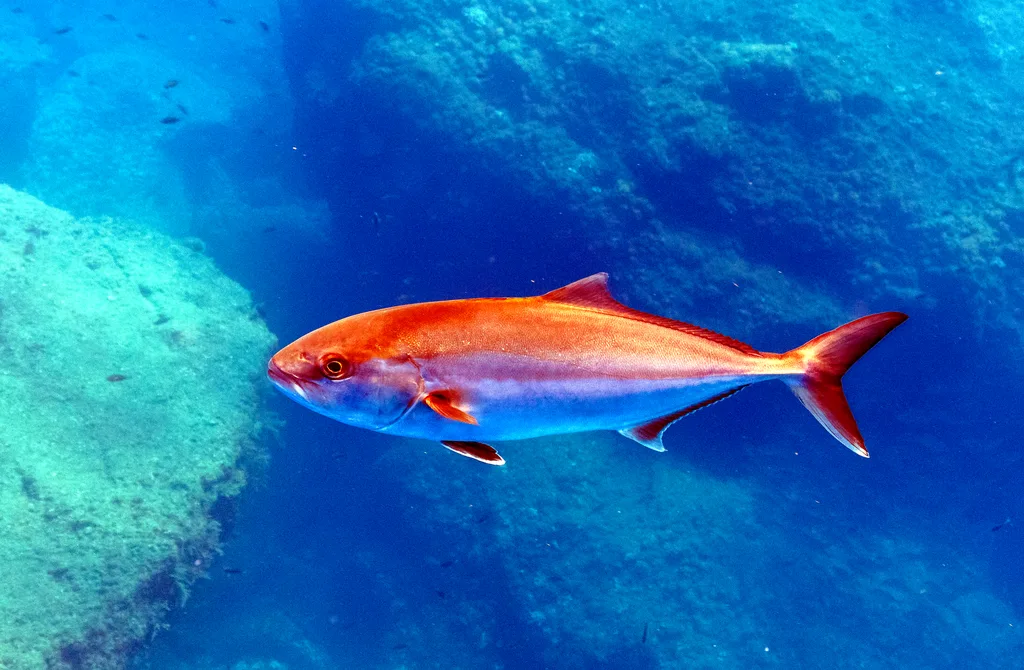
- Deep, blunt-headed jack with a dark amber-brown band running from the snout through the eye to the tail
- Olive to brownish back fading to silvery-white below, often with an amber lateral stripe
- Short dorsal fin and a deeply forked tail with dark margins
- Thick, muscular shoulders — the build that earned the nickname reef donkey
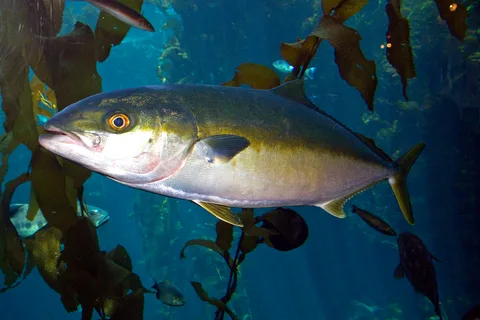
- Look-alike: California yellowtail are Pacific fish with a bright yellow tail and stripe; amberjack are Atlantic and Gulf fish with a dark eye band and a browner body
Habits
- Holds over reefs, wrecks, rigs and ledges in 60-300 ft, often high in the water column above structure
- Feeds aggressively on baitfish, squid and crabs, charging baits well off the bottom
- Smaller fish school tightly; the largest fish are often solitary or in small groups
- Fights straight down for the structure — most fish are won or lost in the first seconds
Distribution
Where to find them
- Offshore wrecks, reefs and oil platforms off Florida and the northern Gulf
- Deep ledges and humps off the Carolinas and Georgia in 80-200 ft
- The Florida Keys reef edge and the humps off Marathon and Islamorada
- Live-bottom areas and artificial reefs off Louisiana and Texas
Where they live
How to catch them
Live-baiting over structure
Rig: Heavy bottom or free-lined outfit, 80 lb leader, 7/0-9/0 circle hook
Bait/lure: Live pinfish, blue runners or cigar minnows
Key tip: Drop to mid-depth over the mark, not right on the bottom. Lock the drag down and move the fish away from the wreck at once.
Vertical jigging
Rig: 6-10 oz vertical jig on a heavy jigging rod, assist hooks on top
Bait/lure: Long metal jigs in pink, silver and glow
Key tip: Rip the jig up 20-30 ft and drop it back. Amberjack often hit on the fall — stay tight.
Best baits & lures
Baseline setup
- Rod: 6-7 ft jigging or bottom rod, heavy
- Line: 65-80 lb braid
- Terminal: Circle hooks 7/0-9/0, 80 lb leaders, vertical jigs
Recommended gear for this species
Rod · Best value
9' 5-weight fly rod outfit
≈ US$180-260
Covers chironomid lakes and small rivers with one setup.
Flies · Budget
Chironomid assortment (30 patterns)
≈ US$25-40
Chironomids are 60% of a lake rainbow's diet in spring.
Picks come from our rule library — never paid placements. Prices are guides; affiliate links may earn us a commission.
Typical size
Common 15-40 lb; large specimens 60-100 lb and up
On the table
Good — firm, meaty flesh, best from smaller fish; larger fish are stronger-flavoured and superb smoked.
Similar species
Regulations vary by area and can change in-season — always check the official rules for your area before you fish. Regulations guide →
Plan a trip for Greater Amberjack
Build today's plan