
Freshwater · Spring and fall peaks; summer schools chase shad on open water
Hybrid Striped Bass (Wiper)
Morone saxatilis × chrysops
The wiper — a hatchery cross of striper and white bass stocked across plains and southern reservoirs, famous for pack-hunting shad and drag-pulling fights. Find the shad boils at dawn and the action is as fast as freshwater fishing gets.
Seasons · Peak
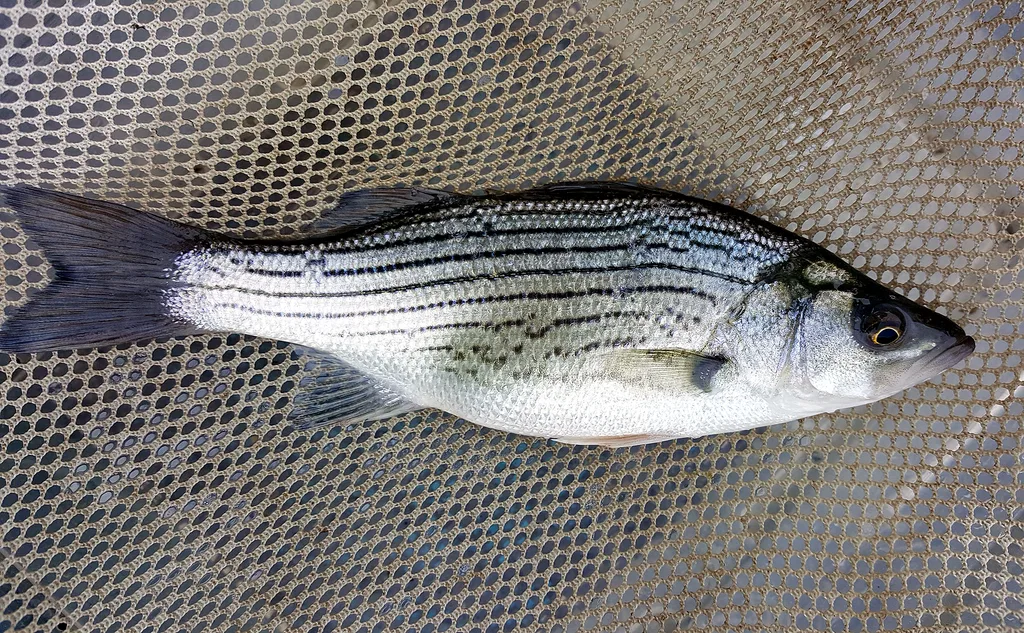
Identifying features
- A stocked cross of striped bass and white bass: deep, compressed, silvery body, deeper than a pure striper
- Dark horizontal stripes, with several lower stripes BROKEN and offset — the hybrid signature
- Two separate tooth patches on the tongue, versus the single patch of a white bass
- Head and mouth are larger than a white bass, the back more humped than a striper
- Look-alike: white bass are smaller with faint, mostly unbroken stripes; pure striped bass are longer and leaner with bold, unbroken stripes
Habits
- A stocked, sterile hybrid that cannot reproduce — numbers depend entirely on hatchery plants
- Roams open water in packs, herding shad schools to the surface in summer feeding frenzies
- Runs up reservoir tributaries and below dams on false spawning runs in spring
- Feeds hardest at dawn, dusk and on windy, overcast days
Distribution
Where to find them
- Open-water humps and flats of Kansas, Oklahoma and Texas reservoirs
- Below tailwater dams and along current seams in spring
- Wind-blown main-lake points where shad stack up
- Surface boils over deep water at dawn in summer
Where they live
How to catch them
Casting to surface schools
Rig: Medium spinning or casting outfit, spoon, jig or topwater plug cast into the boil
Bait/lure: Chrome spoons, 1 oz jigs, topwater plugs
Key tip: Do not run the boat into the school. Stop at casting range, match the shad size, and keep a second rod rigged.
Live shad over humps
Rig: Free-lined or balloon-rigged live shad over main-lake humps and flats
Bait/lure: Live threadfin or gizzard shad
Key tip: Mark bait on the sounder, set baits at that depth, and stay ready — wiper packs sweep through fast.
Best baits & lures
Baseline setup
- Rod: 7 ft medium-heavy spinning or casting rod
- Line: 14-20 lb mono or 30 lb braid
- Terminal: Spoons, jigs, topwater plugs, live-bait hooks
Recommended gear for this species
Rod · Best value
7'3" medium-heavy casting rod
≈ US$100-150
One rod for jigs, Texas rigs and frogs — the bass workhorse.
Reel · Budget
7.1:1 baitcasting reel
≈ US$80-120
Fast retrieve for pitching and quickly taking up slack on hooksets.
Line · Budget
15 lb fluorocarbon (200 yd)
≈ US$18-25
Invisible in clear water, sensitive on rock, abrasion resistant.
Picks come from our rule library — never paid placements. Prices are guides; affiliate links may earn us a commission.
Typical size
Common 2-6 lb; large specimens 10-15 lb
On the table
Very good — firm white flesh like a striper; trim the dark red lateral strip for the mildest flavour.
Similar species
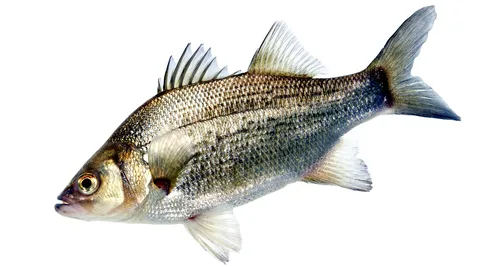 White BassWhite bass are smaller with faint, unbroken lower stripes and one tongue tooth patch; wipers are bigger and deeper with broken stripes
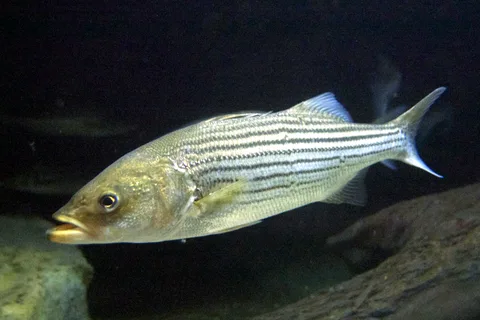 Landlocked Striped BassLandlocked stripers are longer and leaner with bold unbroken stripes and grow far larger; wipers are deeper-bodied with broken lower stripes
Regulations vary by area and can change in-season — always check the official rules for your area before you fish. Regulations guide →
Plan a trip for Hybrid Striped Bass (Wiper)
Build today's plan