Saltwater · Spring through fall; summer peak off Florida and in the Gulf
Mahi Mahi
Coryphaena hippurus
The fastest-growing fish in the ocean and one of the most colourful. Mahi gather under weed lines and floating debris, travel in schools, and strike trolled baits and cast lures with almost no hesitation.
Seasons · Peak
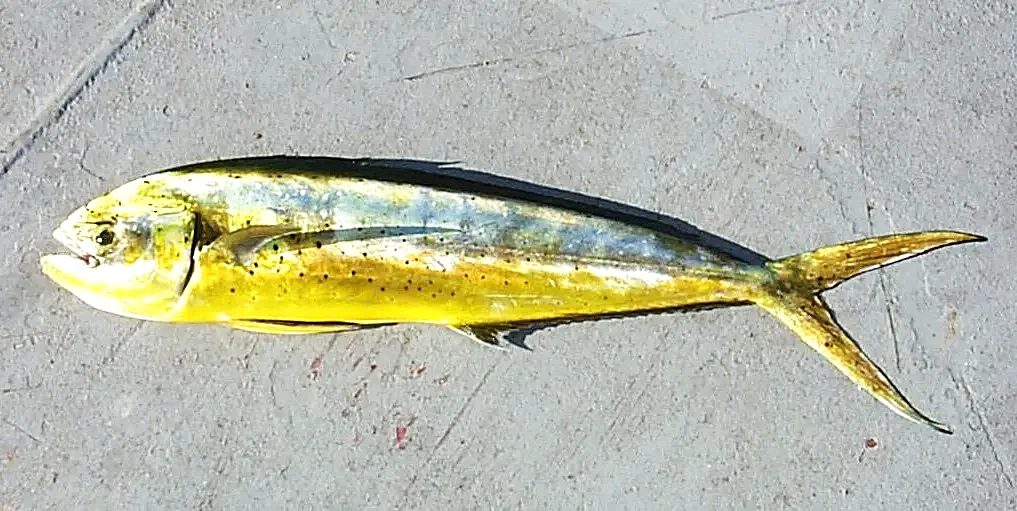
Identifying features
- Brilliant green, blue and gold colours that fade quickly after capture
- Blunt, steep forehead — high and squared on mature males (bulls)
- Long dorsal fin running from the head nearly to the tail
- Deeply forked tail and a thin, compressed body
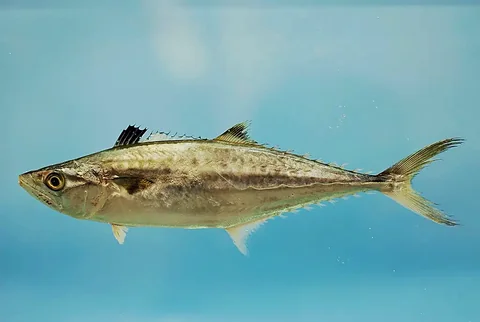
- Look-alike: king mackerel is long and silvery with sharp teeth and no blunt forehead
Habits
- Fast, surface-oriented predator of flying fish and bait schools
- Travels in schools, often under floating weed or debris
- Feeds aggressively by day and rarely hesitates at a bait
- Migrates with warm currents; follows temperature breaks offshore
Distribution
Where to find them
- Sargassum weed lines and current rips offshore
- Floating logs, pallets and debris — even small pieces hold fish
- Colour changes and temperature breaks in blue water
- Around offshore buoys and bait schools, by boat only
Where they live
How to catch them
Trolling weed lines
Rig: Small skirted lure or rigged ballyhoo trolled at 6-8 knots
Bait/lure: Ballyhoo, small feathers in blue/white and pink
Key tip: Troll the clean edge of the weed line, not through the middle of it.
Casting to school fish
Rig: Spinning rod with a small jig or a hook baited with a chunk
Bait/lure: Cut bonito or squid chunks, small bucktails
Key tip: Keep one hooked fish in the water beside the boat — the school stays with it.
Best baits & lures
Baseline setup
- Rod: 7 ft medium-heavy spinning or 20 lb trolling rod
- Line: 20-30 lb mono or braid
- Terminal: Skirted lures, ballyhoo rigs, 40-50 lb leader
Recommended gear for this species
Rod · Best value
9' 5-weight fly rod outfit
≈ US$180-260
Covers chironomid lakes and small rivers with one setup.
Flies · Budget
Chironomid assortment (30 patterns)
≈ US$25-40
Chironomids are 60% of a lake rainbow's diet in spring.
Picks come from our rule library — never paid placements. Prices are guides; affiliate links may earn us a commission.
Typical size
Common 5-15 lb; large bulls 30-40 lb+
On the table
Excellent — firm, mild white flesh; a top grilling fish.
Similar species
Regulations vary by area and can change in-season — always check the official rules for your area before you fish. Regulations guide →
Plan a trip for Mahi Mahi
Build today's plan