Saltwater · Year-round; famous spawning aggregations in late spring and summer
Mutton Snapper
Lutjanus analis
The wary heavyweight of the snapper family — mutton snapper haunt Keys reef edges, demand light leaders and natural baits, and reward patience with some of the best fillets in Florida.
Seasons · Peak
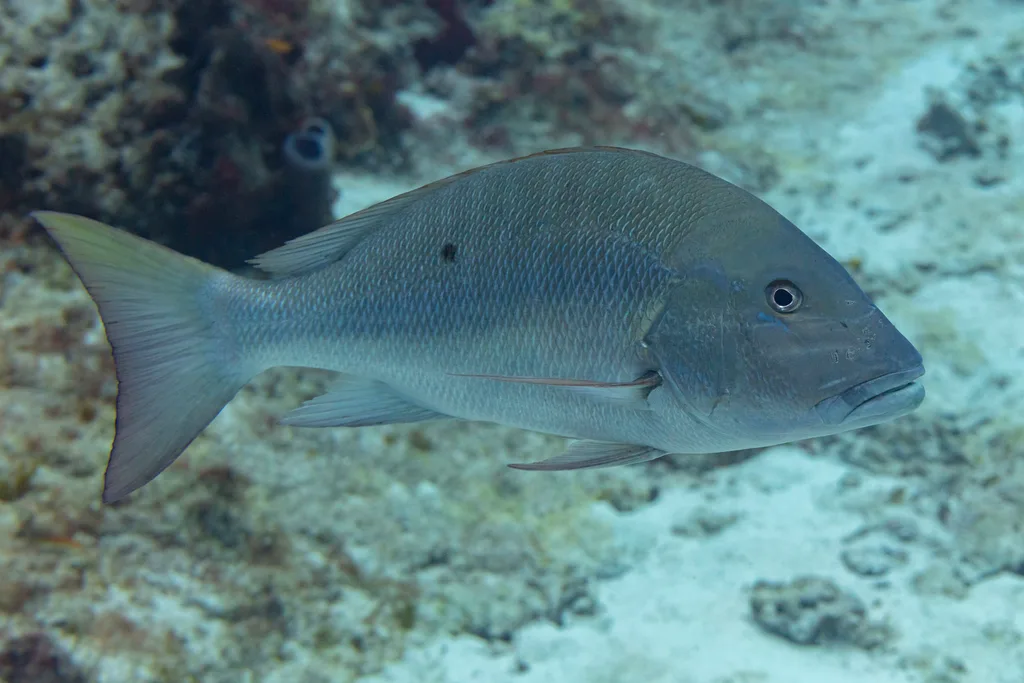
Identifying features
- A distinct black spot on the upper side below the soft dorsal fin, about two-thirds back
- Pointed anal fin — uniquely sharp and triangular among Atlantic snappers
- Olive-green back with reddish fins; spawning fish turn a deep salmon-pink
- Blue-green streaks and bars pattern the head and upper body of adults
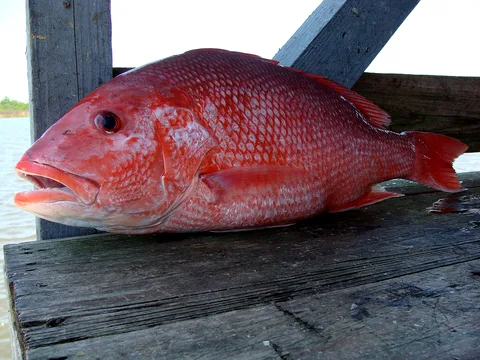
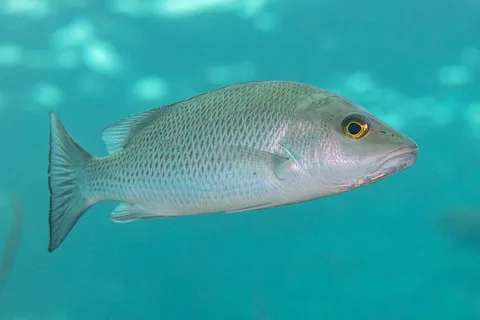
- Look-alike: lane snapper (not in this guide) and red snapper are plainer below the dorsal; the spot plus pointed anal fin identify a mutton
Habits
- A wary reef fish — big muttons are notoriously tackle-shy and leader-shy
- Juveniles live over inshore grass beds; adults move to reef edges and wrecks in 60-160 ft
- Gathers in spawning aggregations on specific reef points in late spring, a famous Florida Keys event
- Feeds on shrimp, crabs and small fish, mostly in low light and at night
Distribution
Where to find them
- Reef edges, patch reefs and wrecks off the Florida Keys and Dry Tortugas
- The reef line on Florida's Atlantic coast in 60-120 ft
- Hard-bottom areas in the eastern Gulf off southwest Florida
Where they live
How to catch them
Bottom fishing with light leaders
Rig: Knocker rig or fish-finder rig, 30-40 lb fluorocarbon — as light as the reef allows
Bait/lure: Live pinfish, pilchards or fresh cut ballyhoo
Key tip: Muttons inspect baits; long, light leaders and a natural drift out-catch heavy tackle.
Night fishing the reef
Rig: Free-line or light egg-sinker rig fished with the current
Bait/lure: Fresh shrimp, goggle-eyes, ballyhoo plugs
Key tip: Anchor up-current of the reef edge and let baits sweep back naturally in the dark.
Best baits & lures
Baseline setup
- Rod: 7' medium conventional or spinning rod
- Line: 20-30 lb braid or mono
- Terminal: 30-40 lb fluorocarbon leaders, knocker rigs, circle hooks
Recommended gear for this species
Rod · Best value
9' 5-weight fly rod outfit
≈ US$180-260
Covers chironomid lakes and small rivers with one setup.
Flies · Budget
Chironomid assortment (30 patterns)
≈ US$25-40
Chironomids are 60% of a lake rainbow's diet in spring.
Picks come from our rule library — never paid placements. Prices are guides; affiliate links may earn us a commission.
Typical size
Common 2-8 lb; large specimens 15-28 lb
On the table
Excellent — among the finest snappers; firm, sweet, pink-tinged fillets.
Similar species
Regulations vary by area and can change in-season — always check the official rules for your area before you fish. Regulations guide →
Plan a trip for Mutton Snapper
Build today's plan