
Saltwater · Winter best from piers; November to March in New England harbours, schools offshore year-round
Atlantic Herring
Clupea harengus
The great schooling forage fish of the Northwest Atlantic, averaging larger than its Pacific herring counterpart. 'Sardine' is a trade name only — canned young Atlantic herring were the basis of Maine's old sardine industry. Immense schools feed cod, tuna, seabirds and whales as well as anglers' bait freezers.
Seasons · Peak
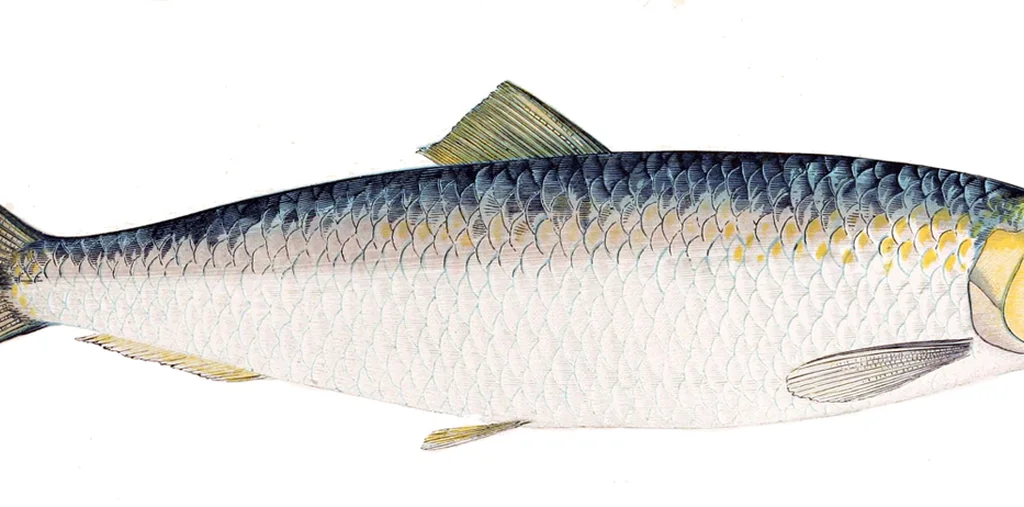
Identifying features
- Slender, strongly silvery body with a blue-green to dark back
- Single short dorsal fin set near the middle of the body
- Deeply forked tail and a slightly protruding lower jaw
- Soft, easily shed scales and a smooth, keel-free belly edge
- Averages larger than Pacific herring, commonly over 10 in (25 cm) as an adult
Habits
- Travels in huge, tightly packed schools that move between offshore banks and the coast
- Feeds on plankton, krill and small crustaceans, often near the surface at dawn and dusk
- Spawns on gravel banks, with major runs in late summer and autumn in the Gulf of Maine
- Moves into harbours and against pier walls in cold months, drawing winter anglers
- A keystone forage fish — where herring gather, striped bass, cod and tuna follow
Distribution
Where to find them
- Maine harbour piers and breakwaters in winter
- New England harbour walls and jetties on winter evenings
- Gulf of Maine schooling water over banks and ledges from boats
Where they live
How to catch them
Sabiki rigs from winter piers Shore
Rig: A multi-hook sabiki rig with a small sinker or jig at the bottom, jigged gently from piers and harbour walls
Bait/lure: Bare sabiki flies (no bait needed)
Key tip: Fish cold evenings under harbour lights — keep the rig moving slowly and expect several fish on at once.
Diamond jigs over schools from boats Boat
Rig: Small diamond jig or feather rig dropped through marked schools over banks and ledges
Bait/lure: Small diamond jigs, feather rigs
Key tip: Watch the sounder — drop to the school's depth, jig with short lifts, and keep caught fish for bait or the table quickly on ice.
Best baits & lures
Baseline setup
- Rod: Light 6-7 ft spinning rod
- Line: 6-10 lb mono or braid
- Terminal: Sabiki rigs, small diamond jigs, 1-2 oz sinkers
Recommended gear for this species
Rod · Best value
9' 5-weight fly rod outfit
≈ US$180-260
Covers chironomid lakes and small rivers with one setup.
Flies · Budget
Chironomid assortment (30 patterns)
≈ US$25-40
Chironomids are 60% of a lake rainbow's diet in spring.
Picks come from our rule library — never paid placements. Prices are guides; affiliate links may earn us a commission.
Typical size
Common 9-14 in (23-36 cm); large fish to about 18 in (46 cm)
On the table
Good — oily and full-flavoured; pickled, smoked or grilled, and widely canned as 'sardines' when young.
Similar species
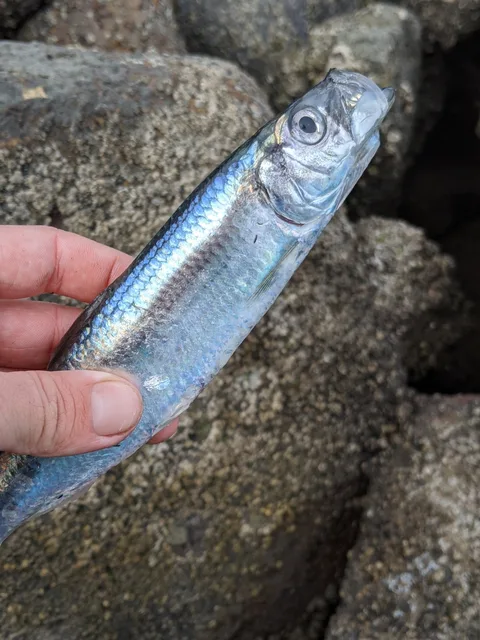 Pacific HerringPacific herring is the Pacific-coast species and averages smaller; Atlantic herring is a Northwest Atlantic fish that commonly grows larger
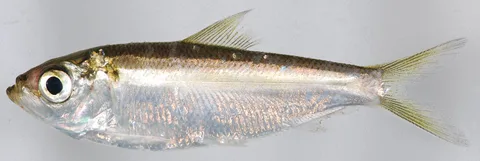 AlewifeAlewife is deeper-bodied with a dark shoulder spot and a serrated belly keel, and runs into fresh water to spawn; Atlantic herring is slimmer, spotless and purely marine
Regulations vary by area and can change in-season — always check the official rules for your area before you fish. Regulations guide →
Plan a trip for Atlantic Herring
Build today's plan