
Saltwater · Late spring through autumn
Ballan Wrasse
Labrus bergylta
The rock and kelp specialist of Europe's Atlantic coasts — thick-lipped, strong-toothed and dressed in colours from emerald to rust-red. A punchy fighter on light tackle that knows exactly where the next ledge is.
Seasons · Peak
Identifying features
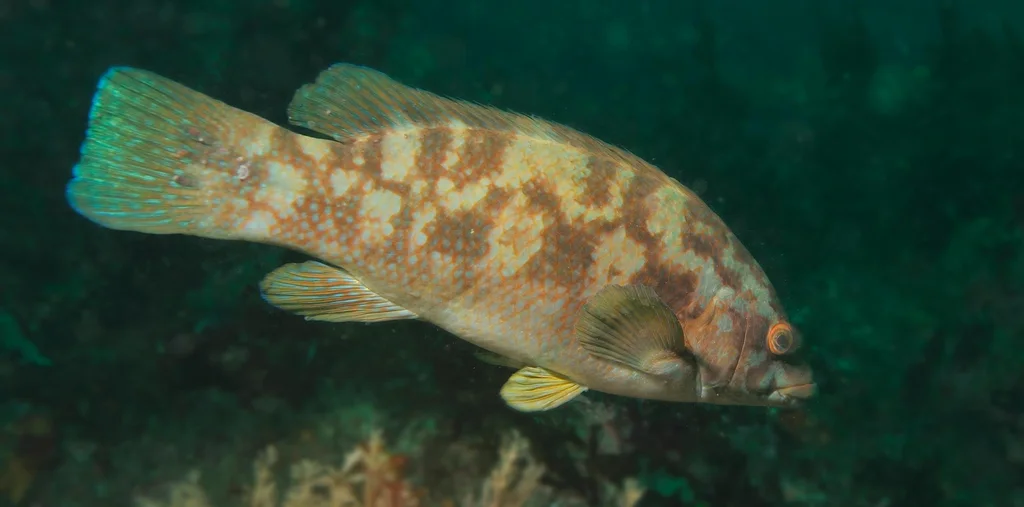
- Thick fleshy lips and strong, protruding front teeth built for picking shellfish off rock
- Colour is wildly variable — green, brown, red or orange — often with pale marbling
- Long dorsal fin with a spiny front section, running most of the back
- Deep, stocky body covered in large, thick scales
- Males are usually the biggest fish, often blue-green around the head in spawning season
Habits
- All ballan wrasse start life as females and the largest, oldest fish become male — a protogynous sex change with age
- Colour follows the ground and the fish: reef fish run green and brown, others turn orange and red
- Builds and defends a small nest among rocks in spring
- Crushes crabs and shellfish with strong throat teeth after the front teeth nip them off the rock
- Feeds by day; at dusk it wedges into a rock crevice and sleeps, so dawn and daylight are the fishing times
Distribution
Where to find them
- Kelp reefs of Cornwall, western Ireland and Brittany
- Deep-water rock ledges of the Channel Islands and Scotland
- Harbour breakwaters and rock gullies of the French Atlantic coast
Where they live
How to catch them
Float fishing over kelp reefs Rock fishing
Rig: Medium rod with a stout float holding the bait just over the kelp, size 1/0-2/0 hook with peeler crab or mussel, fished straight off rock ledges
Bait/lure: Peeler crab or mussel meat
Key tip: Keep the bait just above the kelp and lift instantly — a ballan dives into the rock within seconds of biting.
Fixed ledgering in rock gullies Shore
Rig: One-hook rig with the lead on a weak rotten-bottom link, cast from the shore into gullies and holes
Bait/lure: Lugworm and crab
Key tip: Budget for lost tackle — fish right over rock, kelp and holes where the fish live, with rotten-bottom leads.
Best baits & lures
Baseline setup
- Rod: 9-11 ft medium-heavy rock rod
- Line: 20-30 lb braid or mono over rough rock, with a weak-link rotten bottom
- Terminal: Short pulley or one-hook clipped rigs, size 1/0-3/0 strong hooks, plain leads on rotten bottoms
Recommended gear for this species
Rod · Best value
9' 5-weight fly rod outfit
≈ US$180-260
Covers chironomid lakes and small rivers with one setup.
Flies · Budget
Chironomid assortment (30 patterns)
≈ US$25-40
Chironomids are 60% of a lake rainbow's diet in spring.
Picks come from our rule library — never paid placements. Prices are guides; affiliate links may earn us a commission.
Typical size
Common 12-18 in (30-45 cm) and 1-4 lb (0.45-1.8 kg); large fish to 22 in (55 cm) and 9 lb (4 kg)+
On the table
Good — firm, sweet white flesh, best from clean rocky ground; a rated food fish in France.
Similar species
Regulations vary by area and can change in-season — always check the official rules for your area before you fish. Regulations guide →
Plan a trip for Ballan Wrasse
Build today's plan