
Saltwater · Year-round in the tropics; most active at dawn, dusk and night.
Bigeye Trevally
Caranx sexfasciatus
A wide-ranging Indo-Pacific trevally that also spans Pacific Mexico and Central America (noted here for its full range). Famous for dense daytime schools over reefs and aggressive feeding at dusk and at night.
Seasons · Peak
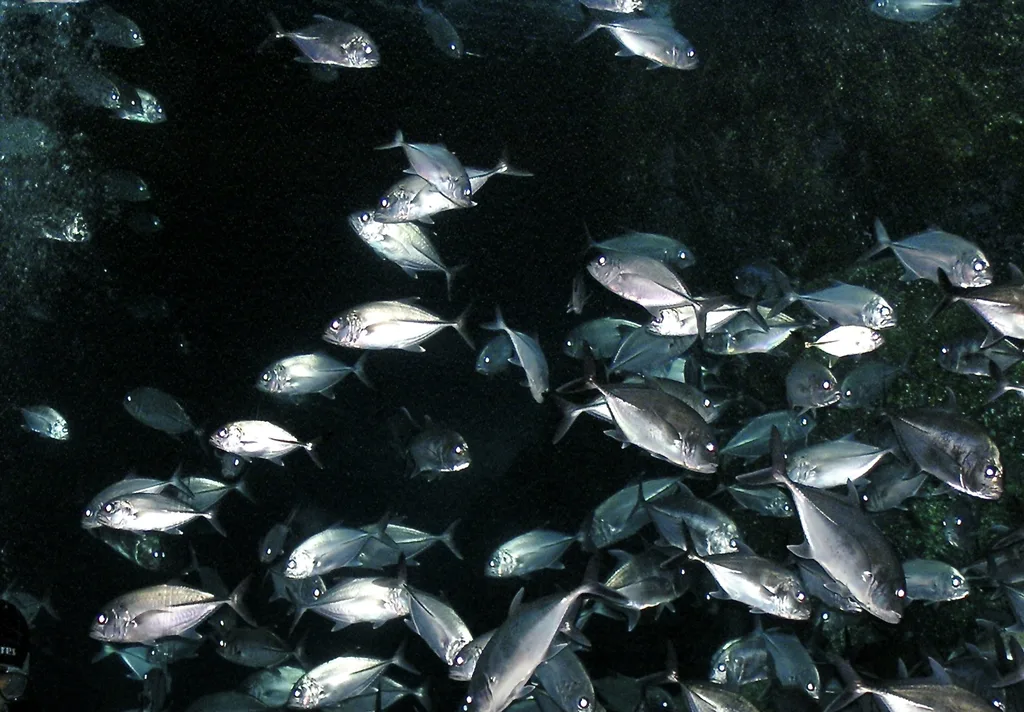
Identifying features
- Very large eye with a thick adipose eyelid
- Six dark bars on juveniles, fading in adults
- Dark spot on the upper gill cover
- Second dorsal and anal fin lobes elongated, dark-tipped
- Steep head and deep, compressed body
Habits
- Forms dense, slow schools over reefs by day
- Disperses to hunt at dusk and at night
- Juveniles enter estuaries and even rivers
- Feeds on small fish and crustaceans
Distribution
Where to find them
- Reef edges and points off the mainland Pacific coast
- River mouths in Costa Rica and Panama
- Rocky headlands in the Sea of Cortez
- Night structure — bridges, piers and lit docks
Where they live
How to catch them
Jigging reef edges Boat
Rig: Vertical jig or soft plastic worked along reef edges at dawn and dusk
Bait/lure: Metal jig or swimbait
Key tip: Work the first and last light when schools break up to feed.
Live-baiting river mouths Boat
Rig: Free-lined or float-fished live bait at estuary mouths
Bait/lure: Small live fish
Key tip: Fish the tide change when trevally push into the mouth to hunt.
Night casting at structure Shore
Rig: Medium spinning rod, swimbait or jig around lit structure
Bait/lure: Soft-plastic swimbait
Key tip: Cast into shadow lines at night when bigeyes hunt shrimp and baitfish.
Best baits & lures
Baseline setup
- Rod: 7-7.5 ft medium-heavy spinning rod
- Line: 30-40 lb braid
- Terminal: 40-60 lb mono/fluorocarbon leader
Recommended gear for this species
Rod · Best value
9' medium-heavy surf spinning rod
≈ US$110-170
Casts plugs and bait past the breakers and handles stripers, drum and bluefish in the wash.
Reel · Best value
5000 size sealed spinning reel
≈ US$120-180
Salt spray and dunkings kill cheap reels — a sealed body and 30 lb braid capacity are the surf standard.
Terminal · Budget
Topwater plugs, soft-plastic jigs and fish-finder rigs
≈ US$25-40
Plugs for blitzes, jigs for the trough, bait on a fish-finder rig when they won't chase — the inshore trio.
Picks are never paid placements. Prices are guides; price links are coming soon and none is an affiliate link yet.
Typical size
Common 40-60 cm; large specimens to 120 cm and 18 kg.
On the table
Fair to good; darker flesh, best fresh or in ceviche.
Similar species
Regulations vary by area and can change in-season — always check the official rules for your area before you fish. Regulations guide →
Plan a trip for Bigeye Trevally
Build today's plan⚠ Heads-up: Bigeye Trevally doesn't occur around Vancouver, BC (or is very rare there), so it's not a sensible local target. Your plan stays in Vancouver, BC and is built around the fish that actually live there.