
Saltwater · Year-round in deep water; a deep-drop and commercial catch, not a seasonal inshore fish
Blackfin Goosefish
Lophius gastrophysus
The western Atlantic goosefish Lophius gastrophysus (FAO: blackfin goosefish) lives on soft slope bottoms at 200-700 m, luring fish to its cavernous mouth; it is mainly a trawl and deep-drop catch and a good food fish.
Seasons · Peak
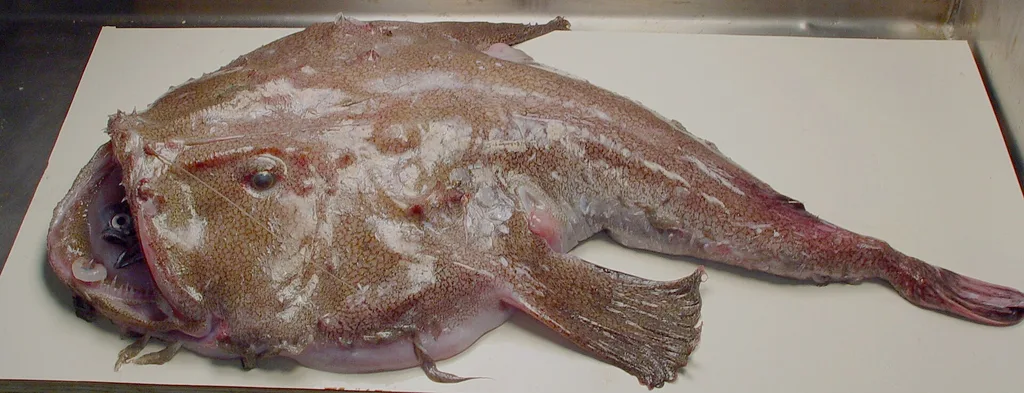
Identifying features
- Huge flattened head and cavernous mouth full of sharp teeth
- First dorsal spine modified into a fishing lure (illicium) over the mouth
- Black rear margin on the pectoral and anal fins — the 'blackfin' mark
- Tapered mottled brown body, well camouflaged on mud
- Much smaller than the northern American angler Lophius americanus
Habits
- Lies half-buried on soft bottoms and waves its lure to draw fish within strike range
- Feeds mainly on fishes
- Mostly at 200-700 m; shallower (from 40 m) only toward the north of its range
- Taken commercially by trawl and marketed fresh or frozen
Distribution
Where to find them
- Continental slope mud in 200-400 m off the shelf edge
- Deep-drop grounds shared with tilefish and deep groupers
- Soft-bottom channels on the upper slope
Where they live
How to catch them
Electric-reel deep-drop fishing Boat
Rig: Electric reel, 50-80 lb braid, multi-hook deep-drop (chicken) rig with 6/0-8/0 circle hooks and 3-5 lb lead
Bait/lure: Whole squid or bonito strips
Key tip: Fish soft slope bottom in 200-400 m on drift; monkfish come as valued bycatch on tilefish and grouper deep-drop grounds — keep baits hard on the bottom.
Manual deep bottom fishing Boat
Rig: Stout conventional reel, heavy braid, stiff multi-hook rig with crimped 150-200 lb mono
Bait/lure: Cut barracuda or tuna strips
Key tip: On shallower northern grounds (100-200 m) a manual reel is feasible; use tough fresh bait that survives the long drop.
Best baits & lures
Baseline setup
- Rod: Deep-drop bent-butt or stiff stand-up rod
- Line: 50-80 lb braid
- Terminal: 6/0-8/0 circle hooks, 150-200 lb mono rigs, 3-5 lb sash weights, deep-drop lights
Recommended gear for this species
Rod · Best value
7'6" medium-heavy jigging rod
≈ US$110-170
Works 2-6 oz jigs over rock and reef and still has the backbone to lift a halibut off the bottom.
Line · Budget
50 lb braid with 40 lb leader (200 yd)
≈ US$25-40
Thin braid cuts the current so jigs stay vertical; the leader shrugs off rock and teeth.
Terminal · Budget
Leadhead jigs, swimbaits and two-hook bottom rigs
≈ US$25-40
A leadhead with a swimbait tail is the universal bottom-fish catcher, from rockfish to cod to flounder.
Picks are never paid placements. Prices are guides; price links are coming soon and none is an affiliate link yet.
Typical size
Common to 45 cm; maximum 67.5 cm TL
On the table
Considered a good food fish; the tail flesh is the prized monkfish cut, marketed fresh or frozen.
Similar species
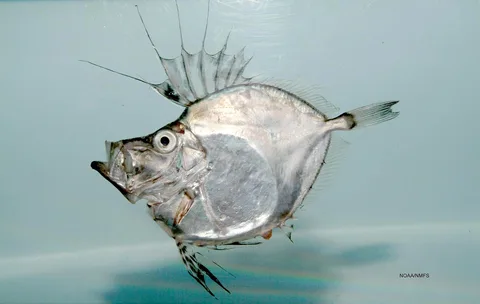 Silvery John DorySilvery John Dory is a thin, silvery deep-water fish with a dark mid-side spot; the American angler is a flattened brown bottom fish with a lure and a huge mouth
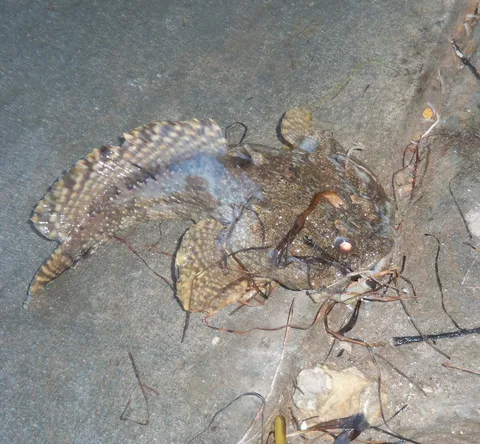 Gulf ToadfishGulf toadfish is a small inshore bay fish under 30 cm that grunts; the American angler is a deep-slope fish to 67 cm with a head lure
Regulations vary by area and can change in-season — always check the official rules for your area before you fish. Regulations guide →
Plan a trip for Blackfin Goosefish
Build today's plan⚠ Heads-up: Blackfin Goosefish doesn't occur around Vancouver, BC (or is very rare there), so it's not a sensible local target. Your plan stays in Vancouver, BC and is built around the fish that actually live there.