
Saltwater · Spring migration peaks off Florida from March to May; common inshore through summer in the Gulf and Southeast
Blacktip Shark
Carcharhinus limbatus
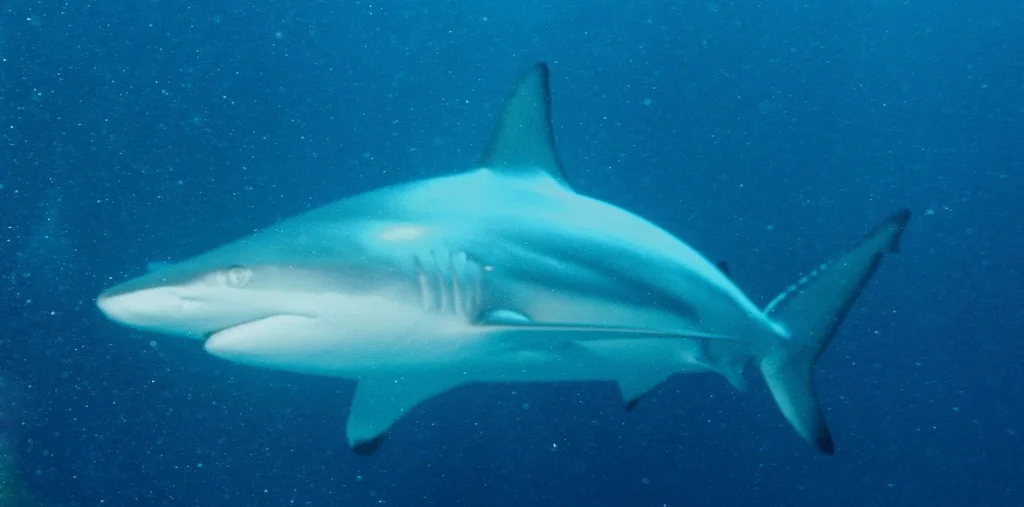
A fast, acrobatic coastal shark famous for the spring migration, when huge schools move along Florida beaches in plain sight. It is told from the very similar spinner shark by the anal fin: the spinner has a black tip on its anal fin, while the blacktip's anal fin is plain white with no black tip. Most anglers release blacktips after the fight.
Seasons · Peak
Identifying features
- Black tips on the pectoral fins, first dorsal fin and lower tail lobe
- Anal fin plain white with NO black tip — the key split from spinner shark, whose anal fin is black-tipped
- Stocky grey body, white belly and a faint pale band along the flank
- Long, pointed snout and no ridge between the dorsal fins
- Black markings are sharpest in young fish and can fade in large adults
Habits
- Migrates in large schools along the coast, following baitfish north in spring
- Feeds fast and hard on schooling fish such as menhaden, mullet and sardines
- Often leaps and spins out of the water when hooked, like its cousin the spinner shark
- Females give birth to live pups in shallow inshore nurseries in late spring and summer
- Mostly a catch-and-release sport fish — handle with care and release quickly
Distribution
Where to find them
- Florida Atlantic beaches during the spring migration, the classic blacktip spectacle
- Texas coast surf, passes and nearshore rigs in summer
- Carolinas and Georgia beaches, inlets and piers in warm months
Where they live
How to catch them
Surf and pier fishing on the spring migration Shore
Rig: Heavy surf or pier rod, fish-finder rig with an 8/0-10/0 circle hook on a short wire leader and cut bait, cast beyond the breakers during the spring migration
Bait/lure: Cut mullet, bonito or ladyfish
Key tip: Fish where birds and bait schools show along the beach — migrating blacktips travel with the bait.
Chumming and live-baiting from boats Boat
Rig: Medium-heavy boat rod, live bait free-lined or under a balloon behind a chum slick, on a wire leader with an 8/0-10/0 circle hook
Bait/lure: Live mullet or menhaden
Key tip: Keep the drag ready — a hooked blacktip often jumps and spins immediately, so give it room on the first run.
Best baits & lures
Baseline setup
- Rod: Heavy surf rod 10-12 ft or medium-heavy boat rod
- Line: 50-65 lb braid with heavy mono topshot
- Terminal: Wire leaders, 8/0-10/0 circle hooks, 4-8 oz sinkers for surf
Recommended gear for this species
Rod · Best value
9' 5-weight fly rod outfit
≈ US$180-260
Covers chironomid lakes and small rivers with one setup.
Flies · Budget
Chironomid assortment (30 patterns)
≈ US$25-40
Chironomids are 60% of a lake rainbow's diet in spring.
Picks come from our rule library — never paid placements. Prices are guides; affiliate links may earn us a commission.
Typical size
Common 4-6 ft (1.2-1.8 m), 30-70 lb (14-32 kg); large fish to about 8 ft (2.4 m) and over 200 lb (90 kg)
On the table
Good if bled and iced at once, but most anglers release blacktips; check current shark rules before keeping any.
Similar species
Regulations vary by area and can change in-season — always check the official rules for your area before you fish. Regulations guide →
Plan a trip for Blacktip Shark
Build today's plan