
Saltwater · Year-round over sandy bottoms of the Cortez and mainland coast.
Bullseye Puffer
Sphoeroides annulatus
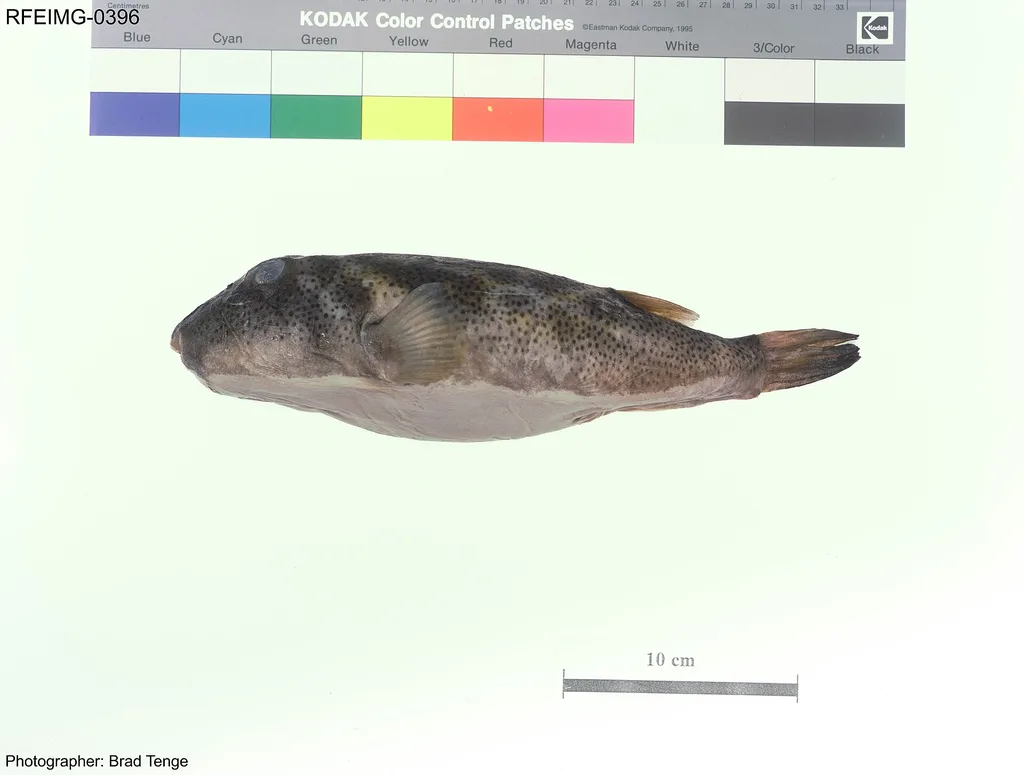
The botete diana — a common puffer of Cortez sand flats, marked by a bullseye ring on its back. Anglers catch it constantly on shrimp baits, but it must be handled and eaten with real caution (see edibility).
Seasons · Peak
Identifying features
- Concentric ring/bullseye pattern of dark markings on the back between the eyes and dorsal fin
- Inflates into a ball when threatened
- Tough leathery skin with small spines, no scales
- Beak-like fused teeth; mottled brown-olive back, pale belly
Habits
- Cruises sandy bottoms eating molluscs, crustaceans and urchins
- Juveniles use estuaries and lagoons as nurseries; adults neritic at 20–40 m
- Inflates with water or air as a defence
Distribution
Where to find them
- Sandy bays of the Sea of Cortez (Mazatlán, La Paz)
- Mainland estuaries and lagoon mouths
- Reef-adjacent sand flats down the mainland coast
Where they live
How to catch them
Light sandy-bottom bait Boat
Rig: Shrimp pieces on small hooks over sand
Bait/lure: Squid strips
Key tip: Fish sand flats and lagoon mouths; puffers find baits quickly — handle with care, no bare hands on the beak.
Lagoon shore bait Shore
Rig: Small shrimp bait in estuary channels
Bait/lure: Cut bait pieces
Key tip: A frequent shore catch in mainland lagoons; unhook carefully and release unless a qualified local cook will prepare it.
Best baits & lures
Baseline setup
- Rod: Light-medium 7 ft spinning rod
- Line: 15–20 lb line
- Terminal: Size 2–1/0 hooks, small sinkers; pliers for safe unhooking
Recommended gear for this species
Rod · Best value
7'6" medium-heavy jigging rod
≈ US$110-170
Works 2-6 oz jigs over rock and reef and still has the backbone to lift a halibut off the bottom.
Line · Budget
50 lb braid with 40 lb leader (200 yd)
≈ US$25-40
Thin braid cuts the current so jigs stay vertical; the leader shrugs off rock and teeth.
Terminal · Budget
Leadhead jigs, swimbaits and two-hook bottom rigs
≈ US$25-40
A leadhead with a swimbait tail is the universal bottom-fish catcher, from rockfish to cod to flounder.
Picks are never paid placements. Prices are guides; price links are coming soon and none is an affiliate link yet.
Typical size
To about 44–48 cm; landed fish commonly 200 g–2.2 kg in Mazatlán studies.
On the table
⚠ CAUTION: wild bullseye puffer tissues — especially liver, gonads, intestine and skin — can contain tetrodotoxin (and possibly saxitoxin), a potentially lethal poison with no antidote. Only ever eat it where an experienced local cook prepares it traditionally; otherwise release or discard — never experiment.
Similar species
Regulations vary by area and can change in-season — always check the official rules for your area before you fish. Regulations guide →
Plan a trip for Bullseye Puffer
Build today's plan⚠ Heads-up: Bullseye Puffer doesn't occur around Vancouver, BC (or is very rare there), so it's not a sensible local target. Your plan stays in Vancouver, BC and is built around the fish that actually live there.