
Saltwater · Year-round in the Florida Keys, Bahamas and Caribbean; best in warm, clear water.
Caesar Grunt
Haemulon carbonarium
A boldly striped Caribbean grunt of clear reef water, often in mixed schools with other grunts. Its dark stripes and black tail spot make it one of the easier grunts to name.
Seasons · Peak
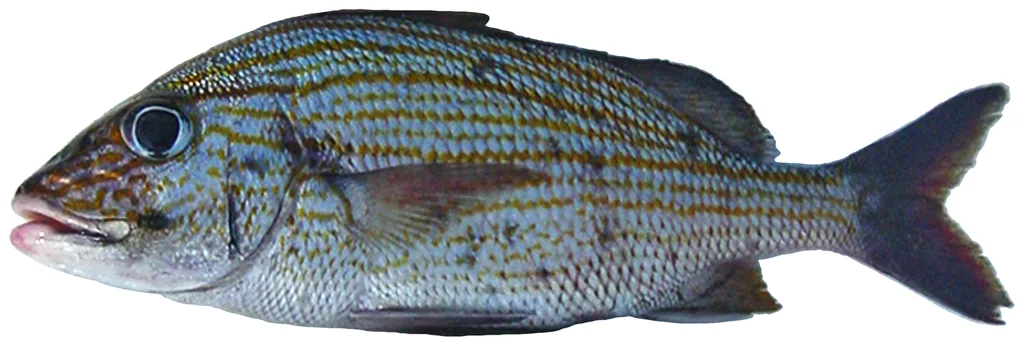
Identifying features
- Silvery body with several dark longitudinal stripes and a black spot at the base of the tail
- Fins are dusky
- Deep, laterally compressed body typical of its family
- Thick lips and a small to medium mouth suited to picking invertebrates
- Up to 36 cm; commonly 20-28 cm and under 1 kg.
Habits
- Schools over reefs by day, often mixed with French and bluestriped grunts
- Feeds at night on benthic invertebrates over sand and grass
- The middle body stripe curves down but fades before joining the lower stripe — a useful field mark
Distribution
Where to find them
- Clear patch reefs in the Florida Keys
- Bahamas and Cuba reef flats
- Caribbean reefs off Puerto Rico and the Dominican Republic
Where they live
How to catch them
Reef bottom fishing Boat
Rig: Fish-finder / knocker rig: egg sinker above a swivel, 30-60 cm fluorocarbon leader, #1-1/0 circle hook
Bait/lure: Small pieces of shrimp or squid
Key tip: Anchor up-current of a patch reef, keep the bait tight to the bottom and reel steadily on the bite instead of striking hard.
Chumming over patch reefs Boat
Rig: Light spinning tackle, small split shot and a #2-1/0 hook fished in the chum slick
Bait/lure: Tiny shrimp pieces or cut bait
Key tip: Hang a frozen chum block in a mesh bag and feed small baits back with the slick; grunts and porgies gather behind the boat.
Best baits & lures
Baseline setup
- Rod: Light to medium spinning rod 2.1-2.4 m
- Line: 10-20 lb braid or mono main line
- Terminal: 20-30 lb fluorocarbon leader, #2-1/0 circle hooks, egg or pyramid sinkers to hold bottom
Recommended gear for this species
Rod · Best value
7'6" medium-heavy jigging rod
≈ US$110-170
Works 2-6 oz jigs over rock and reef and still has the backbone to lift a halibut off the bottom.
Line · Budget
50 lb braid with 40 lb leader (200 yd)
≈ US$25-40
Thin braid cuts the current so jigs stay vertical; the leader shrugs off rock and teeth.
Terminal · Budget
Leadhead jigs, swimbaits and two-hook bottom rigs
≈ US$25-40
A leadhead with a swimbait tail is the universal bottom-fish catcher, from rockfish to cod to flounder.
Picks are never paid placements. Prices are guides; price links are coming soon and none is an affiliate link yet.
Typical size
Up to 36 cm; commonly 20-28 cm and under 1 kg.
On the table
Fair to good small food fish; like other Caribbean reef fish, heed local ciguatera advice.
Similar species
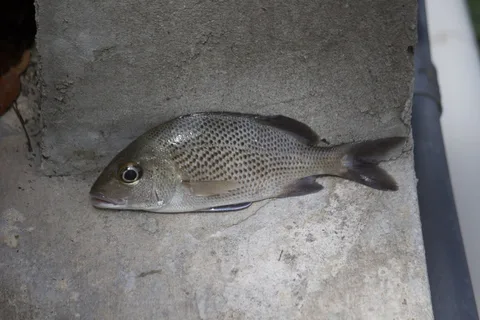
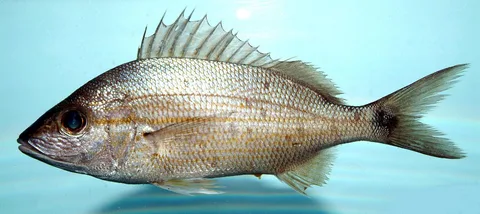
Regulations vary by area and can change in-season — always check the official rules for your area before you fish. Regulations guide →
Plan a trip for Caesar Grunt
Build today's plan⚠ Heads-up: Caesar Grunt doesn't occur around Vancouver, BC (or is very rare there), so it's not a sensible local target. Your plan stays in Vancouver, BC and is built around the fish that actually live there.