
Saltwater · Runs on spring and summer nights, March to August; taking is closed in spring — check the current CDFW schedule
California Grunion
Leuresthes tenuis
A small silvery fish famous for its 'grunion runs': on certain spring and summer nights, just after the highest tides, thousands ride waves right onto wet sand, lay and fertilise eggs in the sand, and ride the next wave back. In California grunion may be taken BY HAND ONLY — no tackle, nets or traps — during open season, with a fishing licence, and a closed season protects the peak spring spawning. Runs follow the moon and tide and are listed in the CDFW schedule; watching a run is the main event.
Seasons · Peak
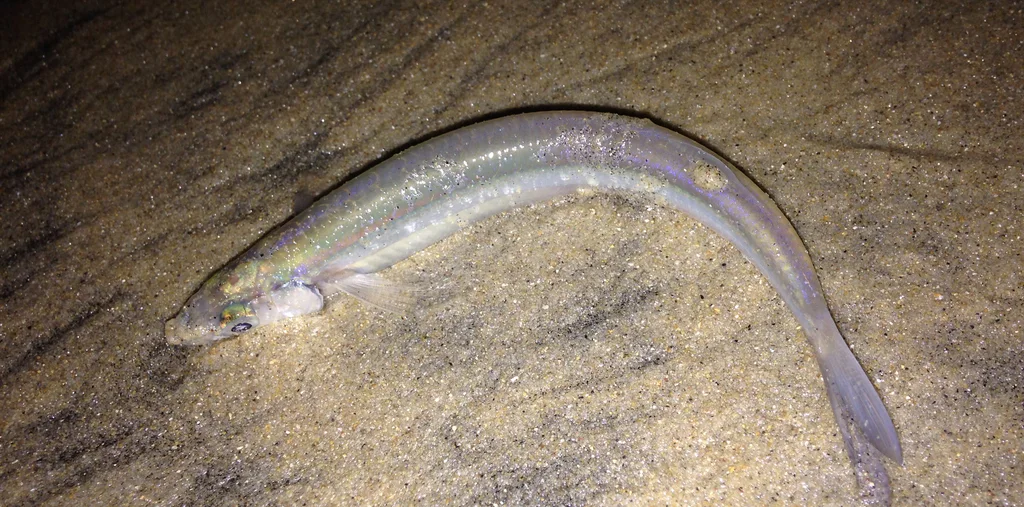
Identifying features
- Small, slender silvery fish with a blue-green back and a bright silver side stripe
- Deeply forked tail and a soft, small first dorsal fin set far back
- No scales on the head and a small, toothless, upturned mouth
- Usually 5-6 in (13-15 cm) long, delicate and almost translucent in a flashlight beam
- Comes fully out of the water onto wet sand to spawn — no other local fish does this
Habits
- Spawns on sand: the female digs tail-first into wet sand and lays eggs, males curl around her
- Runs happen on a few nights after new and full moons, just after the night's highest tide
- Eggs stay buried in the sand about 10 days and hatch when the next high tides wash them out
- By day, schools stay in shallow nearshore water just off the beaches
- Taking rules: hands only, licence required for age 16+, and a spring closed season — always check the current CDFW run schedule and rules
Distribution
Where to find them
- Open sandy beaches in Southern California on run nights
- Gentle, flat sandy beaches from Los Angeles to San Diego counties
- Beaches listed in the CDFW expected-run schedule
Where they live
How to catch them
Watching and timing a grunion run Shore
Rig: No tackle at all — a flashlight, a bucket for the beach, and the CDFW expected-run schedule for the nights after new and full moons
Bait/lure: None
Key tip: Arrive before the night's highest tide and wait quietly in the dark; runs start as the tide begins to fall, and bright lights and noise can put fish off.
Hand capture during an open-season run Shore
Rig: Hands only, as California law requires — no nets, traps, shovels or tackle; a valid fishing licence is required and the spring closed season must be respected
Bait/lure: None
Key tip: Pick up stranded fish by hand on the wet sand only during open season, take only what you will eat, and never dig for eggs.
Best baits & lures
Baseline setup
- Rod: None — no rod or tackle is allowed for grunion
- Line: None — hand capture only
- Terminal: None — a flashlight and bucket only; no nets or traps
Recommended gear for this species
Rod · Best value
9' 5-weight fly rod outfit
≈ US$180-260
Covers chironomid lakes and small rivers with one setup.
Flies · Budget
Chironomid assortment (30 patterns)
≈ US$25-40
Chironomids are 60% of a lake rainbow's diet in spring.
Picks come from our rule library — never paid placements. Prices are guides; affiliate links may earn us a commission.
Typical size
Common 5-6 in (13-15 cm); large to about 7 in (18 cm)
On the table
Good — mild small fish, eaten whole pan-fried where legally hand-taken; many people only watch the runs.
Similar species
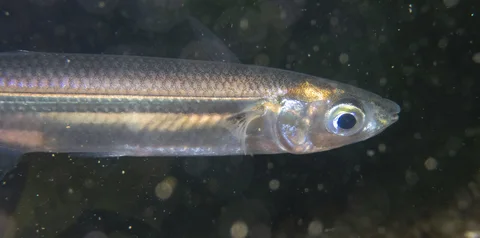 TopsmeltTopsmelt stays in bays and harbours, has a greenish back and a first dorsal fin above the pelvic fins, and never beaches itself; grunion spawns out of the water on open sandy beaches
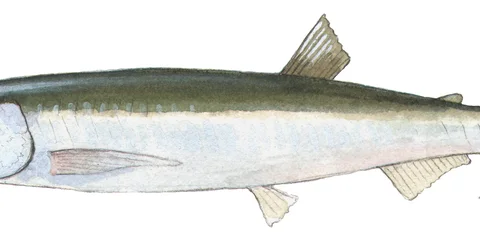 Night SmeltNight smelt is a northern surf fish with an adipose fin and small teeth, spawning in the surf wash; grunion has no adipose fin and lays eggs buried in dry sand above the waterline
Regulations vary by area and can change in-season — always check the official rules for your area before you fish. Regulations guide →
Plan a trip for California Grunion
Build today's plan