
Freshwater · Late spring through early autumn; summer nights best
Common Bream
Abramis brama
The common bream is the number one stillwater and slow-river fish of German lakes and canals. Its shoals graze silt beds at night for bloodworm, and a well-fed swim can produce for hours. Deep-bodied, slimy and dark bronze, it is the benchmark lowland coarse fish.
Seasons · Peak
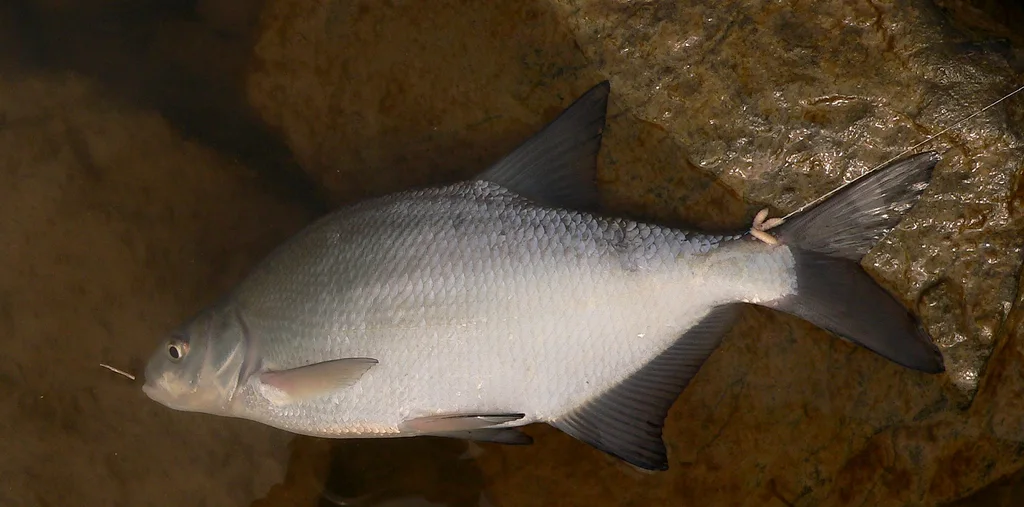
Identifying features
- Very deep, strongly compressed bronze-olive body
- Small head with a protrusible tube-like mouth for bottom sifting
- Long anal fin with 23-30 rays; long dorsal fin grey
- Large dark-edged scales; fins dark grey, never red
- Slime-covered skin; body darkens to deep bronze in older fish
Habits
- Large shoals graze silt beds, sifting sediment for bloodworm and larvae
- Feeds most strongly at dusk and through warm summer nights
- Rolls at the surface at dawn — a tell-tale sign of a shoal
- Slimy protective coating: wet hands and a mat protect the fish
- Holds in deep water in winter, returning to shallows to spawn in late spring
Distribution
Where to find them
- German lakes and canals — the classic stillwater bream
- Irish loughs and slow river reaches
- Reservoir plateaus and old riverbeds
Where they live
How to catch them
Feeder fishing over baited silt beds Lake
Rig: Open-end feeder on feeder or bomb tackle, size 12-14 hook, cast repeatedly to a baited spot on the silt plateau
Bait/lure: Worms, maggots or sweetcorn over plenty of groundbait
Key tip: Bait generously and be patient — bream arrive in waves and a good swim improves over hours.
Waggler and leger fishing on slow rivers River
Rig: Waggler or light leger in deep slow glides, size 14-16 hook, bait dead on the bottom over the feed
Bait/lure: Maggots, casters or bread over loose groundbait
Key tip: Fish into dusk and keep the line out of the wind; bream bites on the waggler can be tiny dips.
Best baits & lures
Baseline setup
- Rod: 12-13 ft feeder or waggler rod
- Line: 3-6 lb mono
- Terminal: Open-end feeders, size 12-18 hooks, fine hooklengths
Recommended gear for this species
Rod · Best value
9' 5-weight fly rod outfit
≈ US$180-260
Covers chironomid lakes and small rivers with one setup.
Flies · Budget
Chironomid assortment (30 patterns)
≈ US$25-40
Chironomids are 60% of a lake rainbow's diet in spring.
Picks come from our rule library — never paid placements. Prices are guides; affiliate links may earn us a commission.
Typical size
Common 2-5 lb (0.9-2.3 kg), 14-20 in (36-51 cm); large fish to 10 lb+ (4.5 kg+) and 28 in (71 cm)
On the table
Poor — soft, bony and muddy-tasting; almost always released.
Similar species
Regulations vary by area and can change in-season — always check the official rules for your area before you fish. Regulations guide →
Plan a trip for Common Bream
Build today's plan