
Freshwater · Spring runs, March to May in Alaska; southern runs tightly restricted or closed
Eulachon
Thaleichthys pacificus
Split picture — check which population before you fish: Alaska populations support traditional and sport dip-net runs ('hooligan' season), while the Southern DPS, from the Columbia River southward, is listed as Threatened under the ESA and its runs are tightly restricted or closed. The 'candlefish' is so oily a dried fish can burn like a candle, and it was a staple of First Nations grease trails — treat runs and traditions with respect.
Seasons · Peak
Identifying features
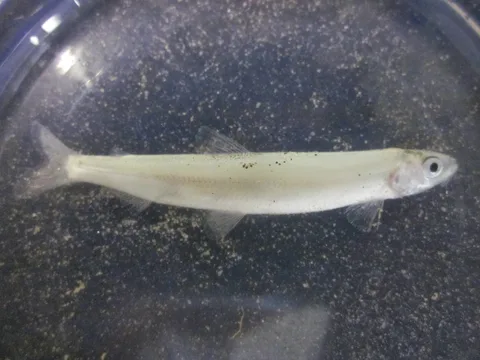
- Small, slender silvery smelt, usually under 10 in long
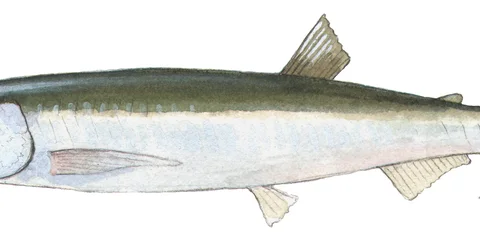
- Bluish-brown back, bright silvery belly and a small adipose fin
- Concentric striae (rings) on the gill cover
- Spawning males develop a midline ridge and rough tubercles
- Very soft, oily flesh — noticeably greasy to the touch
Habits
- Anadromous: winters at sea, runs up coastal rivers to spawn in spring
- Most adults die after their first spawning
- A vital forage fish for salmon, halibut, seals, whales and birds
- Rendered for rich oil ('grease') traded on First Nations grease trails
- Runs can be huge and dense, moving upriver mainly at night
Distribution
Where to find them
- Glacial rivers of Alaska's Cook Inlet and panhandle in spring, where open
- Southeast Alaska river mouths during announced open seasons
- Columbia River only in rare, specifically announced seasons — otherwise closed
Where they live
How to catch them
Dip-netting in glacial rivers during spring runs River
Rig: Long-handled, small-mesh dip net swept through dense schools in lower glacial rivers during Alaska's 'hooligan' season; no rod used
Bait/lure: No bait — dip net only
Key tip: Fish the rising tide and the edges of the school — and confirm the run is open before you go; Alaska and southern rules differ completely.
Dip nets and small mesh nets in lower-river runs Shore
Rig: Dip net or permitted small-mesh net worked from shore in the lower river where a season is specifically open
Bait/lure: No bait — net fishery only
Key tip: Southern DPS water is tightly restricted or closed under the ESA — if no season is announced, the run is closed and fish must be left alone.
Best baits & lures
Baseline setup
- Rod: No rod — long-handled dip net
- Line: Not applicable — net fishery
- Terminal: Small-mesh dip net; bucket and current regulations in hand
Recommended gear for this species
Rod · Best value
9' 5-weight fly rod outfit
≈ US$180-260
Covers chironomid lakes and small rivers with one setup.
Flies · Budget
Chironomid assortment (30 patterns)
≈ US$25-40
Chironomids are 60% of a lake rainbow's diet in spring.
Picks come from our rule library — never paid placements. Prices are guides; affiliate links may earn us a commission.
Typical size
Common 6-9 in; large fish to about 10 in (25 cm)
On the table
Good where legal — rich and oily, eaten fresh or smoked; never keep fish from a closed or ESA-listed run.
Similar species
Regulations vary by area and can change in-season — always check the official rules for your area before you fish. Regulations guide →
Plan a trip for Eulachon
Build today's plan