
Freshwater · Winter ice fishing and spring spawning runs
European Smelt
Osmerus eperlanus
A small, translucent silvery fish of cold northern lakes, Baltic lagoons and lower river reaches — Stint in German, stynka in Polish. It is famous for the strong cucumber smell of a fresh fish. This is a different species from North America's rainbow smelt (Osmerus mordax). Around the Baltic it is an ice-fishing and spring-spawning classic; many populations are freshwater fish for their whole lives and never run to sea.
Seasons · Peak
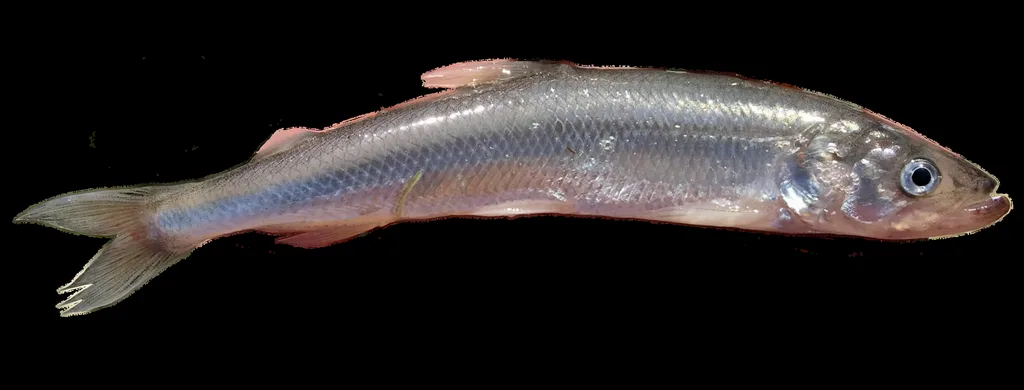
Identifying features
- Slender, translucent silvery body, greenish-olive on the back
- Small adipose fin behind the dorsal fin — a salmon-family mark
- Large mouth with visible teeth and a projecting lower jaw
- Lateral line short and incomplete, fading out above the pectoral fin
- Fresh fish smell strongly of cucumber — the surest field mark of all
Habits
- Forms dense shoals that move up from deep water to feed
- Spawns in early spring over sand and gravel in rivers, lake shallows and tributaries — many populations live their whole lives in fresh water and never go to sea
- Feeds on plankton, insect larvae, small crustaceans and fry
- A cold-water fish, most active in the coldest months and under ice
- Fresh fish smell distinctly of cucumber
Distribution
Where to find them
- Ice holes over deep basins of Finnish and Swedish lakes in winter
- Baltic river mouths and lagoons during the spring spawning gatherings
- Harbour piers and shores of the German Baltic coast in early spring
Where they live
How to catch them
Ice fishing with micro jigs Lake
Rig: Short ice rod with a micro jig or small hook worked just off the lake bottom with gentle lifts
Bait/lure: Micro jig or a hook with a maggot or piece of smelt
Key tip: Lift slowly and pause long — smelt rise to the bait, and a line of holes shows where the shoal is travelling.
Float fishing the spring spawning gatherings River
Rig: Light spinning rod with a small float, split shot and a size 12-14 hook, fished at river mouths and lake shores
Bait/lure: Small worm pieces, maggots or bloodworm
Key tip: Fish at dusk and after dark when spawning shoals push into the shallows; bites are delicate, so use a bright float tip.
Best baits & lures
Baseline setup
- Rod: Light 6-9 ft spinning rod, or a short ice rod in winter
- Line: 4-8 lb mono or light braid with a fine fluorocarbon leader
- Terminal: Micro jigs, small hooks size 10-14, tiny floats and split shot
Recommended gear for this species
Rod · Budget
6'6" light spinning rod
≈ US$50-80
Whitefish and cisco have soft mouths — a light, forgiving tip keeps small hooks pinned.
Terminal · Budget
Small jigging spoons and micro jigs (1/16-1/8 oz)
≈ US$12-20
Tiny flashy spoons jigged over deep shoals are the whitefish standard, on open water and through the ice.
Line · Budget
6 lb fluorocarbon (200 yd)
≈ US$12-18
Deep, clear, cold water and wary fish — light fluoro gets bit when heavy line won't.
Picks come from our rule library — never paid placements. Prices are guides; affiliate links may earn us a commission.
Typical size
Common 6-8 in (15-20 cm); large fish to about 12 in (30 cm)
On the table
Good — a prized little pan fish, eaten whole and fried crisp; famous for its fresh cucumber smell.
Similar species
Regulations vary by area and can change in-season — always check the official rules for your area before you fish. Regulations guide →
Plan a trip for European Smelt
Build today's plan