
Saltwater · Spring, when the shoals move inshore; a short, intense season
Garfish
Belone belone
A silvery, needle-beaked surface hunter whose spring shoals pack Baltic and North Sea beaches and piers. Famous — and nothing to worry about — are its green bones, coloured by the harmless mineral vivianite. Hornhecht in German, geep in Dutch, orphie in French.
Seasons · Peak
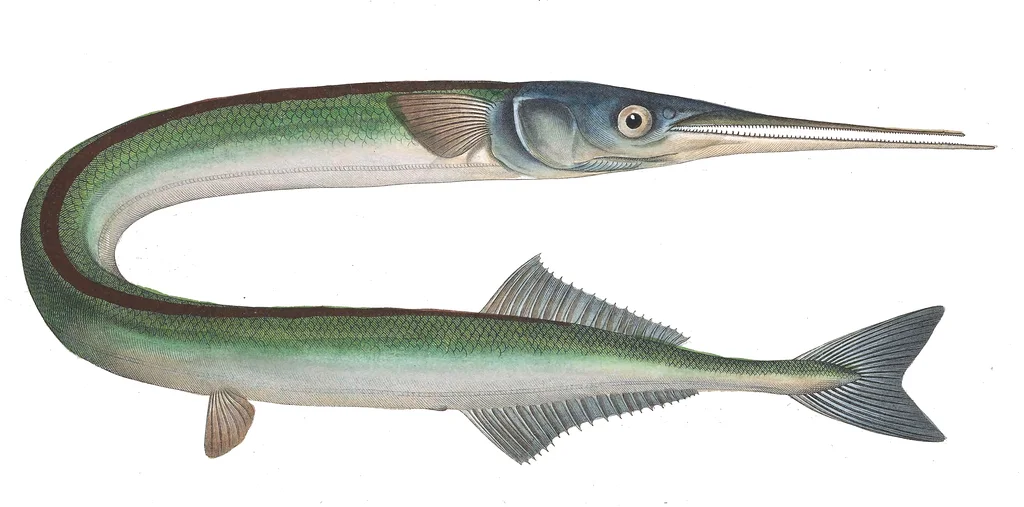
Identifying features
- Extremely long, needle-like beak formed by both jaws, lined with fine teeth
- Slim silvery body with a blue-green back and bright silver flanks
- Dorsal and anal fins set far back, opposite each other near the tail
- Bones are green (vivianite) once cooked — striking but completely harmless
- Very small scales that shed easily; a young-of-year beak develops the lower jaw first
Habits
- Arrives in dense surface shoals in spring to feed and spawn inshore
- Hunts sandeels, sprats and small fry right at the surface
- Skitters and jumps when hooked, fighting on the surface
- The spring Baltic run is a mass-participation fishery from beaches and piers
- Moves back offshore after spawning as summer progresses
Distribution
Where to find them
- German and Danish Baltic beaches and piers in spring
- Dutch and French Channel harbours and piers in late spring
- South-west British piers and Wadden Sea edges in summer
Where they live
How to catch them
Float fishing from piers and beaches Shore
Rig: Light rod with a sliding float presenting a strip of fish or sandeel just 1-3 ft (0.3-1 m) below the surface in the path of the shoal
Bait/lure: Fish strips, shrimp, wool strands
Key tip: Garfish nibble cautiously at the tail of the bait — wait a moment and strike only when the float slides away decisively.
Light casting and fly work at the surface Boat
Rig: Light spinning or fly rod with small silver spoons or streamers retrieved fast just under the surface
Bait/lure: Small spoons and streamer flies
Key tip: Cast ahead of the moving shoal and retrieve briskly — garfish often follow right to the boat before lunging.
Best baits & lures
Baseline setup
- Rod: Light 9-10 ft spinning or float rod
- Line: 6-10 lb mono or light braid
- Terminal: Sliding floats, size 6-8 hooks, small spoons and streamers
Recommended gear for this species
Rod · Best value
9' 5-weight fly rod outfit
≈ US$180-260
Covers chironomid lakes and small rivers with one setup.
Flies · Budget
Chironomid assortment (30 patterns)
≈ US$25-40
Chironomids are 60% of a lake rainbow's diet in spring.
Picks come from our rule library — never paid placements. Prices are guides; affiliate links may earn us a commission.
Typical size
Common 20-30 in (50-75 cm), usually under 2 lb (0.9 kg); large fish to 39 in (100 cm) and about 3 lb (1.4 kg)
On the table
Good — white, tasty flesh, but the bones are famously green from harmless vivianite pigment; the colour is natural and no reason to discard the fish.
Similar species
Regulations vary by area and can change in-season — always check the official rules for your area before you fish. Regulations guide →
Plan a trip for Garfish
Build today's plan