
Saltwater · Year-round in the eastern Pacific; a regular component of coastal and shrimp-trawl catches from Mexico to Panama.
Golden Croaker
Micropogonias altipinnis
An eastern Pacific croaker also called tallfin croaker and corvina agria in the Gulf of Nicoya, ranging from Baja California and the Gulf of California to Peru over sand and mud.
Seasons · Peak
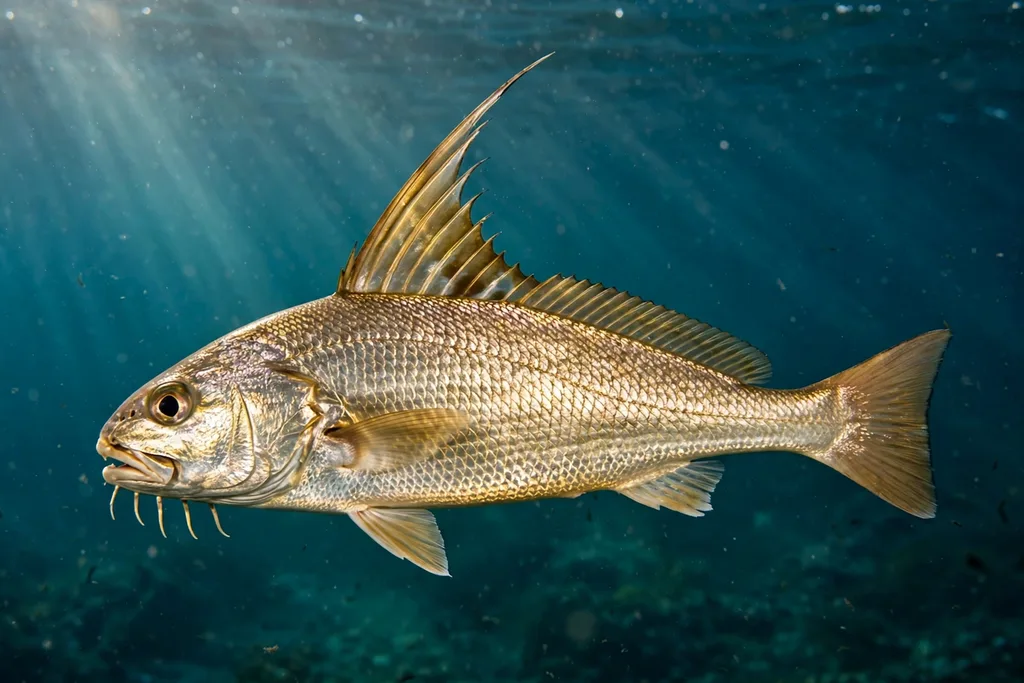
Identifying features
- Tall dorsal fin — the source of the names tallfin / altipinnis
- Golden-bronze sheen over a silvery body, especially when fresh
- Several small barbels along the edge of the lower jaw (Micropogonias trait)
- Mouth nearly horizontal, lower jaw not strongly projecting
- Deeper body than the more elongate Cynoscion weakfishes
Habits
- Lives in estuarine and marine water from 1 to about 104 m
- Feeds on benthic crustaceans and small fishes
- Listed among the Gulf of Nicoya corvinas as 'agria'
- Frequent in shrimp-trawl bycatch in the Gulf of Tehuantepec
Distribution
Where to find them
- Gulf of California and Acapulco-area bays, Mexico
- Gulf of Nicoya, Costa Rica
- Coastal grounds of Pacific Panama
Where they live
How to catch them
Bottom fishing with natural bait Boat
Rig: Two-hook paternoster or Carolina rig with 1-3 oz sinker
Bait/lure: Live or fresh shrimp
Key tip: Keep the bait on the bottom over sand or mud and wait for the soft, tapping bite.
Slow jigging and soft plastics Boat
Rig: Light jigging rod with 1/2-2 oz jig head or metal jig
Bait/lure: Shrimp-imitating soft plastic or small metal jig
Key tip: Work the lure slowly just above the bottom; most strikes come on the fall.
Best baits & lures
Baseline setup
- Rod: Medium spinning or conventional rod 7-9 ft
- Line: 20-30 lb braid with 30 lb fluorocarbon leader
- Terminal: 2/0-4/0 circle hooks, 2-4 oz sinker or jig
Recommended gear for this species
Rod · Best value
7'6" medium-heavy jigging rod
≈ US$110-170
Works 2-6 oz jigs over rock and reef and still has the backbone to lift a halibut off the bottom.
Line · Budget
50 lb braid with 40 lb leader (200 yd)
≈ US$25-40
Thin braid cuts the current so jigs stay vertical; the leader shrugs off rock and teeth.
Terminal · Budget
Leadhead jigs, swimbaits and two-hook bottom rigs
≈ US$25-40
A leadhead with a swimbait tail is the universal bottom-fish catcher, from rockfish to cod to flounder.
Picks are never paid placements. Prices are guides; price links are coming soon and none is an affiliate link yet.
Typical size
Up to about 66 cm (26 in); commonly 25-40 cm.
On the table
Fine, firm flesh; a valued local food fish, good steamed, fried or in soups.
Similar species
Regulations vary by area and can change in-season — always check the official rules for your area before you fish. Regulations guide →
Plan a trip for Golden Croaker
Build today's plan⚠ Heads-up: Golden Croaker doesn't occur around Vancouver, BC (or is very rare there), so it's not a sensible local target. Your plan stays in Vancouver, BC and is built around the fish that actually live there.