
Saltwater · Present year-round in the northern Gulf; the famous spawning aggregation and fishery peak in late winter–spring, February–May, on spring tides.
Gulf Corvina
Cynoscion othonopterus
⚠ IUCN Vulnerable: this upper-Gulf endemic is heavily fished on its Colorado River Delta spawning aggregation — fish responsibly: respect the Biosphere Reserve no-take core and seasonal rules, avoid targeting dense spawning aggregations, and release fish outside the legal fishery. Endemic to the northern Gulf of California, it shares its home water with the protected totoaba.
Seasons · Peak
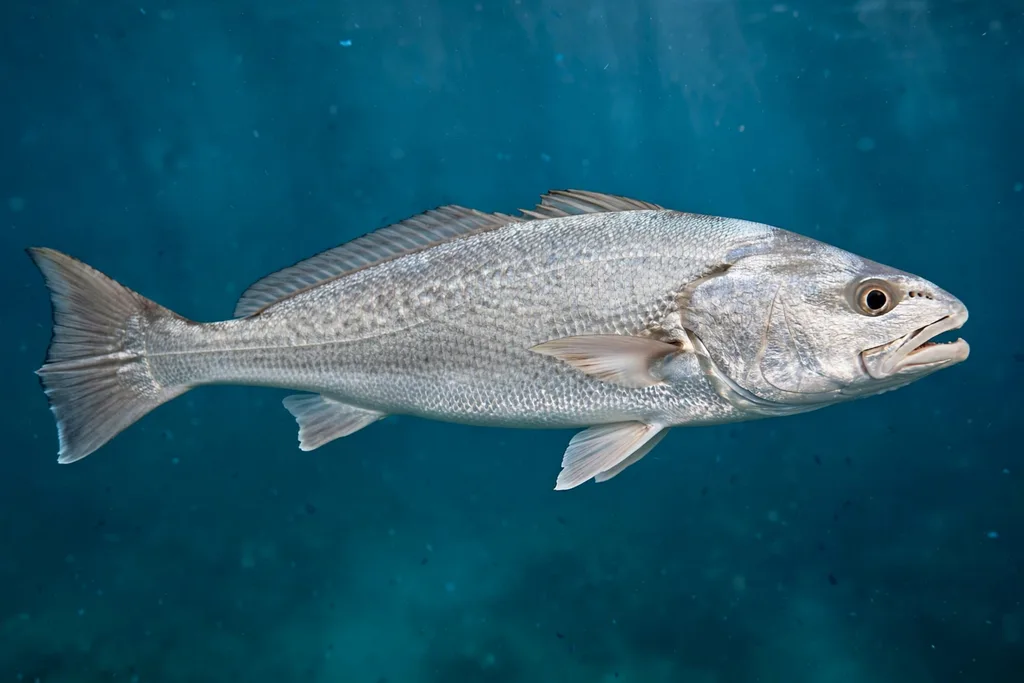
Identifying features
- Large corvina with soft dorsal fin lacking scales on its base (vs. similar Cortez corvinas)
- Silvery-grey body with a slightly upturned, oblique mouth
- No black spot at the pectoral-fin base
- Fins dusky to yellowish; juveniles with faint dark saddles
Habits
- Whole adult population migrates to the Colorado River Delta to spawn Feb–May
- Males drum loudly — spawning choruses are among the loudest fish sounds known
- Spawning is synchronised to new/full-moon spring tides on outgoing tides
- Disperses through the northern Gulf the rest of the year
Distribution
Where to find them
- Upper Gulf channels off San Felipe and Golfo de Santa Clara (outside reserve no-take zones)
- Midriff Islands region outside spawning season
- Colorado Delta tidal channels — only where and when legally open
Where they live
How to catch them
Legal-season bottom fishing Boat
Rig: Cut bait on a bottom rig in channels
Bait/lure: Shrimp on a circle hook
Key tip: Fish dispersed fish in open channels during the legal season only; never target the spawning aggregation itself.
Channel jigging Boat
Rig: Small jig or spoon worked near bottom
Bait/lure: Soft swimbait on a jig head
Key tip: Work channel edges outside protected zones and outside peak spawning tides.
Best baits & lures
Baseline setup
- Rod: Medium 7 ft spinning or conventional rod
- Line: 20–30 lb braid
- Terminal: 30 lb fluorocarbon leader, 4/0–6/0 circle hooks
Recommended gear for this species
Rod · Best value
7'6" medium-heavy jigging rod
≈ US$110-170
Works 2-6 oz jigs over rock and reef and still has the backbone to lift a halibut off the bottom.
Line · Budget
50 lb braid with 40 lb leader (200 yd)
≈ US$25-40
Thin braid cuts the current so jigs stay vertical; the leader shrugs off rock and teeth.
Terminal · Budget
Leadhead jigs, swimbaits and two-hook bottom rigs
≈ US$25-40
A leadhead with a swimbait tail is the universal bottom-fish catcher, from rockfish to cod to flounder.
Picks are never paid placements. Prices are guides; price links are coming soon and none is an affiliate link yet.
Typical size
To over 100 cm and about 12 kg; fishery fish commonly 50–70 cm and 1.5–3.5 kg.
On the table
Highly valued food fish in the upper Gulf — precisely why restraint and legal compliance matter.
Similar species
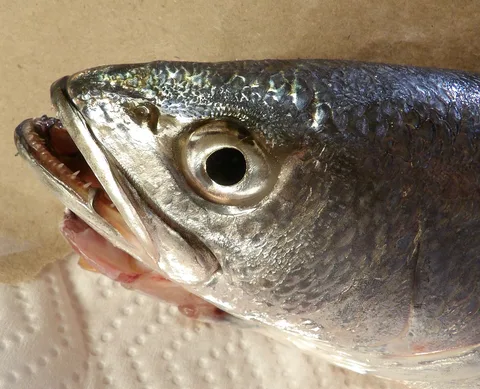 Shortfin CorvinaShortfin corvina is smaller, blue-backed and widespread; Gulf corvina is a larger upper-Gulf endemic with longer pectorals.
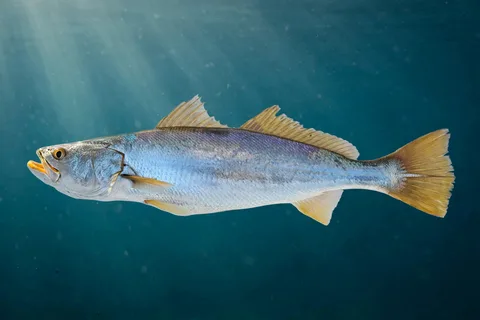 Orangemouth CorvinaOrangemouth corvina has a yellow-orange mouth lining and a Gulf-wide range; Gulf corvina lacks the orange mouth and is confined to the northern Gulf.
Regulations vary by area and can change in-season — always check the official rules for your area before you fish. Regulations guide →
Plan a trip for Gulf Corvina
Build today's plan⚠ Heads-up: Gulf Corvina doesn't occur around Vancouver, BC (or is very rare there), so it's not a sensible local target. Your plan stays in Vancouver, BC and is built around the fish that actually live there.