
Saltwater · Year-round; most numerous in warm months, May to October
Hardhead Catfish
Ariopsis felis
The ever-present sea catfish of Gulf piers, surf and bays — it finds almost any baited bottom hook. SAFETY: its serrated dorsal and pectoral spines carry slime and a mild venom and lock upright when the fish is handled; grip with great care or release it in the net, and never bare-hand the spines.
Seasons · Peak
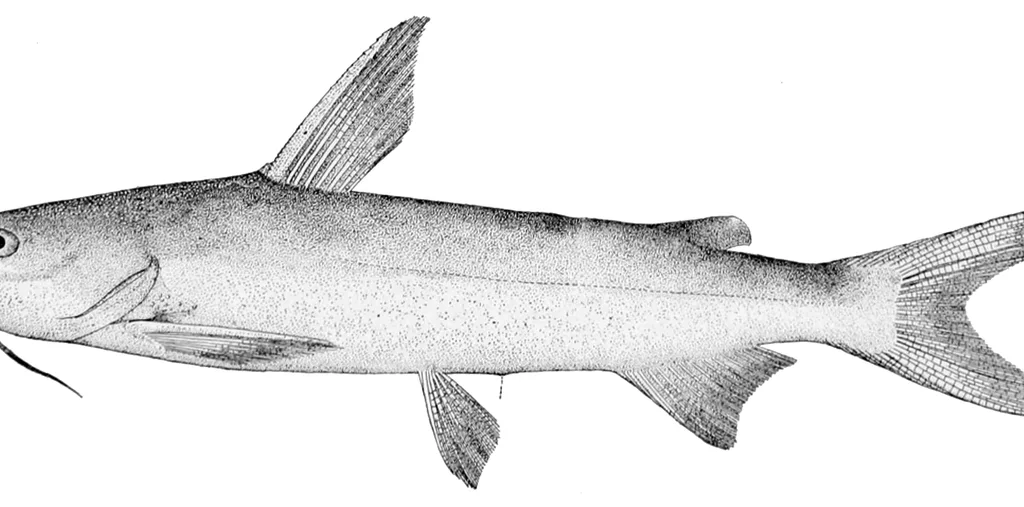
Identifying features
- Smooth, scaleless grey-brown to olive body with a pale belly
- Broad, blunt head armoured with a hard bony shield — the 'hardhead'
- Six barbels: one long pair at the mouth corners, two pairs on the chin
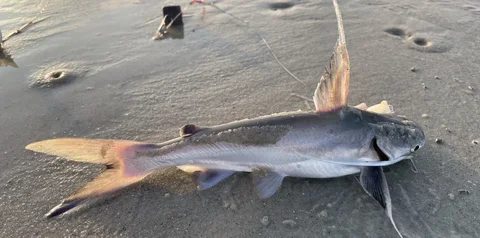
- Deeply forked tail and a tall, sail-less dorsal fin with NO long filament — the key split from gafftopsail
- Serrated dorsal and pectoral spines that lock erect — handle with care
Habits
- Bottom feeder on shrimp, crabs, small fish and almost any dead bait
- Males mouthbrood the eggs and then the young through summer — a male with a full mouth is best released
- Forms large schools in estuaries and along beaches in warm months
- Constant bycatch on baited bottom hooks from piers, surf and bay boats
- Spine wounds are painful from the serrations, slime and mild venom — clean any puncture promptly
Distribution
Where to find them
- Gulf and Florida piers, jetties and surf troughs
- Louisiana and Texas bay channels and passes
- Estuary mouths and bayous on moving tides
Where they live
How to catch them
Bottom rigs from piers, surf and bays Shore
Rig: Medium spinning rod, two-hook bottom rig or Carolina rig with a pyramid or egg sinker and 2/0-4/0 circle hooks baited with shrimp, squid or cut bait
Bait/lure: Shrimp, squid, cut bait
Key tip: Use circle hooks and pliers, and control the fish in a net — never reach across the erect dorsal and pectoral spines.
Estuary baited-hook fishing (the constant bycatch) Shore
Rig: Any baited bottom hook fished in estuaries, bayous and channels while targeting drum or seatrout — hardheads find it first
Bait/lure: Dead shrimp, cut bait
Key tip: Expect hardheads on nearly every bait; keep a dehooker handy and release them quickly without touching the spines.
Best baits & lures
Baseline setup
- Rod: Medium 7 ft spinning rod
- Line: 12-20 lb mono or braid
- Terminal: 2/0-4/0 circle hooks, pyramid and egg sinkers, long-nose pliers
Recommended gear for this species
Rod · Best value
9' 5-weight fly rod outfit
≈ US$180-260
Covers chironomid lakes and small rivers with one setup.
Flies · Budget
Chironomid assortment (30 patterns)
≈ US$25-40
Chironomids are 60% of a lake rainbow's diet in spring.
Picks come from our rule library — never paid placements. Prices are guides; affiliate links may earn us a commission.
Typical size
Common 1-2 lb (0.5-0.9 kg), 10-16 in; large fish to about 5 lb (2.3 kg) and 24 in
On the table
Edible but soft and often muddy-tasting; the great majority of anglers release it, partly because of the spine hazard.
Similar species
Regulations vary by area and can change in-season — always check the official rules for your area before you fish. Regulations guide →
Plan a trip for Hardhead Catfish
Build today's plan