
Freshwater · Spring through autumn
Ide
Leuciscus idus
The ide is the big silvery shoal fish of Europe's large rivers and, as the winde, the Netherlands' number one river fish. It is NOT the same fish as the guide's amur ide (Leuciscus waleckii) — this is the true European ide, L. idus; its golden form is the ornamental orfe of garden ponds.
Seasons · Peak
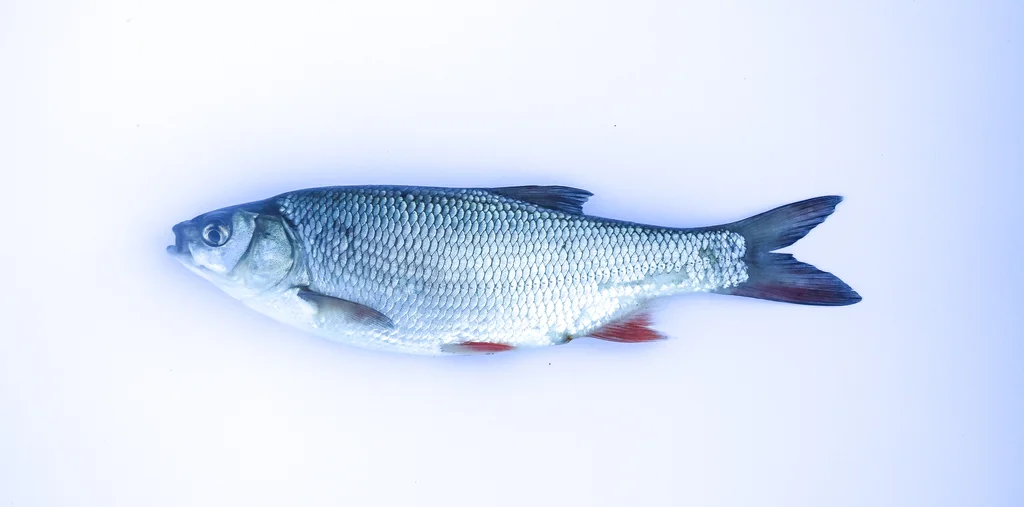
Identifying features
- Deep silvery-olive body with notably small scales for its size
- Small, distinctly upturned mouth; no barbels
- Orange-red pelvic and anal fins, especially in spring fish
- Dorsal fin grey-green, tail deeply forked and dark-edged
- Eyes yellowish; flanks with a golden sheen in sunlight
Habits
- Strong shoaling fish of big rivers; migrates within the system to spawn in spring
- Omnivorous: insect larvae, molluscs, crustaceans and fry
- Golden orfe form is a popular ornamental pond fish but is the same species
- Feeds through the day in summer; dusk best in clear water
- Tolerates low salinity, hence its Baltic lagoon populations
Distribution
Where to find them
- Dutch main rivers — the winde is the Netherlands' number one river fish
- Flood edges and harbour basins on lowland rivers
- Baltic lagoons and river mouths in spring
Where they live
How to catch them
Feeder and leger fishing on big rivers River
Rig: Feeder rod with open-end feeder and size 10-12 hook, cast to the main flow or the edges of slower water
Bait/lure: Worms, sweetcorn or bread flake over groundbait
Key tip: Feed accurately and repeatedly on one line — ide patrol in shoals and a baited swim holds them.
Float fishing on lakes and canals Lake
Rig: Waggler on a 12-13 ft rod, size 12-14 hook, loose-fed with the bait sinking slowly just off the bottom
Bait/lure: Maggots, casters or small worms
Key tip: Feed little and often; ide rise in mid-water and a falling bait beats a static one.
Best baits & lures
Baseline setup
- Rod: Medium-light 12-13 ft float or feeder rod
- Line: 4-8 lb mono or light braid
- Terminal: Size 10-14 hooks, cage feeders, waggler and stick floats
Recommended gear for this species
Rod · Best value
9' 5-weight fly rod outfit
≈ US$180-260
Covers chironomid lakes and small rivers with one setup.
Flies · Budget
Chironomid assortment (30 patterns)
≈ US$25-40
Chironomids are 60% of a lake rainbow's diet in spring.
Picks come from our rule library — never paid placements. Prices are guides; affiliate links may earn us a commission.
Typical size
Common 2-4 lb (0.9-1.8 kg), 16-22 in (40-55 cm); large fish to 8 lb (3.6 kg) and 30 in (76 cm)
On the table
Fair — soft, bony flesh; eaten in eastern and northern Europe, usually released farther west.
Similar species
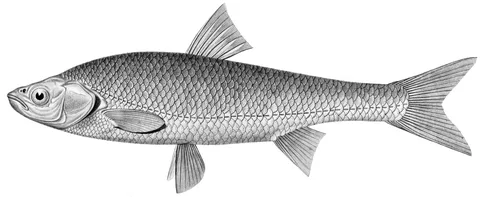 Amur IdeAmur ide (Leuciscus waleckii) is an East Asian relative of the Amur and Liao rivers; this ide (L. idus) is the true European species of western Eurasia — they are not the same fish
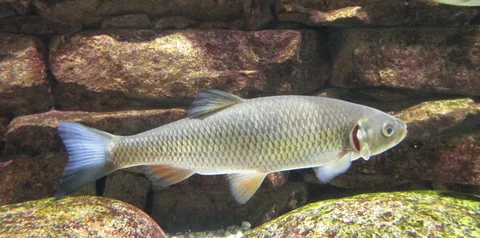 ChubChub is brassier and torpedo-shaped with a huge mouth and convex anal fin; ide is deeper, more silvery, small-scaled with a small upturned mouth
Regulations vary by area and can change in-season — always check the official rules for your area before you fish. Regulations guide →
Plan a trip for Ide
Build today's plan