
Saltwater · Winter to spring on the Pacific coast of Hokkaido and NE Honshu; caught through ice at lake mouths and from shore
Japanese Surf Smelt
Hypomesus japonicus
The chika is the identification twin of the wakasagi — telling them apart by anal-fin base length and scale counts is the classic Hokkaido winter exam question. A marine fish of cold Pacific coasts, it is caught on sabiki under the ice and from shore in winter and spring.
Seasons · Peak
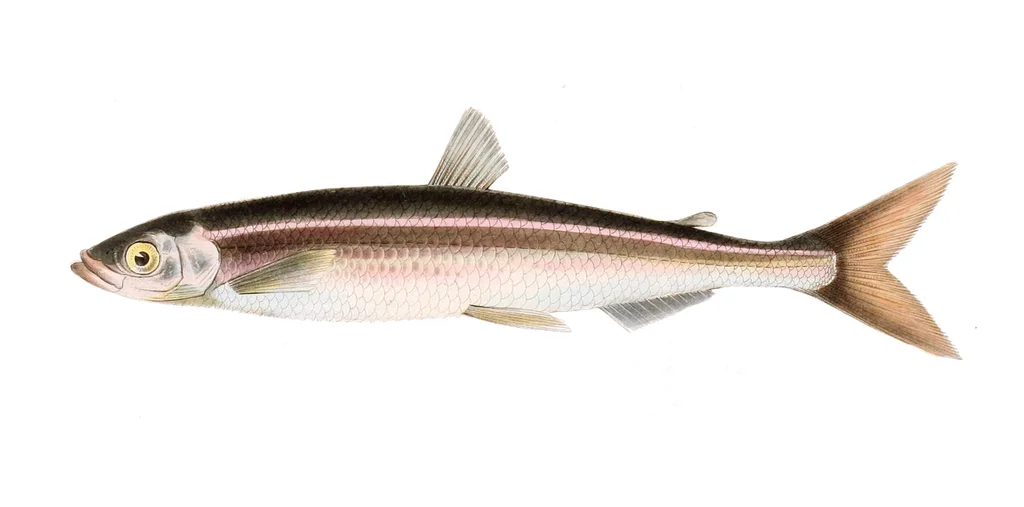
Identifying features
- Slender, translucent silvery body very like a wakasagi — its identification twin
- Upper jaw bone (maxillary) reaches to below the middle of the eye — the key mark vs wakasagi
- Anal-fin base is distinctly long, longer relative to the body than in wakasagi
- Scale counts and anal-fin base length are the classic points used to separate it from wakasagi
- Small adipose fin present, eye large, lower jaw protruding
Habits
- Marine but enters brackish lagoons and river mouths in winter and spring
- Forms dense schools close to shore in the cold season
- Feeds on small crustaceans and plankton
- Caught on sabiki under the ice at lagoon mouths and from shore in winter-spring
- Spawns in spring in brackish shallows
Distribution
Regional coverage expanding
Where to find them
- Lake Saroma, Hokkaido — ice fishing on the brackish lagoon
- Pacific coast around Kushiro, Hokkaido
- Pacific coast around Abashiri and the Okhotsk side of eastern Hokkaido
Where they live
How to catch them
Sabiki fishing from shore and piers Shore
Rig: Light shore rod with a multi-hook sabiki and a small sinker, retrieved slowly along sandy coasts and harbour entrances
Bait/lure: Bare sabiki skins or tiny worm pieces
Key tip: Retrieve slowly and deep; schools cruise tight to shore in cold water.
Ice fishing at lagoon mouths Lake
Rig: Short ice rod and fine sabiki fished vertically through ice over brackish lagoon mouths such as Lake Saroma
Bait/lure: Maggots or small worm pieces on sabiki hooks
Key tip: Try many holes until a school is found; bites come in waves when schools pass.
Best baits & lures
Baseline setup
- Rod: Light shore rod or short ice rod
- Line: 3-6 lb nylon
- Terminal: Sabiki rigs with tiny hooks, small sinker, fine float where used
Recommended gear for this species
Rod · Budget
6'6" light spinning rod
≈ US$50-80
Whitefish and cisco have soft mouths — a light, forgiving tip keeps small hooks pinned.
Terminal · Budget
Small jigging spoons and micro jigs (1/16-1/8 oz)
≈ US$12-20
Tiny flashy spoons jigged over deep shoals are the whitefish standard, on open water and through the ice.
Line · Budget
6 lb fluorocarbon (200 yd)
≈ US$12-18
Deep, clear, cold water and wary fish — light fluoro gets bit when heavy line won't.
Picks come from our rule library — never paid placements. Prices are guides; affiliate links may earn us a commission.
Typical size
Common 4-6 in (10-15 cm); large fish to about 8 in (20 cm)
On the table
Good — eaten whole, grilled or deep-fried like wakasagi; soft bones. A winter shore-fishing staple in Hokkaido.
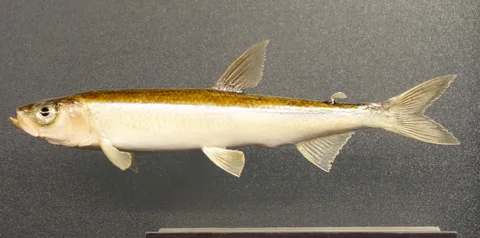
Similar species
Regulations vary by area and can change in-season — always check the official rules for your area before you fish. Regulations guide →
Plan a trip for Japanese Surf Smelt
Build today's plan