
Saltwater · Warm peak June-October at night; resident year-round
Kidako Moray
Gymnothorax kidako
The patterned reef moray of Jeju and the south coast — 곰치 (the Korean group name for morays; carried as the representative species). A night hunter from rock crevices, and this page stresses safety above all: backward-curving glass teeth, a fish that entangles itself in everything, and the standard practice of cutting the line rather than bringing hands near the mouth. Experienced anglers target it at night with wire leaders.
Seasons · Peak
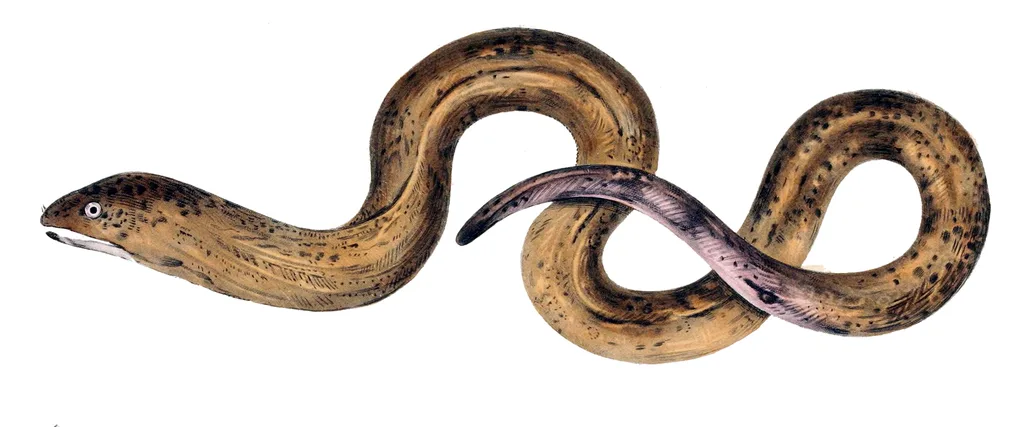
Identifying features
- Long, snake-like body with no pectoral fins — unmistakably a moray
- Patterned brown-and-white reticulated markings — the kidako moray
- Sharp, needle-like teeth in a mouth held slightly open
- Dorsal and anal fins merged into a continuous fin fold
- Reaches over 35 in (90 cm)
Habits
- Strictly nocturnal — hunts from rock crevices at night
- A true moray: sharp, backward-curving teeth that inflict severe wounds
- The Korean name 곰치 covers morays generally; this species is the typical big one of rock fishing
- Entangles itself in line and structure — never bring hands near the mouth
- The safest release is cutting the line at the hook
Distribution
Regional coverage expanding
Where to find them
- Reefs around Jeju
- Yeosu deep rocks (night)
- Busan open-coast rocks in summer
Where they live
How to catch them
Night boat fishing at reefs Boat
Rig: Heavy bottom rig with wire leader and whole fish fished at night from a boat over 30-100 ft reef at Jeju
Bait/lure: Whole small fish or squid strips
Key tip: Morays bite and roll instantly — a wire leader and a hard strike are required; to release, cut the line early.
Night rock fishing in crevices Rock fishing
Rig: Heavy rock rig with octopus cast into rock crevices at open-coast rocks at night
Bait/lure: Octopus pieces
Key tip: Never reach into a crevice to free a line — simply re-tie the rig; the teeth are unforgiving.
Best baits & lures
Baseline setup
- Rod: Heavy 7-8 ft boat or rock rod
- Line: 30-50 lb monofilament with wire or heavy kevlar leader
- Terminal: Large hooks size 5/0-7/0 on wire leader — teeth shred mono
Recommended gear for this species
Rod · Best value
9' 5-weight fly rod outfit
≈ US$180-260
Covers chironomid lakes and small rivers with one setup.
Flies · Budget
Chironomid assortment (30 patterns)
≈ US$25-40
Chironomids are 60% of a lake rainbow's diet in spring.
Picks come from our rule library — never paid placements. Prices are guides; affiliate links may earn us a commission.
Typical size
Common 24-35 in (60-90 cm); large fish over 39 in (100 cm)
On the table
Edible but caution: morays can carry ciguatera-like toxins and the blood is poisonous raw; in Korea 곰치 is taken mainly as a soup fish. Most anglers release by cutting the line.
Similar species
Regulations vary by area and can change in-season — always check the official rules for your area before you fish. Regulations guide →
Plan a trip for Kidako Moray
Build today's plan