
Saltwater · Year-round on the Mexican and Central American Pacific coast; best in warm months.
Latin Grunt
Haemulon steindachneri
A sandy-bottom schooling grunt of the eastern Pacific, from the Sea of Cortez to Peru. Since 2020 the Atlantic population has been treated as a separate species, Haemulon atlanticus — this is the true Pacific fish.
Seasons · Peak
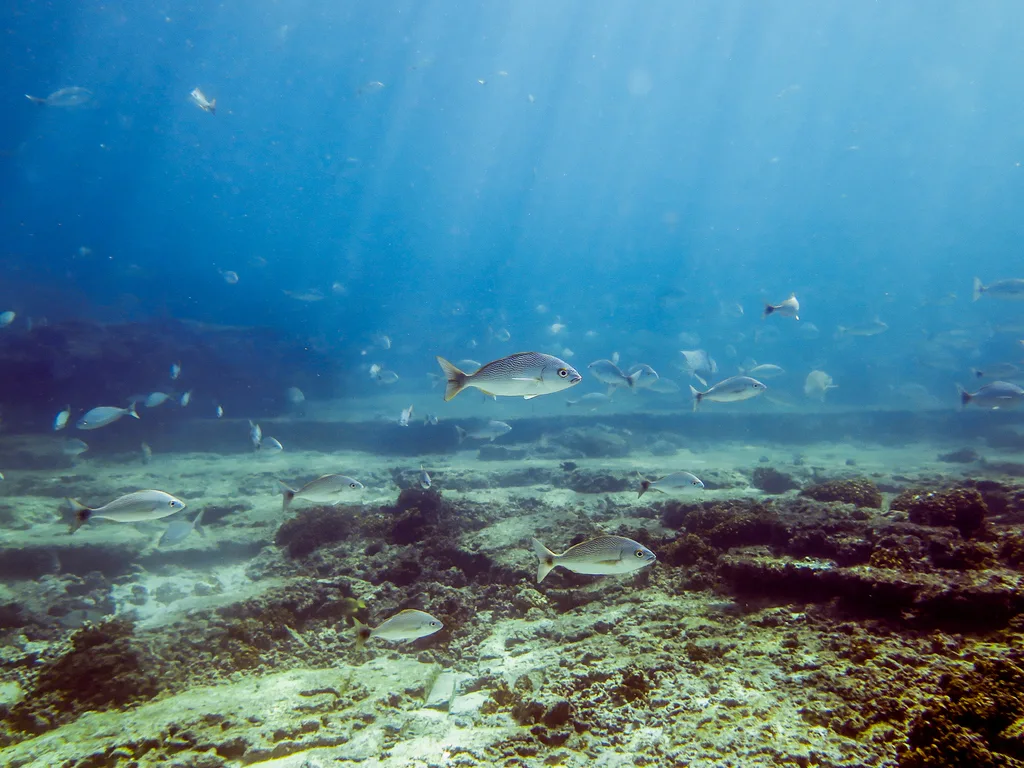
Identifying features
- Grey-bronze body with faint scale-row stripes and a dark, triangular spot on the preopercle (Pacific form)
- Fins are dusky yellow
- Deep, laterally compressed body typical of its family
- Thick lips and a small to medium mouth suited to picking invertebrates
- Up to 30 cm; commonly around 20 cm and well under 1 kg.
Habits
- Found over sandy and rubble bottoms, occasionally on coral reefs and rocky areas
- Often in schools; juveniles near shore over sand beside seagrass beds
- Feeds on benthic invertebrates; marketed fresh in local Pacific fisheries
Distribution
Where to find them
- Sandy bays and low reefs of mainland Mexico
- Sea of Cortez sandy-rocky ground
- Pacific coast of Panama in sandy bays
Where they live
How to catch them
Reef bottom fishing Boat
Rig: Fish-finder / knocker rig: egg sinker above a swivel, 30-60 cm fluorocarbon leader, #1-1/0 circle hook
Bait/lure: Small pieces of shrimp or squid
Key tip: Anchor up-current of a patch reef, keep the bait tight to the bottom and reel steadily on the bite instead of striking hard.
Shore and pier bottom fishing Shore
Rig: Two-hook dropper rig with a pyramid sinker, #2-1/0 hooks
Bait/lure: Shrimp pieces or clam
Key tip: Cast to sandy holes beside rock, dock or mangrove structure and watch for light, nibbling bites.
Chumming over patch reefs Boat
Rig: Light spinning tackle, small split shot and a #2-1/0 hook fished in the chum slick
Bait/lure: Tiny shrimp pieces or cut bait
Key tip: Hang a frozen chum block in a mesh bag and feed small baits back with the slick; grunts and porgies gather behind the boat.
Best baits & lures
Baseline setup
- Rod: Light to medium spinning rod 2.1-2.4 m
- Line: 10-20 lb braid or mono main line
- Terminal: 20-30 lb fluorocarbon leader, #2-1/0 circle hooks, egg or pyramid sinkers to hold bottom
Recommended gear for this species
Rod · Best value
7'6" medium-heavy jigging rod
≈ US$110-170
Works 2-6 oz jigs over rock and reef and still has the backbone to lift a halibut off the bottom.
Line · Budget
50 lb braid with 40 lb leader (200 yd)
≈ US$25-40
Thin braid cuts the current so jigs stay vertical; the leader shrugs off rock and teeth.
Terminal · Budget
Leadhead jigs, swimbaits and two-hook bottom rigs
≈ US$25-40
A leadhead with a swimbait tail is the universal bottom-fish catcher, from rockfish to cod to flounder.
Picks are never paid placements. Prices are guides; price links are coming soon and none is an affiliate link yet.
Typical size
Up to 30 cm; commonly around 20 cm and well under 1 kg.
On the table
Good small food fish, sold fresh in Mexican and Central American Pacific markets.
Similar species
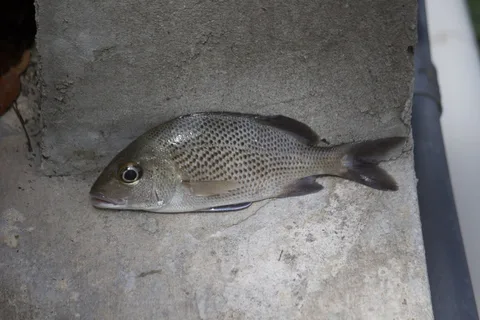 Sailor's ChoiceSailor's choice is the Atlantic inshore lookalike of mangroves and grass beds; Latin grunt (Pacific form) schools over open sand and rubble in the eastern Pacific.
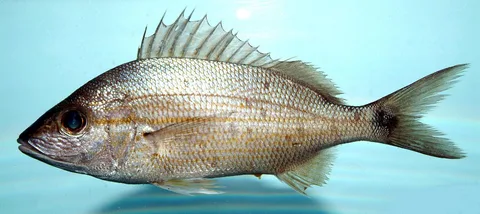 Tomtate GruntTomtate is a silvery Atlantic reef fish with a bronze midline stripe and tail spot; Latin grunt is bronze-grey, Pacific, and marked by the preopercle spot.
Regulations vary by area and can change in-season — always check the official rules for your area before you fish. Regulations guide →
Plan a trip for Latin Grunt
Build today's plan⚠ Heads-up: Latin Grunt doesn't occur around Vancouver, BC (or is very rare there), so it's not a sensible local target. Your plan stays in Vancouver, BC and is built around the fish that actually live there.