
Saltwater · Late spring to fall best; May to October over sand and mud bottom
Northern Sea Robin
Prionotus carolinus
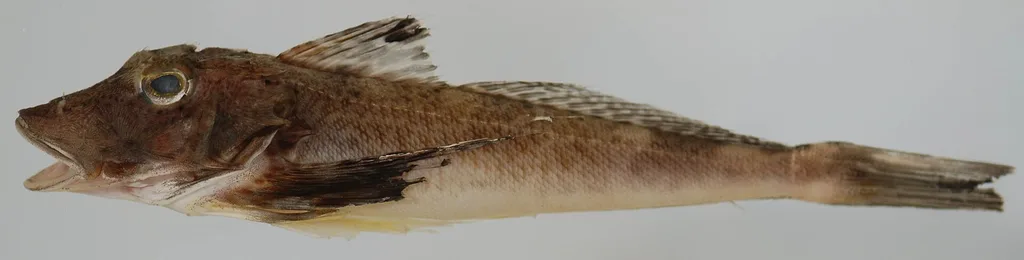
A bizarre, bottom-walking gurnard that is frequent bycatch when drifting for fluke and sea bass in New England and New York. It grunts and croaks when handled, and 'walks' on the bottom with free finger-like pectoral rays. The striped sea robin (Prionotus evolans) also occurs here and is separated in the notes below by its dark side stripe.
Seasons · Peak
Identifying features
- Large bony head with spines and a broad, spade-shaped snout
- Three free finger-like pectoral rays used to 'walk' and taste the bottom
- Large fan-like pectoral fins with dark spots and blotches
- No dark stripe along the side — the striped sea robin (Prionotus evolans) HAS a bold dark side stripe
- Reddish-brown to grey body, usually 8-14 in (20-36 cm)
Habits
- Walks on the bottom on free pectoral rays, probing sand for crabs and shrimp
- Grunts and croaks when handled, drumming its swim bladder
- Frequent bycatch on fluke and sea bass drift rigs over sand and mud
- Feeds on shrimp, crabs, squid, worms and small fish
- Striped sea robin is told by the dark stripe along its side; northern lacks that stripe
Distribution
Where to find them
- Long Island Sound drift grounds in summer
- New England party-boat sand and mud bottom
- Chesapeake Bay channel edges over soft bottom
Where they live
How to catch them
Bottom rigs while drifting for fluke and sea bass Boat
Rig: Standard fluke drift rig or high-low rig with squid or clam, drifted over sand and mud — sea robins take it as frequent bycatch
Bait/lure: Squid strips or clam pieces
Key tip: Handle carefully — head spines are sharp and the fish will grunt loudly; unhook over the rail.
Party-boat high-low rigs over sand and mud Boat
Rig: Party-boat high-low rig with two hooks and a bank sinker over sand and mud bottom
Bait/lure: Squid, clam or shrimp pieces
Key tip: If sea robins dominate, move a little — fluke and sea bass often hold just off the robin patch.
Best baits & lures
Baseline setup
- Rod: Medium-light 6-7 ft boat rod
- Line: 15-20 lb braid or mono
- Terminal: High-low and drift rigs, size 2-1/0 hooks, 2-4 oz sinkers
Recommended gear for this species
Rod · Best value
7'6" medium-heavy jigging rod
≈ US$110-170
Works 2-6 oz jigs over rock and reef and still has the backbone to lift a halibut off the bottom.
Line · Budget
50 lb braid with 40 lb leader (200 yd)
≈ US$25-40
Thin braid cuts the current so jigs stay vertical; the leader shrugs off rock and teeth.
Terminal · Budget
Leadhead jigs, swimbaits and two-hook bottom rigs
≈ US$25-40
A leadhead with a swimbait tail is the universal bottom-fish catcher, from rockfish to cod to flounder.
Picks come from our rule library — never paid placements. Prices are guides; affiliate links may earn us a commission.
Typical size
Common 8-12 in (20-30 cm), under 1 lb (0.5 kg); large fish to 16 in (41 cm)
On the table
Fair to good — firm white flesh in larger fish, though bony head wastes much; many anglers release them.
Similar species
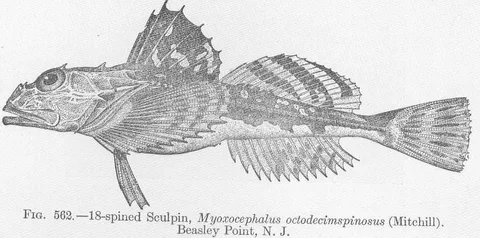 Longhorn SculpinLonghorn sculpin has huge cheek spines and fleshy tabs and no free walking rays; sea robin has three free pectoral rays and a broad spade head
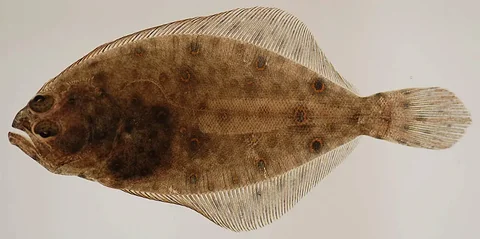 Summer FlounderSummer flounder is a flatfish with both eyes on one side lying flat; sea robin is a round-bodied bottom fish that sits upright and walks on fin rays
Regulations vary by area and can change in-season — always check the official rules for your area before you fish. Regulations guide →
Plan a trip for Northern Sea Robin
Build today's plan