
Saltwater · Spring through autumn; spawns on sand in winter
Pacific Sand Lance
Ammodytes personatus
The tiny, sand-burrowing eel-like fish of the west coast — 까나리. Enormous schools sweep over sand, and it is traditionally the base of 액젓, Korea's fermented fish sauce. Shore sabiki anglers take small amounts. Note: recent scientific literature splits A. heian as a separate species — Korean stocks may belong to it; this page follows the guide's aggregate designation.
Seasons · Peak
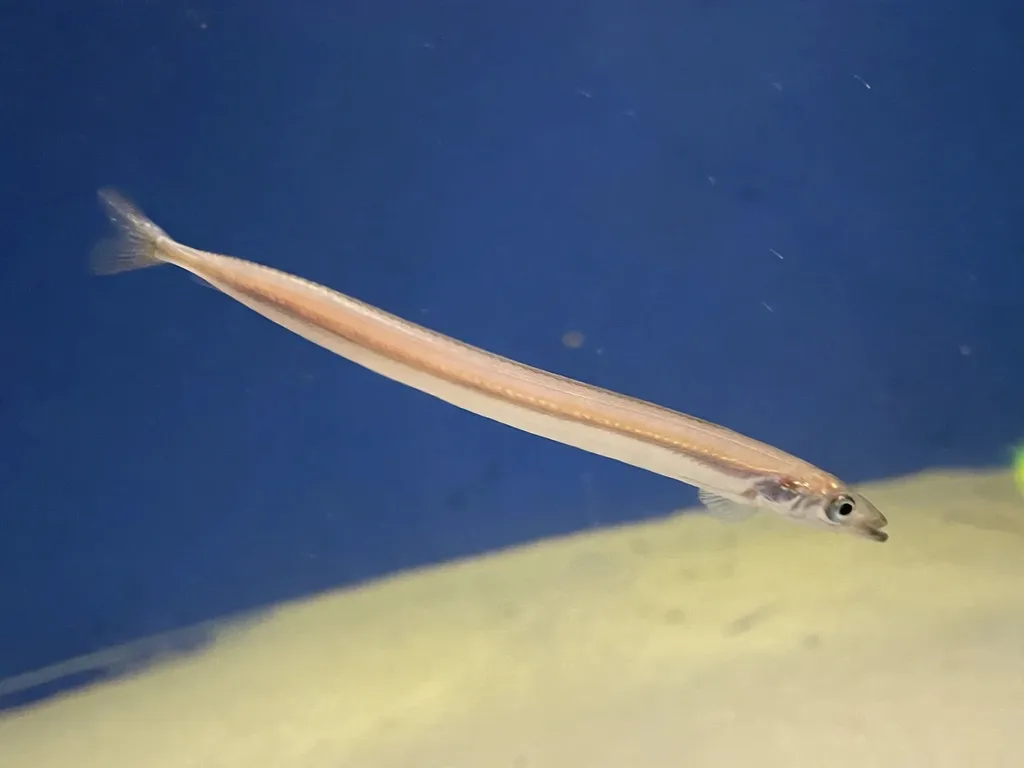
Identifying features
- Very slim, eel-like body with a distinctly forked tail
- Pointed snout, no beak; lower jaw slightly projecting
- Lacks scales — smooth, silvery skin
- No swim bladder
- Buries quickly in sand when disturbed
Habits
- Buries head-first in sand when not feeding
- Enormous schools move with the tide
- The species was part of a recent split proposal: A. heian has been proposed as separate
- Mostly taken by trawls and set nets; shore sabiki takes small amounts
- Tiny worm-like fish with a forked tail
Distribution
Regional coverage expanding
Where to find them
- Incheon surf, west coast
- Gunsan sand beaches
- Mokpo sandy piers
Where they live
How to catch them
Sabiki at sandy beaches Shore
Rig: Ultra-tiny sabiki rig cast over sandy surf and retrieved slowly across sand bars
Bait/lure: Tiny sabiki lures
Key tip: Schools ride the flood tide in — fish piers where water streams across sand flats.
Light surf rig in bays Shore
Rig: Light two-hook rig with tiny shrimp pieces cast into shallow sandy bays
Bait/lure: Tiny shrimp pieces
Key tip: Bites are mere trembles — pause a heartbeat and wind slowly to set the hook.
Best baits & lures
Baseline setup
- Rod: Light 6-7 ft spinning rod
- Line: 4-6 lb monofilament
- Terminal: Sabiki rigs with hooks size 14-18, mini sinkers
Recommended gear for this species
Rod · Best value
9' 5-weight fly rod outfit
≈ US$180-260
Covers chironomid lakes and small rivers with one setup.
Flies · Budget
Chironomid assortment (30 patterns)
≈ US$25-40
Chironomids are 60% of a lake rainbow's diet in spring.
Picks come from our rule library — never paid placements. Prices are guides; affiliate links may earn us a commission.
Typical size
Common 5-7 in (12-17 cm); large fish about 8 in (20 cm)
On the table
Traditionally fermented into 액젓 (fish sauce) in Korea — an important sauce fish; small amounts eaten fresh.
Similar species
Regulations vary by area and can change in-season — always check the official rules for your area before you fish. Regulations guide →
Plan a trip for Pacific Sand Lance
Build today's plan