
Saltwater · Year-round in California; schools push farthest north in summer and fall
Pacific Sardine
Sardinops sagax
A small, silvery plankton-feeder that travels in vast schools and anchors the whole West Coast food web. It is not the European pilchard (Sardina pilchardus); the Japanese sardine of the northwest Pacific belongs to the same Sardinops species complex. Monterey's Cannery Row was built on it, and its famous boom-and-bust fishery still rises and crashes with ocean conditions.
Seasons · Peak
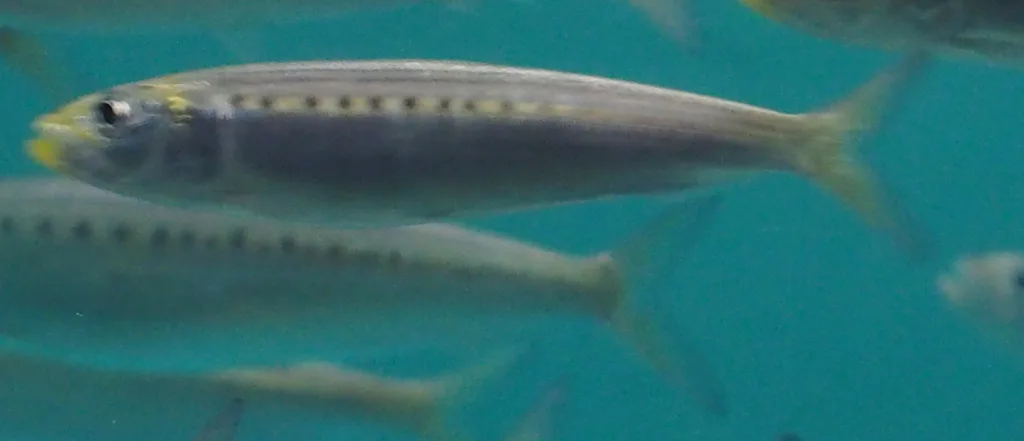
Identifying features
- A single row of dark spots along the upper flank — the signature mark
- Blue-green back shading to a bright silver belly
- Gill cover with bony ridges radiating downward and outward
- Deeply forked tail and a soft, keel-less belly
- Slightly protruding lower jaw with an upturned mouth
Habits
- Forms huge, tight schools that can darken acres of water
- Filter-feeds on phytoplankton and zooplankton through fine gill rakers
- Migrates north in summer and back south as the water cools
- Spawns offshore in winter and spring, mainly off Southern California
- Abundance swings wildly in boom-and-bust cycles driven by ocean conditions
Distribution
Where to find them
- Monterey Bay bait balls and harbour edges
- Southern California piers, bait barges and kelp lines
- Oregon and Washington coast bait schools in summer
Where they live
How to catch them
Sabiki rigs around bait and kelp Shore
Rig: Light spinning rod, multi-hook sabiki rig with a small sinker, jigged gently around bait receivers, piers and kelp lines
Bait/lure: Bare tinsel sabiki hooks, sometimes tipped with tiny shrimp bits
Key tip: Lift smoothly rather than striking — sardines are soft-mouthed and tear off on hard jerks.
Cast nets and small jigs over bait balls Boat
Rig: Fine-mesh cast net where legal, or a small silver jig dropped through a marked school from a boat
Bait/lure: No bait needed — the school itself is the target
Key tip: Work the edges of a bait ball under birds; the same sardines make the West Coast's key live bait for bigger gamefish.
Best baits & lures
Baseline setup
- Rod: Light 6-7 ft spinning rod
- Line: 4-8 lb mono
- Terminal: Size 8-12 sabiki rigs, small jigs, 1 oz sinkers
Recommended gear for this species
Rod · Best value
9' 5-weight fly rod outfit
≈ US$180-260
Covers chironomid lakes and small rivers with one setup.
Flies · Budget
Chironomid assortment (30 patterns)
≈ US$25-40
Chironomids are 60% of a lake rainbow's diet in spring.
Picks come from our rule library — never paid placements. Prices are guides; affiliate links may earn us a commission.
Typical size
Common 8-10 in (20-25 cm); large fish to about 16 in (41 cm)
On the table
Excellent — oily, rich and full of omega-3s fresh, grilled or canned; also the West Coast's premier live bait.
Similar species
Regulations vary by area and can change in-season — always check the official rules for your area before you fish. Regulations guide →
Plan a trip for Pacific Sardine
Build today's plan