
Saltwater · Year-round in Central America, best in the warm months (roughly May-October in Mexico) around floating structure.
Pacific Tripletail
Lobotes pacifica
The eastern Pacific tripletail, hunting crabs and small fish beneath floating debris, buoys and pilings from southern California and the Gulf of California to Peru, and increasingly prized by recreational anglers for its excellent meat.
Seasons · Peak
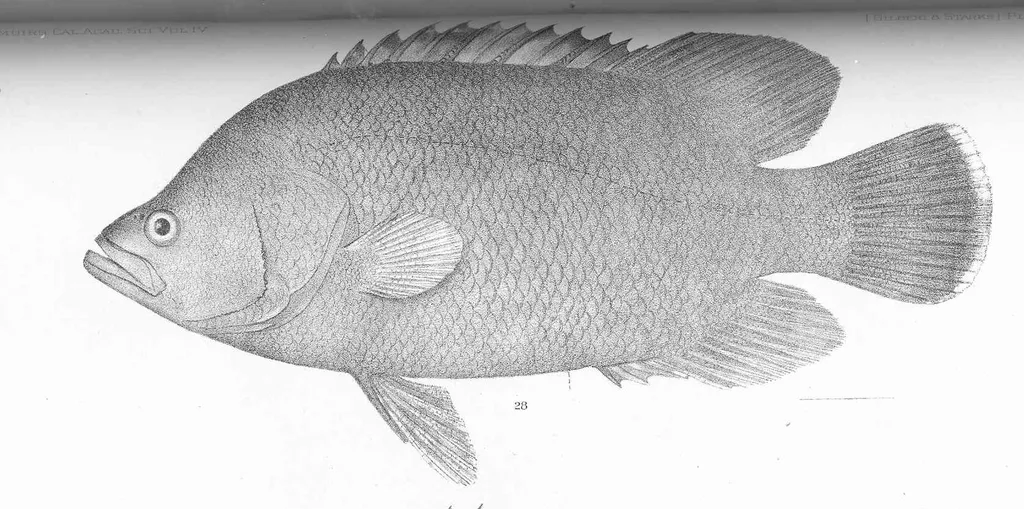
Identifying features
- Rounded dorsal, anal and caudal fins make the fish look like it has three tails / three lobes
- Deep, compressed body, mottled brown to yellowish in juveniles, darker in adults
- Small mouth with a steep, almost vertical head profile
- Often floats on its side just under surface debris, imitating a leaf or piece of flotsam
- No spiny, bass-like profile — the soft triple-lobed silhouette is diagnostic
Habits
- Solitary or in aggregations under floating objects in the open sea and in bays
- Feeds on crustaceans and small fishes
- Juveniles drift with flotsam and mimic leaves
- Caught with seines, gill nets and hook and line; IGFA record 12.13 kg off Quepos, Costa Rica (2023)
Distribution
Where to find them
- Floating debris and buoys off Quepos and the Gulf of Nicoya, Costa Rica
- Bays and estuary mouths of Pacific Mexico
- Flotsam lines off Pacific Panama and Guatemala
Where they live
How to catch them
Live-bait fishing under structure Boat
Rig: Circle hook on fluorocarbon leader, free-lined or under a float
Bait/lure: Live shrimp or small live baitfish
Key tip: Present the bait beside floating debris, pilings or buoys and be ready for a slow, powerful run.
Casting small lures Boat
Rig: Light spinning tackle with small jig or soft plastic
Bait/lure: Small shrimp or baitfish imitation
Key tip: Cast to reef edges and structure and retrieve slowly near the bottom.
Best baits & lures
Baseline setup
- Rod: Medium spinning or conventional rod 7-9 ft
- Line: 20-30 lb braid with 30 lb fluorocarbon leader
- Terminal: 2/0-4/0 circle hooks, 2-4 oz sinker or jig
Recommended gear for this species
Rod · Best value
9' medium-heavy surf spinning rod
≈ US$110-170
Casts plugs and bait past the breakers and handles stripers, drum and bluefish in the wash.
Reel · Best value
5000 size sealed spinning reel
≈ US$120-180
Salt spray and dunkings kill cheap reels — a sealed body and 30 lb braid capacity are the surf standard.
Terminal · Budget
Topwater plugs, soft-plastic jigs and fish-finder rigs
≈ US$25-40
Plugs for blitzes, jigs for the trough, bait on a fish-finder rig when they won't chase — the inshore trio.
Picks are never paid placements. Prices are guides; price links are coming soon and none is an affiliate link yet.
Typical size
Up to about 1 m; IGFA record 12.13 kg (Quepos, Costa Rica); adults commonly 5-15 lb in angling reports.
On the table
Fine, firm flesh; a valued local food fish, good steamed, fried or in soups.
Similar species
Regulations vary by area and can change in-season — always check the official rules for your area before you fish. Regulations guide →
Plan a trip for Pacific Tripletail
Build today's plan⚠ Heads-up: Pacific Tripletail doesn't occur around Vancouver, BC (or is very rare there), so it's not a sensible local target. Your plan stays in Vancouver, BC and is built around the fish that actually live there.