
Saltwater · Year-round around Okinawa reefs; summer peak
Parrotfishes
Scarus spp.
A group page for Okinawa's 'irabutcha' — several Scarus parrotfish species, mainly S. ovifrons, S. rivulatus and relatives. Fused beak teeth make them unmistakable; their colour phases differ so wildly — drab initial phase versus bright blue-green terminal males — that anglers often take them for different fish. Herbivorous reef grazers that hook up regularly on crab and shell baits, and a spearfishing staple as well.
Seasons · Peak
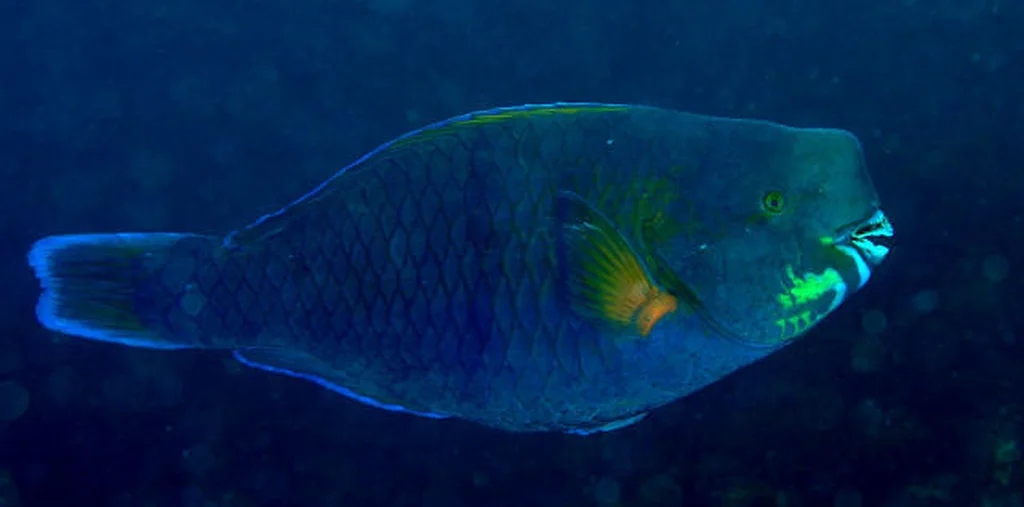
Identifying features
- This is a group page: Okinawa's 'irabutcha' are several Scarus species, mainly S. ovifrons, S. rivulatus and relatives
- Fused teeth form a parrot-like beak — the single key feature
- Large, coarse scales and a blunt, steep head profile
- Colour phases differ wildly: initial-phase fish are drab brown or grey, terminal males bright blue-green
- Scraping marks on reef rock and crunching sounds underwater often give grazing fish away
Habits
- Graze algae from rock and dead coral by day, scraping with the beak and leaving pale feeding marks
- Sleep in reef crevices at night, some species in a mucus cocoon
- Sex and colour change with growth — many species pass from drab initial phase to bright terminal male colours
- Regularly hooked on crab and shell baits by reef bait anglers, and also a spearfishing staple in Okinawa
- Powerful jaws and beak crush shell baits — and can bite through light hooks and line
Distribution
Regional coverage expanding
Where to find them
- Reef edges and harbours of Okinawa Island where irabutcha graze
- Kerama Islands reef channels
- Ishigaki and Miyako (Yaeyama and Miyako Islands) rocky reefs
Where they live
How to catch them
Reef rock fishing with shell baits Rock fishing
Rig: Stout bottom rig with a heavy leader and size 2/0-4/0 hooks cast from rocky shore into reef edges and channels
Bait/lure: Crab or shellfish meat on a stout hook
Key tip: Turn the fish away from the reef the moment it strikes — it dives for crevices and its beak shreds light leaders.
Bait fishing at harbour mouths beside reef Shore
Rig: Strong bottom rig from piers or shore beside reef ground, with a heavy sinker to hold bait on the grazing edge
Bait/lure: Crab pieces or turban-shell meat
Key tip: Fish where pale scrape marks show fresh grazing and keep the bait right on the edge.
Best baits & lures
Baseline setup
- Rod: Strong medium-heavy rock or shore rod
- Line: 30-50 lb main line with a heavy leader — parrotfish beaks and reef edges cut light line
- Terminal: Stout bottom rigs, hooks size 2/0-4/0, heavy sinkers for reef ground
Recommended gear for this species
Rod · Best value
9' 5-weight fly rod outfit
≈ US$180-260
Covers chironomid lakes and small rivers with one setup.
Flies · Budget
Chironomid assortment (30 patterns)
≈ US$25-40
Chironomids are 60% of a lake rainbow's diet in spring.
Picks come from our rule library — never paid placements. Prices are guides; affiliate links may earn us a commission.
Typical size
Species vary: common 12-20 in (30-50 cm) for the main Okinawa species; the largest Scarus species grow far bigger
On the table
Good in Okinawa — 'irabutcha' is a traditional island food fish, eaten in soups and simmered dishes; follow local advice on which species and areas to eat from.
Similar species
Regulations vary by area and can change in-season — always check the official rules for your area before you fish. Regulations guide →
Plan a trip for Parrotfishes
Build today's plan