
Saltwater · Year-round on western Atlantic reefs
Puddingwife Wrasse
Halichoeres radiatus
The largest Halichoeres wrasse in the Atlantic, a colourful reef fish of the Caribbean and Florida; currently listed as Least Concern by the IUCN and taken only incidentally by anglers.
Seasons · Peak
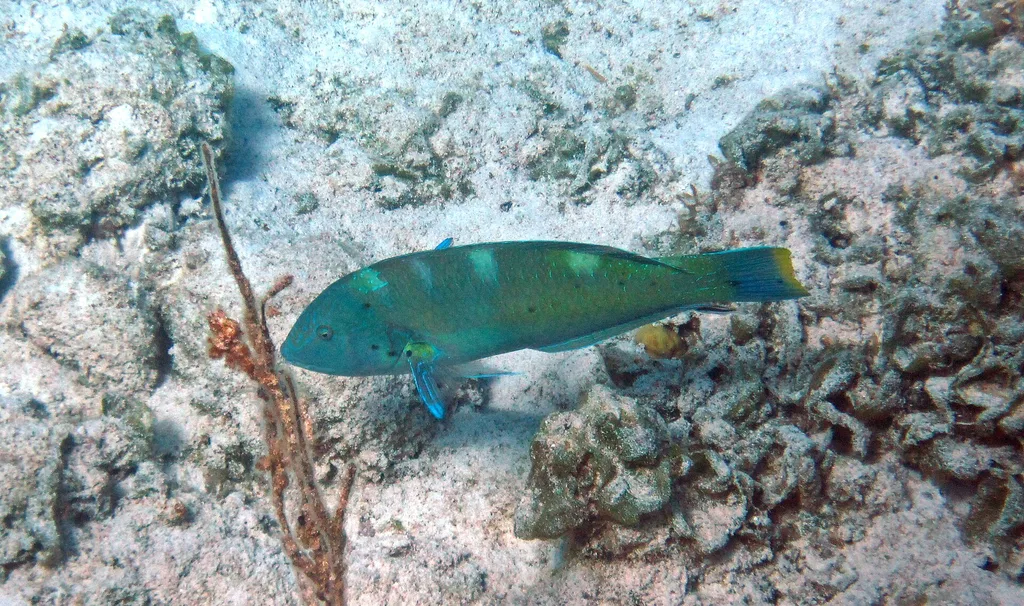
Identifying features
- Large wrasse to about 51 cm, green-blue terminal males with pink-orange markings
- Initial-phase fish mottled brown-green with a dark spot on the dorsal fin
- Radiating lines around the eye give the species its name radiatus
- Thick lips and protruding canine teeth
- Juveniles distinctly patterned with dark bars
Habits
- Feeds on sea urchins, molluscs, crabs and brittle stars, crushing prey with throat teeth
- Solitary, active by day over reef and rubble
- Sleeps buried or wedged at night
- Low resilience — populations double slowly, so large fish are best released
Distribution
🐋 Where the big ones are
- Size: To about 51 cm; IGFA record 1.67 kg (2023, North Carolina). Most are 30-40 cm.
- Best waters: Yucatán Peninsula · Quintana Roo & Yucatán, Andros & the Bahamas · The Bahamas
- Prime months: Mar, Apr, May, Jun, Jul, Aug, Sep, Oct
Where to find them
- Reef slopes in the Bahamas and Florida Keys
- Patch reefs off Yucatán (Veracruz reefs included)
- Rocky reefs off Puerto Rico and Belize
Where they live
How to catch them
Reef bottom fishing (mostly release) Boat
Rig: Light-medium bottom rig, 1/0-2/0 hook
Bait/lure: Crab or shrimp piece
Key tip: An incidental catch on snapper/grouper bait — photograph and release large fish promptly.
Rock reef light tackle Rock fishing
Rig: Float rig with strong small hook
Bait/lure: Shrimp piece
Key tip: Wary in clear water; fish reef edges at first light and release what you catch.
Best baits & lures
Baseline setup
- Rod: Medium spinning rod 7 ft
- Line: 15-20 lb braid, 20 lb leader
- Terminal: Hook 1/0-3/0, 1-2 oz sinker, fluorocarbon leader
Recommended gear for this species
Rod · Best value
7'6" medium-heavy jigging rod
≈ US$110-170
Works 2-6 oz jigs over rock and reef and still has the backbone to lift a big bottom fish off the bottom.
Line · Budget
50 lb braid with 40 lb leader (200 yd)
≈ US$25-40
Thin braid cuts the current so jigs stay vertical; the leader shrugs off rock and teeth.
Terminal · Budget
Leadhead jigs, swimbaits and two-hook bottom rigs
≈ US$25-40
A leadhead with a swimbait tail is the universal bottom-fish catcher on rock, reef and sand.
Picks are never paid placements. Prices are guides; price links are coming soon and none is an affiliate link yet.
Typical size
To about 51 cm; IGFA record 1.67 kg (2023, North Carolina). Most are 30-40 cm.
On the table
Not recommended — reported ciguatera risk and low resilience; best released, especially large terminal males.
Similar species
Regulations vary by area and can change in-season — always check the official rules for your area before you fish. Regulations guide →
Plan a trip for Puddingwife Wrasse
Build today's plan⚠ Heads-up: Puddingwife Wrasse doesn't occur around Vancouver, BC (or is very rare there), so it's not a sensible local target. Your plan stays in Vancouver, BC and is built around the fish that actually live there.