
Saltwater · Year-round in tropical waters; best May to October off Florida, in the Gulf and around Hawaii
Rainbow Runner
Elagatis bipinnulata
A sleek oceanic jack marked by blue, green and yellow stripes that follows floating objects across warm seas. Unusually for a jack, it eats like a tuna — firm, mild and highly rated on the table. Schools patrol the surface layer offshore and often gather in the shade of FADs, buoys and weed lines.
Seasons · Peak
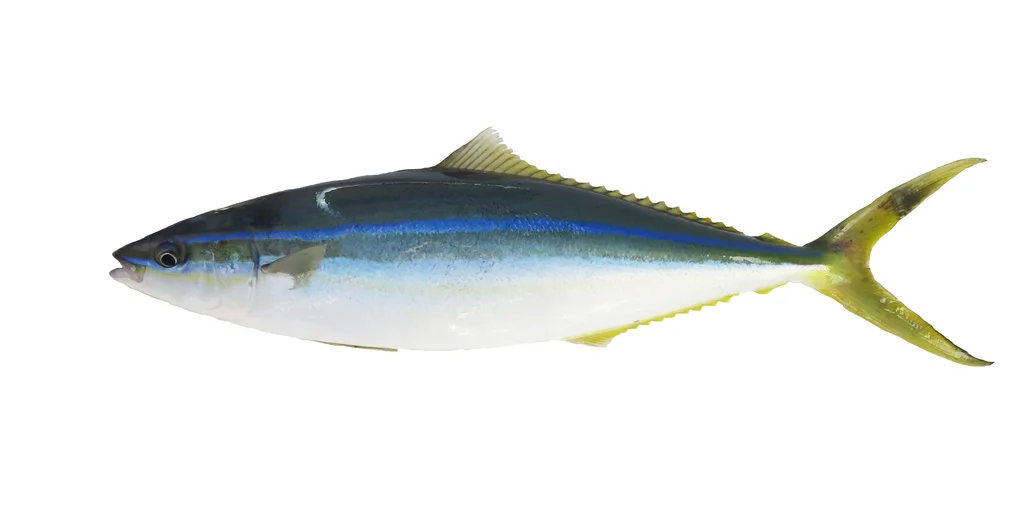
Identifying features
- Two bright blue stripes separated by a wider yellow-gold stripe along each side
- Dark blue-green back fading to a silvery white belly
- Long, streamlined, almost tuna-like body with a deeply forked tail
- Small detached finlets behind the dorsal and anal fins
- No hard scutes on the tail base, unlike most other jacks
Habits
- Truly oceanic and surface-oriented, rarely coming close to shore
- Follows floating objects, buoys and FADs and shelters in their shade
- Travels in fast-moving schools that chase baitfish, squid and crustaceans
- Feeds aggressively in daylight and will rise quickly to a chum slick
- Migrates with warm currents and appears off Southern California mainly in warm-water years
Distribution
Where to find them
- FADs, buoys and weed lines off the Florida Keys and Florida Atlantic coast
- Offshore rips and floating debris in the northern Gulf off Louisiana and Texas
- Hawaiian FADs and open-water bait schools
Where they live
How to catch them
Trolling and casting small lures around floating cover Boat
Rig: Medium spinning or conventional tackle trolled or cast with small feathers, spoons or jigs around FADs, buoys and weed lines
Bait/lure: Small feathers, spoons and casting jigs
Key tip: Work the shaded side of floating cover and vary the speed — schools often follow first, then strike on a faster retrieve.
Live bait and chunking over offshore structure Boat
Rig: Freelined or lightly weighted live sardine on a 4/0-6/0 circle hook, fished in a chunk chum slick over deep offshore structure
Bait/lure: Live sardines, pilchards and cut bait chunks
Key tip: Keep chunks drifting at the same depth as the bait — runners feed high in the water column and lose interest if the chum sinks away.
Best baits & lures
Baseline setup
- Rod: Medium 7 ft spinning or 20-30 lb trolling rod
- Line: 20-30 lb braid or mono with a 30-40 lb fluorocarbon leader
- Terminal: Small feathers and spoons, 4/0-6/0 circle hooks, light egg sinkers
Recommended gear for this species
Rod · Best value
9' 5-weight fly rod outfit
≈ US$180-260
Covers chironomid lakes and small rivers with one setup.
Flies · Budget
Chironomid assortment (30 patterns)
≈ US$25-40
Chironomids are 60% of a lake rainbow's diet in spring.
Picks come from our rule library — never paid placements. Prices are guides; affiliate links may earn us a commission.
Typical size
Common 2-3 ft (60-90 cm), 5-15 lb (2.3-6.8 kg); large fish over 3 ft and 20 lb (9 kg)
On the table
Excellent — firm, mild flesh more like tuna than most jacks; superb raw, grilled or seared.
Similar species
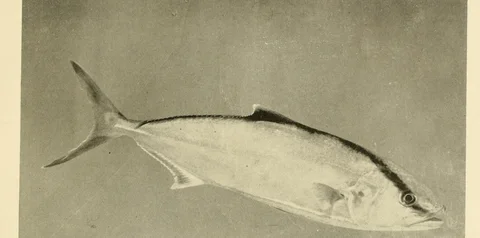 Yellow JackYellow jack is a deeper-bodied reef jack with a yellow tail and no blue side stripes; rainbow runner is slimmer, more oceanic and carries blue and yellow lengthwise stripes
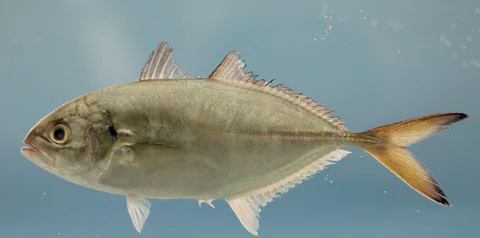 Blue RunnerBlue runner is much smaller and plainer, with a dark tail-base spot and hard scutes; rainbow runner is larger, striped blue and yellow and has no scutes
Regulations vary by area and can change in-season — always check the official rules for your area before you fish. Regulations guide →
Plan a trip for Rainbow Runner
Build today's plan