
Saltwater · Year-round; best April to October in surf and bays
Shovelnose Guitarfish
Pseudobatos productus
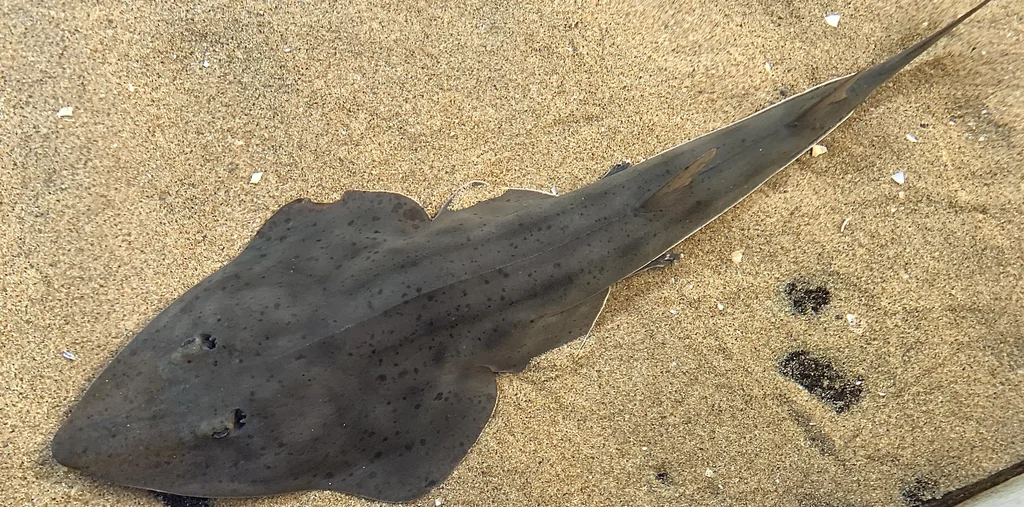
A ray with a shark's tail: the front half is a flattened, shovel-shaped ray disc and the rear half is a powerful shark-like tail — half shark, half ray in one body plan. Common in Southern California surf and bays, it is harmless (no stinging spine) but big fish pull very hard on surf tackle. It digs crabs and shellfish from the sand.
Seasons · Peak
Identifying features
- Long, pointed shovel-shaped snout and flattened wedge-shaped front disc
- Rear half is a thick, shark-like tail with two dorsal fins and a tail fin
- Plain sandy-brown to grey back with no spots or bars
- Two ridges run along the tail; small thorns only along the mid-back
- No stinging spine anywhere — harmless, unlike stingrays
Habits
- Rests half-buried on sand and mud flats by day, often in very shallow water
- Feeds on crabs, shrimp, worms and clams dug from the bottom
- Moves into bays, surf and estuaries in spring and summer to pup
- Females give live birth to litters of pups in summer
- Harmless to handle around the mouth, but big fish thrash powerfully — control the tail
Distribution
Where to find them
- Southern California surf beaches and troughs
- Southern California bay flats and harbour mouths
- Sand edges beside Southern California kelp beds
Where they live
How to catch them
Surf and pier fishing on bottom rigs Shore
Rig: Medium-heavy surf rod, fish-finder or dropper bottom rig with 3/0-5/0 hooks and squid, mackerel or sand crab on sand
Bait/lure: Squid, mackerel, sand crab
Key tip: Cast into troughs close to shore; let big fish run — they make long, hard runs on their shark-like tail.
Bay fishing over mud and sand flats Shore
Rig: Medium boat or shore rod, bottom rig with cut bait or squid drifted or anchored over bay flats
Bait/lure: Cut fish, squid, ghost shrimp
Key tip: Fish warm afternoon tides when guitarfish move shallow to feed; release pups and big females in the water.
Best baits & lures
Baseline setup
- Rod: Medium-heavy 9-11 ft surf rod or medium boat rod
- Line: 20-30 lb mono or braid
- Terminal: 3/0-5/0 hooks, fish-finder rigs, 3-5 oz sinkers
Recommended gear for this species
Rod · Best value
7'6" medium-heavy jigging rod
≈ US$110-170
Works 2-6 oz jigs over rock and reef and still has the backbone to lift a halibut off the bottom.
Line · Budget
50 lb braid with 40 lb leader (200 yd)
≈ US$25-40
Thin braid cuts the current so jigs stay vertical; the leader shrugs off rock and teeth.
Terminal · Budget
Leadhead jigs, swimbaits and two-hook bottom rigs
≈ US$25-40
A leadhead with a swimbait tail is the universal bottom-fish catcher, from rockfish to cod to flounder.
Picks come from our rule library — never paid placements. Prices are guides; affiliate links may earn us a commission.
Typical size
Common 3-4 ft (0.9-1.2 m); large to about 5.5 ft (1.7 m) and 40 lb (18 kg)
On the table
Good — firm flesh from the tail, similar to scallop in texture; many anglers still release big females.
Similar species
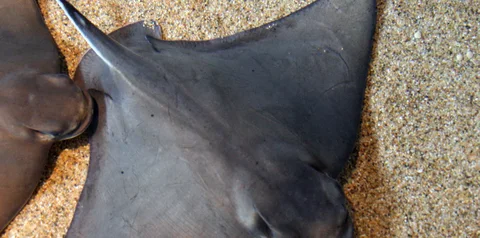 Bat RayBat ray has a raised head, broad smooth wings and a thin whip tail with a spine; shovelnose has a pointed shovel snout and a thick shark-like tail with fins and no spine
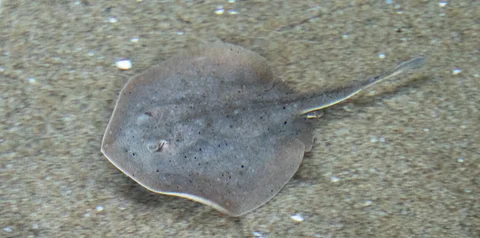 Round StingrayRound stingray is small (under 2 ft across) and almost perfectly round with a short stinging tail; shovelnose grows past 5 ft, is wedge-shaped in front and has no sting
Regulations vary by area and can change in-season — always check the official rules for your area before you fish. Regulations guide →
Plan a trip for Shovelnose Guitarfish
Build today's plan