
Saltwater · Year-round; best late spring through fall, summer pupping season in bays
Soupfin Shark
Galeorhinus galeus
A sleek, wide-ranging houndshark once fished hard in California for its vitamin-A-rich liver oil during World War II. Europe population panel: the same species, called tope in Europe, is assessed as Critically Endangered in the Northeast Atlantic and European waters, so European readers should understand its serious status there. Females enter shallow California bays in summer to pup, and pups should always be released.
Seasons · Peak
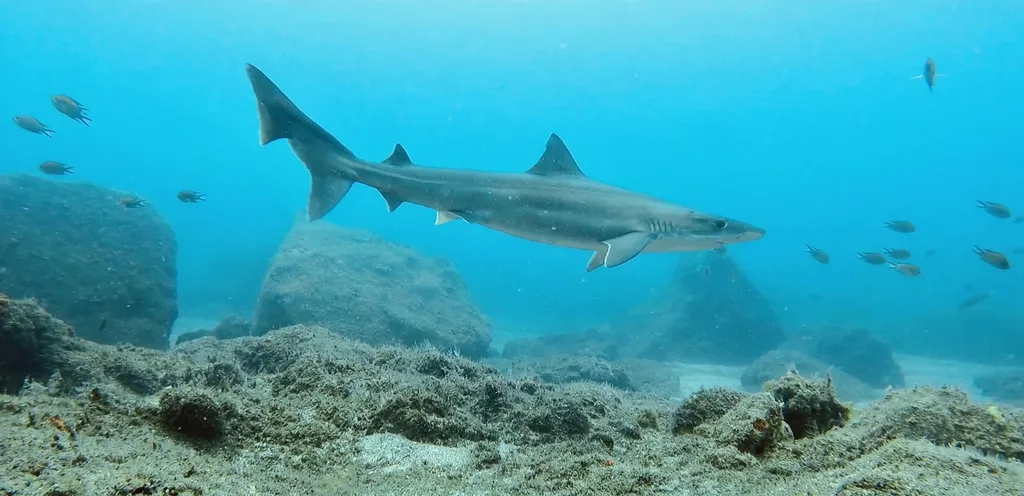
Identifying features
- Sleek grey-brown houndshark body with five gill slits
- Large first dorsal fin set mid-body, second dorsal much smaller
- Long, pointed snout and a strongly forked tail with a large lower lobe
- Underside of the snout tip is dusky, and the tail tip is often dark-edged
- Males have long claspers; adults are plain with no spots or saddles
Habits
- Migrates long distances along the coast, schooling by size and sex
- Feeds on sardines, mackerel, squid and bottom fish
- Females pup in shallow bays and estuaries in summer — release pups and pupping females
- Once targeted hard for liver oil (the WWII vitamin A fishery) in California
- Most active at night in bays and over reef edges
Distribution
Where to find them
- Surf troughs and bay channels of central and northern California
- Shallow pupping bays in summer (release all pups)
- Reef and kelp edges off Oregon and the Strait of Juan de Fuca area
Where they live
How to catch them
Surf, pier and boat bottom fishing on wire leaders Shore
Rig: Heavy surf, pier or boat rod, wire leader and a large circle hook with mackerel or squid fished on the bottom
Bait/lure: Mackerel, squid
Key tip: Use a wire leader — soupfin teeth cut mono. Fish troughs and channels on a moving tide.
Night fishing in bays in summer pupping season Shore
Rig: Heavy tackle fished at night over bay flats and channels, with pups and pupping females released immediately
Bait/lure: Whole mackerel, sardine
Key tip: Night fishing in bays during the summer pupping season — release all pups and handle females with extra care.
Best baits & lures
Baseline setup
- Rod: Heavy 9-12 ft surf rod or heavy boat rod
- Line: 40-65 lb braid or mono
- Terminal: Wire leaders, 7/0-10/0 circle hooks
Recommended gear for this species
Rod · Best value
9' 5-weight fly rod outfit
≈ US$180-260
Covers chironomid lakes and small rivers with one setup.
Flies · Budget
Chironomid assortment (30 patterns)
≈ US$25-40
Chironomids are 60% of a lake rainbow's diet in spring.
Picks come from our rule library — never paid placements. Prices are guides; affiliate links may earn us a commission.
Typical size
Common 4-5 ft (1.2-1.5 m); large females to about 6.5 ft (2 m) and 100 lb (45 kg)
On the table
Good eating historically, but given its conservation status most anglers release them; check local rules.
Similar species
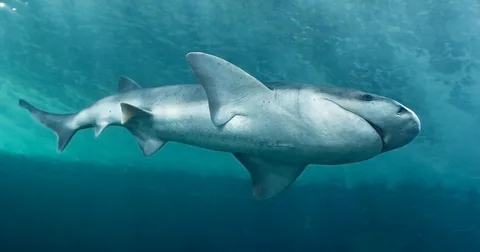 Broadnose Sevengill SharkSevengill has seven gills and a single small dorsal fin set far back; soupfin has five gills, a large mid-body first dorsal and a much sleeker body
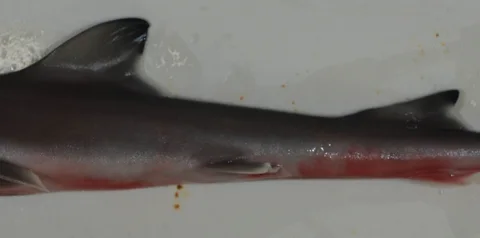 Smooth DogfishSmooth dogfish (smooth-hounds) are far smaller, inshore sharks with blunt crushing teeth; soupfin is much larger with a big first dorsal and forked tail
Regulations vary by area and can change in-season — always check the official rules for your area before you fish. Regulations guide →
Plan a trip for Soupfin Shark
Build today's plan