
Saltwater · Year-round in estuaries and inner bays
Stone Flounder
Kareius bicoloratus
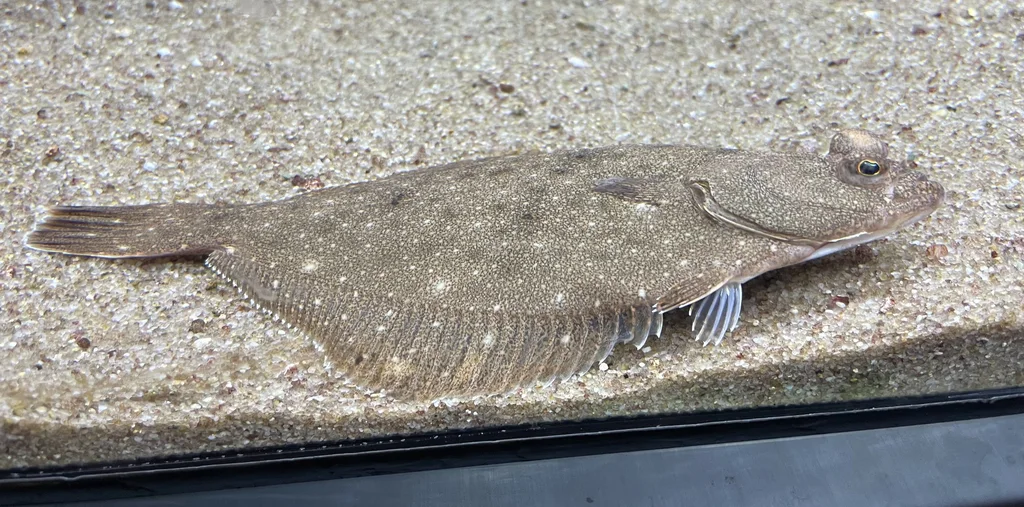
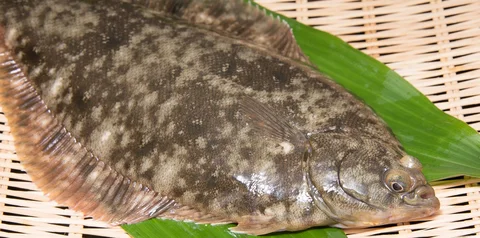
An estuary and inner-bay flatfish whose row of bony plates along the lateral line is unmistakable — run a finger along its side and identification is instant. It is a standard bycatch of estuary casting and inshore boat fishing, and together with marbled sole it forms the basic 'karei identification set' for Japanese anglers.
Seasons · Peak
Identifying features
- Row of hard bony plates along the lateral line on the eyed side
- Both eyes on the right side; eyed side grey-brown
- Small mouth and a thick, rough-feeling body
- Plates also form a ridge at the bases of dorsal and anal fins
- Blind side white; fins often with dark speckling
Habits
- Tolerates brackish water and pushes well into estuaries
- Feeds on worms, small shellfish and crustaceans in sand-mud
- The bony lateral plates are unique among local karei
- Juveniles grow up in estuaries and shallow inner bays
- A routine bycatch of estuary casting and bay boat fishing
Distribution
Regional coverage expanding
Where to find them
- Tama River mouth and Tokyo Bay flats
- Matsushima Bay, Miyagi
- Ariake Sea estuary flats, Kyushu
Where they live
How to catch them
Estuary casting from shore Shore
Rig: Casting rig with two hooks and worms, thrown from estuary banks, harbour walls and surf edges
Bait/lure: Marine worms
Key tip: Cast onto sand-mud flats on a moving tide and retrieve slowly with pauses; plates make released fish easy to identify in hand.
Inner-bay boat fishing Boat
Rig: Two-hook karei rig with a 2-4 oz sinker anchored over bay sand-mud
Bait/lure: Clam pieces or worms
Key tip: Anchor on soft bay bottom and fish static; expect steady, unhurried bites in the estuary flow.
Best baits & lures
Baseline setup
- Rod: Light-medium 7-9 ft surf or boat rod
- Line: 12-20 lb braid or mono
- Terminal: Karei rigs with size 8-12 hooks, 2-4 oz sinkers
Recommended gear for this species
Rod · Best value
9' 5-weight fly rod outfit
≈ US$180-260
Covers chironomid lakes and small rivers with one setup.
Flies · Budget
Chironomid assortment (30 patterns)
≈ US$25-40
Chironomids are 60% of a lake rainbow's diet in spring.
Picks come from our rule library — never paid placements. Prices are guides; affiliate links may earn us a commission.
Typical size
Common 8-12 in (20-30 cm); large fish to about 20 in (50 cm)
On the table
Fair — coarser than marbled sole; eaten locally, often simmered or as sashimi when fresh.
Similar species
Regulations vary by area and can change in-season — always check the official rules for your area before you fish. Regulations guide →
Plan a trip for Stone Flounder
Build today's plan