
Saltwater · Warm months; in the far eastern Pacific it pushes south mainly during El Niño events
Striped Bonito
Sarda orientalis
A wide-ranging Indo-Pacific bonito that reaches the eastern Pacific around Baja and mainland Mexico, extending south in El Niño years. It schools with small tunas in coastal water and takes trolled and cast lures readily.
Seasons · Peak
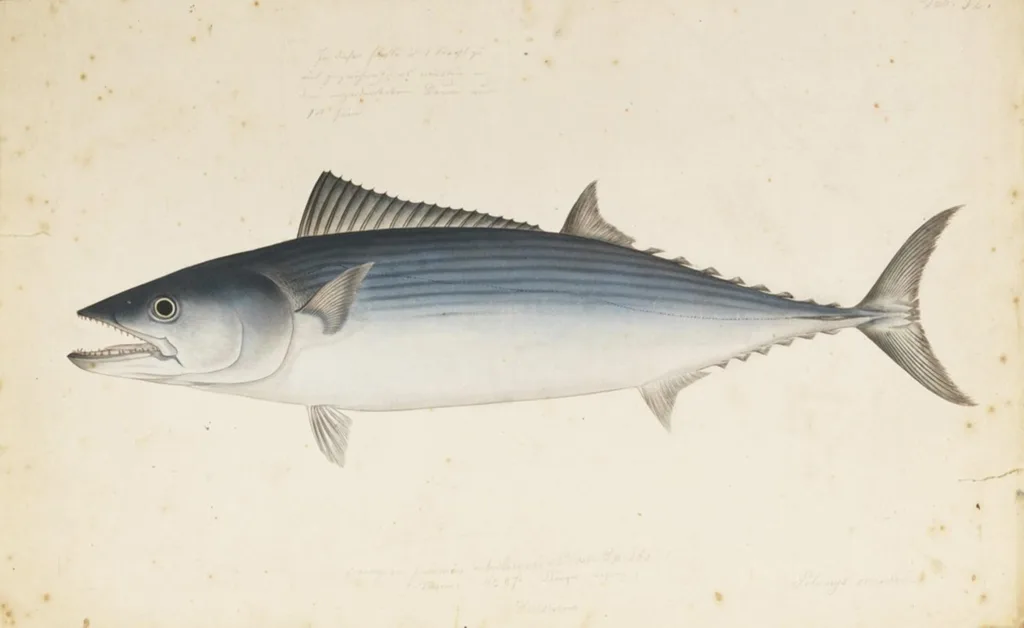
Identifying features
- Narrow, oblique dark stripes along the upper back, with a plain white belly
- Mouth relatively large for a bonito, reaching back to about the eye
- No stripes or spots on the belly — separating it from skipjack-type tunas
- Streamlined Sarda body with a strongly forked tail and small finlets
- Larger than most local small tunas — can exceed 1 m
Habits
- Coastal schooling species, often mixed with small tunas
- Feeds on clupeoids (sardines and anchovies), other small fish, squid and prawns
- In the eastern Pacific its southern push to Peru is linked to El Niño warm events
- Fast, surface-oriented predator of bait schools
Distribution
Where to find them
- Coastal bait grounds off Baja California and mainland Mexico
- Around offshore islands where small tunas school
- Surface feeding frenzies under birds
Where they live
How to catch them
Trolling for bonito schools Boat
Rig: Light-medium trolling outfit, feather or small diving plug
Bait/lure: Tuna feathers, small plugs, spoons
Key tip: Work bait schools and bird flocks along the coast; in El Niño years watch for this species mixed with small tunas far south of Baja.
Casting jigs to surface feeders Boat
Rig: Medium spinning outfit, 20-30 g metal jig
Bait/lure: Metal jigs and small stickbaits
Key tip: Cast past the frenzy and retrieve fast through it; bonito punish slow retrieves and light leaders, so check for abrasion after each fish.
Best baits & lures
Baseline setup
- Rod: Medium 7' spinning / light trolling rod
- Line: 20-30 lb braid
- Terminal: Metal jigs, feathers, 40 lb fluorocarbon leader
Recommended gear for this species
Rod · Best value
9' medium-heavy surf spinning rod
≈ US$110-170
Casts plugs and bait past the breakers and handles stripers, drum and bluefish in the wash.
Reel · Best value
5000 size sealed spinning reel
≈ US$120-180
Salt spray and dunkings kill cheap reels — a sealed body and 30 lb braid capacity are the surf standard.
Terminal · Budget
Topwater plugs, soft-plastic jigs and fish-finder rigs
≈ US$25-40
Plugs for blitzes, jigs for the trough, bait on a fish-finder rig when they won't chase — the inshore trio.
Picks are never paid placements. Prices are guides; price links are coming soon and none is an affiliate link yet.
Typical size
Common about 55 cm; maximum 102 cm fork length and 10.7 kg
On the table
Good eating fresh like other bonitos; also sold dried-salted, canned and frozen in parts of its range.
Similar species
Regulations vary by area and can change in-season — always check the official rules for your area before you fish. Regulations guide →
Plan a trip for Striped Bonito
Build today's plan⚠ Heads-up: Striped Bonito doesn't occur around Vancouver, BC (or is very rare there), so it's not a sensible local target. Your plan stays in Vancouver, BC and is built around the fish that actually live there.