
Freshwater · Year-round; best in the dry season when rivers run clear in channels and lagoons
Tenguayaca (Bay Snook)
Petenia splendida
The big predatory cichlid of Tabasco, Chiapas, Petén and Belize — the local tenguayaca, a fish-eater with a spectacularly protrusible mouth, fished in green and pink-red forms in lakes and slow rivers.
Seasons · Peak
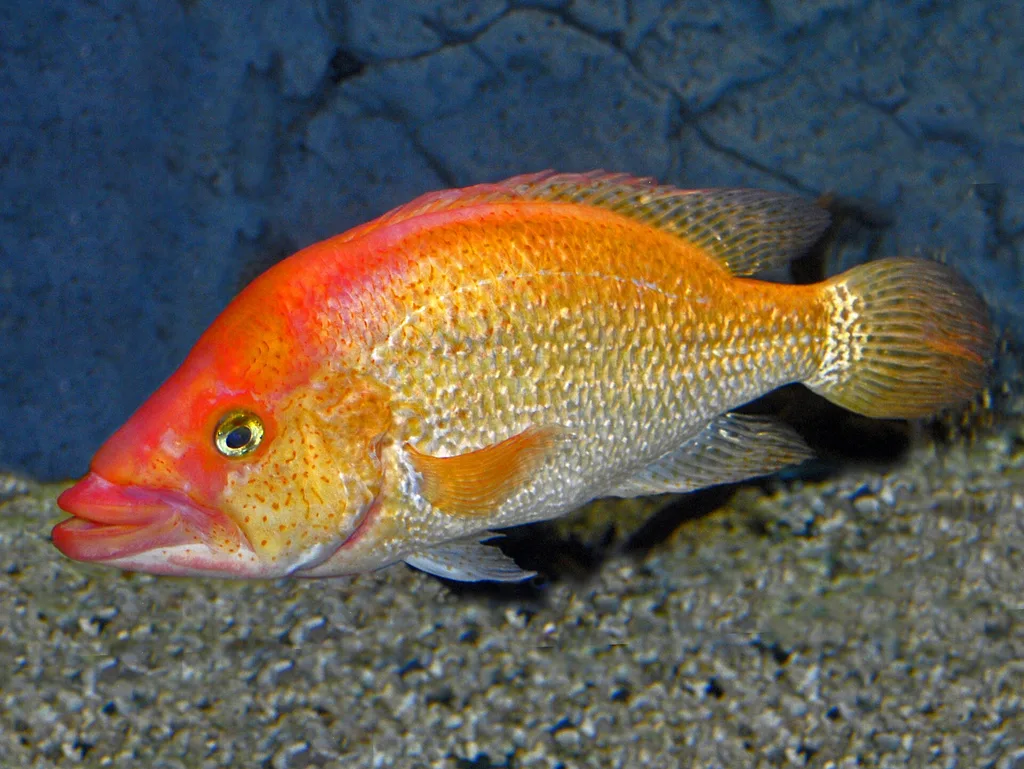
Identifying features
- Long, laterally compressed cichlid with an elongated head and a prominent protrusible jaw
- Mouth can project forward dramatically — over 1/4 of the body length when striking
- Colour phases: normal greenish-silver and a pink to reddish (red bay snook) form
- Dark blotches along the flank in the normal phase; large males develop a nuchal hump
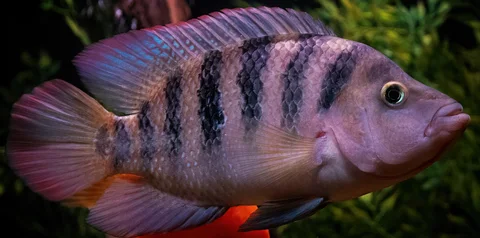
- Look-alike: Mayan cichlid is deeper-bodied and shorter-headed with a barred pattern and lacks the extreme protrusible mouth
Habits
- A piscivorous cichlid that ambushes smaller fish in slow water
- Highly protrusible jaws extend over a quarter of its length to suck in prey
- Prefers lower and middle river reaches with soft sand-mud bottoms
- Pink/red and normal greenish colour forms occur in the same waters
Distribution
Where to find them
- Lagoon edges and channels in the Petén-Usumacinta basin
- Sunken trees and wood along slow river bends
- Creek mouths entering the Grijalva and Usumacinta
Where they live
How to catch them
Jerkbaits around wood cover River
Rig: Medium baitcasting rod, 20 lb braid, 30 lb leader
Bait/lure: Jerkbaits and shallow crankbaits in mojarra colours
Key tip: Twitch and pause beside sunken trees — the strike comes on the pause as the protrusible mouth fires.
Live bait in lagoons Lake
Rig: 3/0 circle hook, live bait free-lined or under a float
Bait/lure: Small live mojarra or river sardines
Key tip: Present bait at lagoon edges near cover and let the fish suck it in before setting.
Swimbaits along channel edges River
Rig: Swimbait on a weighted wide-gap hook, medium tackle
Bait/lure: Soft swimbaits 4-5 in
Key tip: Roll slowly along sand-mud edges where tenguayacas wait for passing baitfish.
Best baits & lures
Baseline setup
- Rod: 6.5-7 ft medium spinning or baitcasting rod
- Line: 15-30 lb braid, 30 lb fluorocarbon leader
- Terminal: Jerkbaits, crankbaits, swimbaits, 3/0 hooks
Recommended gear for this species
Rod · Budget
7' light spinning rod
≈ US$50-90
Light enough to cast 1/32 oz jigs, strong enough for a slab crappie or a bonus drum.
Reel · Budget
1000-2000 size spinning reel
≈ US$40-70
Balances a light rod and handles 4-6 lb line — all panfishing ever asks of a reel.
Terminal · Budget
Micro jigs, small hooks and slip floats (panfish kit)
≈ US$15-25
A bobber over a tiny jig tipped with a worm catches every sunfish, crappie and perch in the lake.
Picks are never paid placements. Prices are guides; price links are coming soon and none is an affiliate link yet.
Typical size
Common 20-35 cm; max about 50 cm SL / roughly 2-3 lb
On the table
Excellent — a prized food fish in Tabasco and Petén ('pez blanco' complex of local fisheries); firm white flesh.
Similar species
Regulations vary by area and can change in-season — always check the official rules for your area before you fish. Regulations guide →
Plan a trip for Tenguayaca (Bay Snook)
Build today's plan⚠ Heads-up: Tenguayaca (Bay Snook) doesn't occur around Vancouver, BC (or is very rare there), so it's not a sensible local target. Your plan stays in Vancouver, BC and is built around the fish that actually live there.