
Freshwater · Late spring through early autumn; summer nights fish best
Wels Catfish
Silurus glanis
Europe's largest freshwater fish, a broad-headed giant catfish native to the Danube and central European rivers and famously introduced to Spain's Ebro, where it grows to record size. Mostly nocturnal and caught on heavy tackle, deadbaits and the traditional clonk. In the UK it is present only in stocked stillwaters.
Seasons · Peak
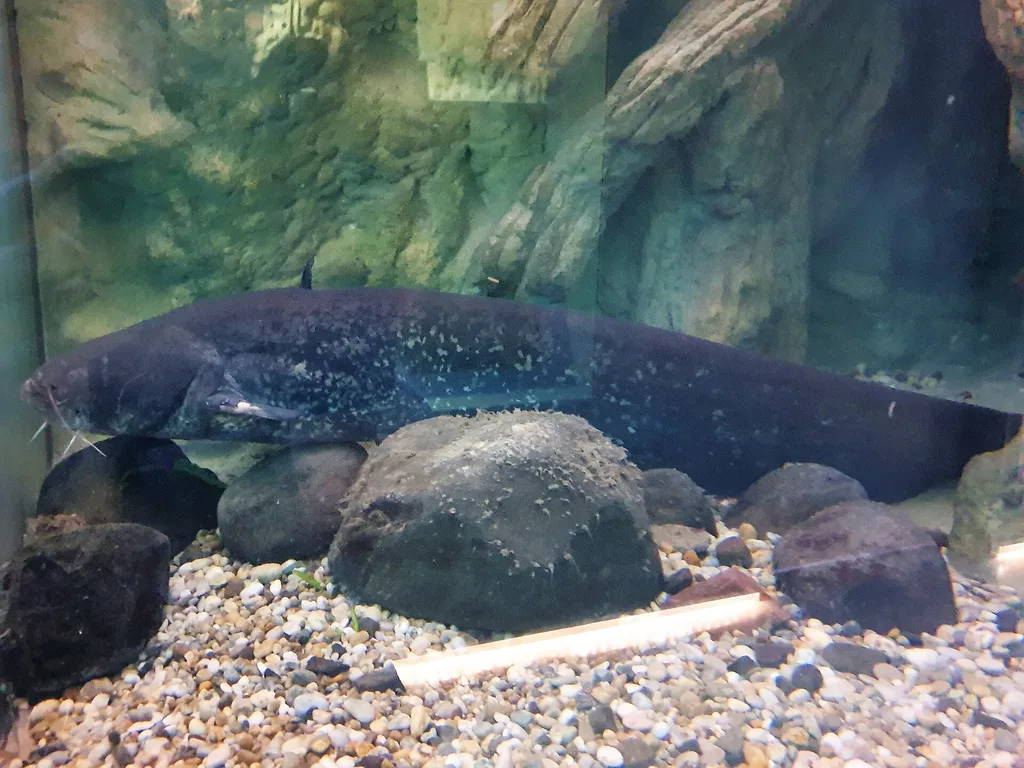
Identifying features
- Scaleless, smooth dark olive to near-black skin, often mottled
- Very broad, flat head with a huge wide mouth
- Six barbels: two very long ones on the upper jaw, four short ones below
- Long anal fin running most of the way to the small rounded tail
- Tiny eyes for its size and a bulky, muscular front body
Habits
- Feeds mainly at night on fish, crayfish, frogs and even waterbirds
- Lies up by day in deep holes, under banks and in sunken cover
- Spawns in late spring and summer in warm shallows; the male guards the eggs
- It is drawn to surface disturbance — the wooden clonk (clickbait) imitates feeding sounds and pulls fish up from depth
- Long-lived and slow-growing; the Ebro giants are the product of decades and warm water
Distribution
Where to find them
- Spain's Ebro reservoirs around Mequinenza and Caspe
- Deep Danube bends and tributary mouths
- Large German and French lowland rivers — Rhine, Rhône and Seine backwaters
Where they live
How to catch them
Clonk (clickbait) fishing over deep holes Boat
Rig: Boat anchored or drifting over a deep hole; a wooden clonk struck on the surface while a deadbait or worm bunch hangs below on a strong catfish rig with a heavy lead
Bait/lure: Deadbait fish, bunches of lobworms
Key tip: The clonk's hollow 'plop' mimics feeding wels — fish rise from the hole to the bait; watch the rod tip and strike on a positive pull.
Static deadbaiting from the bank River
Rig: Heavy rod, strong braid and a running lead or breakline rig with a big circle or single hook, fished into deep bankside holes after dark
Bait/lure: Fresh deadbait sections, pellets on some stocked waters
Key tip: Set up before dusk near snags and holes, keep baits close to cover, and use a secure rod rest — takes at night are violent.
Best baits & lures
Baseline setup
- Rod: Heavy catfish rod, 9-11 ft bank or shorter boat rod, rated for 100 lb+ fish
- Line: 60-100 lb braid with a strong abrasion-resistant leader
- Terminal: Large circle or single hooks, heavy leads, catfish-safe rigs
Recommended gear for this species
Rod · Best value
9' 5-weight fly rod outfit
≈ US$180-260
Covers chironomid lakes and small rivers with one setup.
Flies · Budget
Chironomid assortment (30 patterns)
≈ US$25-40
Chironomids are 60% of a lake rainbow's diet in spring.
Picks come from our rule library — never paid placements. Prices are guides; affiliate links may earn us a commission.
Typical size
Common 20-60 lb (9-27 kg) where established; large fish over 100 lb (45 kg), Ebro giants past 200 lb (90 kg) and 8 ft (2.4 m)
On the table
Fair — smaller fish are eaten in central Europe; big old fish accumulate contaminants and are best released.
Similar species
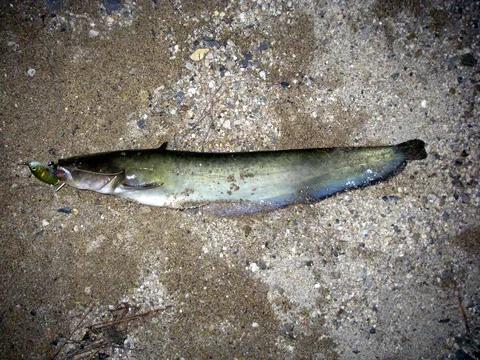 Amur CatfishAmur catfish is an East Asian species that rarely exceeds about 3 ft (1 m) and has a shorter anal fin; the wels is far larger with two very long upper barbels
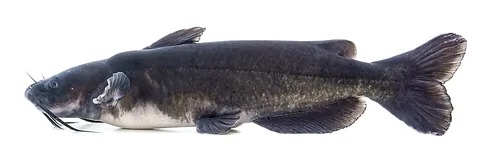 Channel CatfishChannel catfish is a North American species with a deeply forked tail and dark spots on young fish; the wels has a small rounded tail and no fork
Regulations vary by area and can change in-season — always check the official rules for your area before you fish. Regulations guide →
Plan a trip for Wels Catfish
Build today's plan