
Saltwater · Year-round; best in warm months May–October at river mouths and in surf, and in mangrove lagoons on moving tides.
White Snook
Centropomus viridis
A large, pale Pacific snook — with black snook one of only two Pacific snooks that grow truly big — famous for heavy surf fish at Baja river mouths and for mangrove lagoon fish on the mainland.
Seasons · Peak
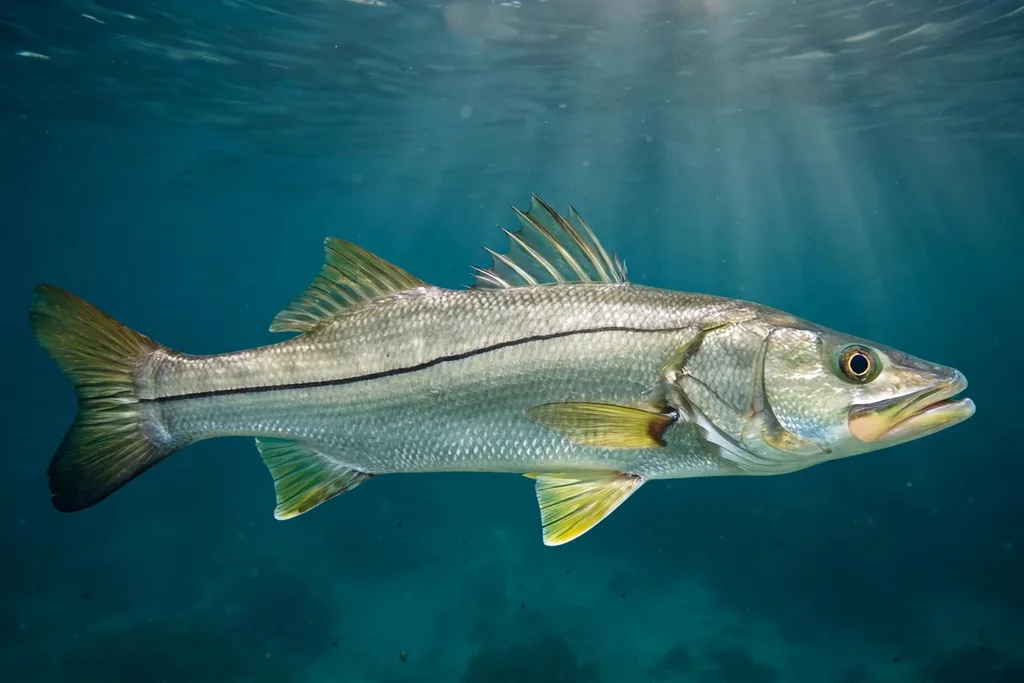
Identifying features
- Pale silvery body with a dark but not jet-black lateral line
- Third dorsal spine is the tallest (key difference from black snook)
- Slender, streamlined profile, less deep-bodied than black snook
- Large mouth with protruding lower jaw
- Fins pale to dusky, not charcoal-black
Habits
- Feeds on baitfish and shrimp along beaches, mouths and mangrove edges
- Most active at dawn, dusk and on moving tides
- Moves between surf, estuaries and lower rivers seasonally
- Protandric; the largest fish are female
Distribution
Where to find them
- Surf and bars at river mouths in southern Baja
- Magdalena Bay mangrove channels
- River mouths and lagoons of Sinaloa, Nayarit and Jalisco
- Deep estuary holes and snags
Where they live
How to catch them
Surf plug casting Shore
Rig: Heavy swimming plug or popper at first light
Bait/lure: Live mullet in the surf trough
Key tip: Cast along bars and troughs at dawn; big white snook hunt bait in the wash.
Mangrove lagoon casting Boat
Rig: Soft swimbait or jerkbait tight to roots
Bait/lure: Live shrimp under a popping cork
Key tip: Work root lines and channel edges on moving water from a panga.
Live-bait at river mouths Boat
Rig: Free-lined live sardina or mullet
Bait/lure: Live shrimp on a circle hook
Key tip: Anchor or drift at the mouth on a falling tide when bait pours out.
Best baits & lures
Baseline setup
- Rod: Medium-heavy 7–8 ft spinning rod (longer for surf)
- Line: 30–40 lb braid
- Terminal: 40–60 lb fluorocarbon leader, 4/0–6/0 hooks
Recommended gear for this species
Rod · Best value
9' medium-heavy surf spinning rod
≈ US$110-170
Casts plugs and bait past the breakers and handles stripers, drum and bluefish in the wash.
Reel · Best value
5000 size sealed spinning reel
≈ US$120-180
Salt spray and dunkings kill cheap reels — a sealed body and 30 lb braid capacity are the surf standard.
Terminal · Budget
Topwater plugs, soft-plastic jigs and fish-finder rigs
≈ US$25-40
Plugs for blitzes, jigs for the trough, bait on a fish-finder rig when they won't chase — the inshore trio.
Picks are never paid placements. Prices are guides; price links are coming soon and none is an affiliate link yet.
Typical size
To about 150 cm reported and over 25 kg (IGFA record 27.6 kg, 2025); anglers commonly take 3–10 kg fish.
On the table
Excellent — firm, white, highly prized table flesh.
Similar species
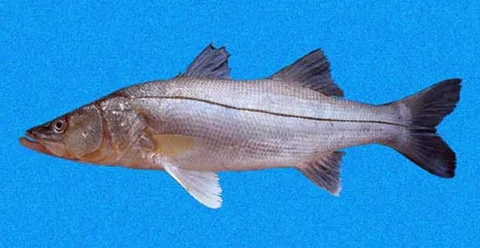 Black SnookBlack snook is darker and deeper-bodied with a jet-black lateral line and its fourth dorsal spine tallest; white snook is paler and more slender with the third spine tallest.
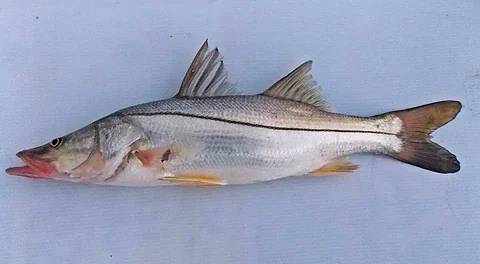 SnookAtlantic common snook is a close look-alike but never occurs in the Pacific; white snook is its Pacific counterpart.
Regulations vary by area and can change in-season — always check the official rules for your area before you fish. Regulations guide →
Plan a trip for White Snook
Build today's plan⚠ Heads-up: White Snook doesn't occur around Vancouver, BC (or is very rare there), so it's not a sensible local target. Your plan stays in Vancouver, BC and is built around the fish that actually live there.